- This article contains affiliate links. I may receive a commission if you purchase from them, at no extra cost to you.
I almost didn’t go to Tulum. Too many perfect Instagram photos — yoga on white sand, flowy dresses, the same ruins shot. I thought it was overrated. Then I went. And I was wrong.
Tulum isn’t just a pretty face. Beyond the filters, there are real experiences that take your breath away: Mayan ruins on cliffs, secret cenotes in the jungle, beaches that live up to the hype, and food that’ll make you cancel your flight.
Here are 5 specific places in Tulum — ruins and beaches — that don’t just look good for Instagram. They feel good. They surprise you. And they’ll also give you incredible photos.
Ready for a Tulum vacation that’s actually worth your time and money? Let’s go.
Table of contents ⇅
1. Tulum Archaeological Zone (The Cliffside Ruins)
You’ve seen a million photos of the Tulum Archaeological Zone. The castle perched on a 12-meter cliff, the turquoise Caribbean Sea below, the iguanas sunbathing on ancient stones. I went in expecting a crowded tourist trap. I left with my jaw on the floor.
What I love most: The wind. Seriously. Standing on the edge of the cliff, with the wind whipping off the ocean, you suddenly understand why the Mayans chose this spot. It feels powerful. The ruins themselves are relatively small compared to Chichén Itzá, but the setting is unmatched.
Best attractions inside the site:
- El Castillo (The Castle) – the main pyramid, built so that on the summer solstice, the sun rises directly behind it from certain angles.
- The Temple of the Frescoes – look for the remaining colorful murals depicting Mayan gods. They’re faded but still visible.
- The House of the Cenote – a small structure built over a natural sinkhole. The Mayans used it for fresh water.
- The Beach below the ruins – there’s a small, rocky beach at the bottom of the cliff. You used to be able to swim there, but it’s currently restricted to protect the ruins. Still, the view from above is perfect.
Cost: 90 pesos ($5 USD) for entry. If you want to skip the line, you can buy tickets online in advance.
How to get there: From the Tulum town center (Tulum Pueblo), take a taxi (about 150-200 pesos, $8-10) or a colectivo (30 pesos, $1.50) from the main avenue. The colectivo drops you at the highway entrance, then it’s a 10-minute walk or a short bike ride.
Where to combine it with: After the ruins, head to the beach road (Zona Hotelera) for breakfast or brunch. The ruins exit brings you out onto the main road, and you can rent a bike right there.
There are no lockers at the ruins. Don’t bring a big bag. A small anti-theft daypack is perfect – it holds water, sunscreen, and your camera without being bulky.
Pro Tip
Why this breaks Instagram: Because the reality is better than the filtered photos. The wind in your hair, the salt spray on your skin, the sound of waves crashing below – no filter can fake that.
2. Paradise Beach – The Quintessential Tulum Beach
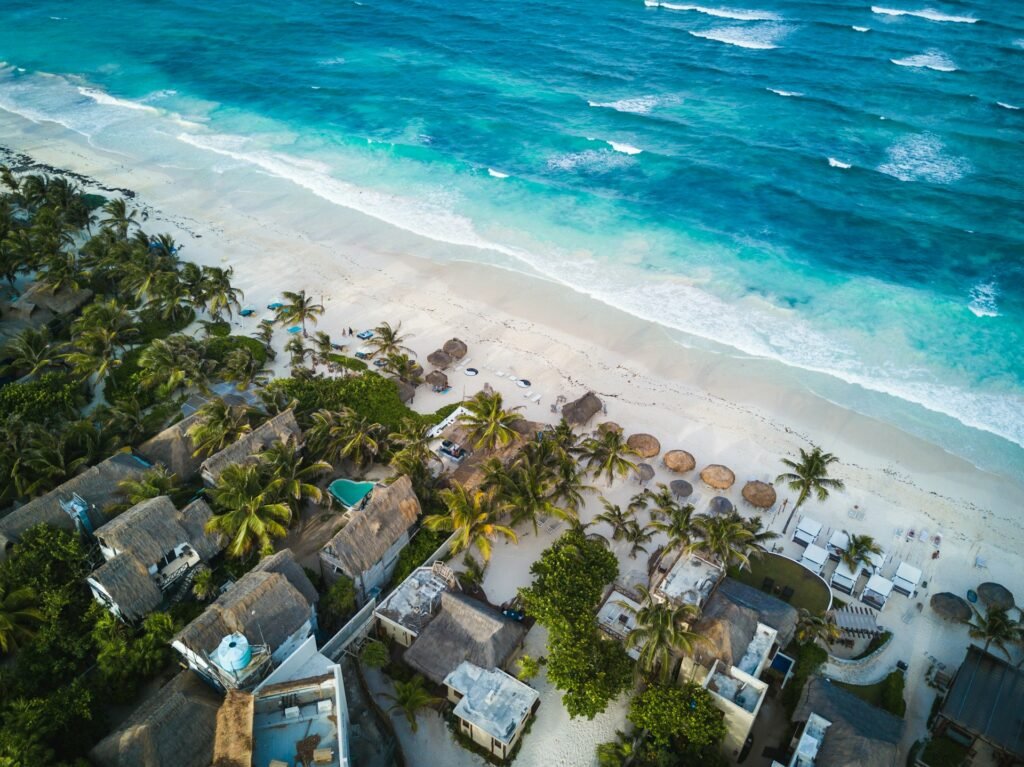
If you only go to one beach in Tulum, make it Playa Paraíso. It’s the longest, widest, and most beautiful stretch of sand in the area. The water is impossibly blue, the sand is soft and white, and the palm trees lean lazily toward the sea. This is the beach that ends up on postcards.
What I love most: How much space there is. Unlike some of the smaller, more crowded beaches, Playa Paraíso feels expansive. You can walk for 20 minutes and still find your own patch of sand. The water is calm and swimmable – perfect for floating and staring at the sky.
Best things to do there:
- Swim. The water is warm, clear, and usually calm. No big waves.
- Rent a beach club lounge chair. Places like Playa Paraíso Beach Club charge about 300-500 pesos ($15-25) for a day bed with umbrella and waiter service. You’ll get food and drink delivery to your seat.
- Eat fresh ceviche. There are small palapa restaurants on the sand. Cevichería El Camarón is my favorite – a huge plate of lime-marinated shrimp with tostadas for 180 pesos ($9).
- Sunset. The beach faces east, so it’s not a sunset beach (morning is best). But the late afternoon light is still gorgeous for photos.
Bring biodegradable sunscreen. The Mexican government is cracking down on chemical sunscreens that damage the coral reef. You can buy a reef-safe sunscreen stick before you go – it’s better for you and the environment.
Pro Tip
How to get there: From Tulum town, take a taxi (200 pesos, $10) or rent a bicycle (100-150 pesos per day, $5-7). The bike ride is about 20-30 minutes along a flat bike path. It’s a lovely ride, but bring water – it’s hot.
Where to eat nearby: Walk a few minutes south to La Eufemia, a super casual beach bar with $3 tacos, $4 beers, and a very chill, non-pretentious vibe. Their fish tacos are legendary. Or try Taquería Honorio in town (not on the beach) for the best cochinita pibil tacos in Tulum – about 15 pesos each ($0.75).
Why this breaks Instagram: Because you’ll be too busy floating in the warm water to take photos. The real break happens when you put your phone down and just… float.
3. Gran Cenote – The Most Photogenic Swim in the World
No Tulum vacation is complete without visiting a cenote. These natural sinkholes, filled with crystal-clear groundwater, were sacred to the Mayans. Gran Cenote is the most famous, and for good reason. It’s absolutely stunning – open to the sky, with turquoise water, overhanging vines, and little turtles swimming right next to you.
What I love most: Snorkeling through the dark cave section. The main pool is open and bright, but you can swim into a shallow cave where the water turns deep blue, and you can see stalactites hanging from the ceiling. Tiny black catfish swim around your feet. It feels like a different world.
Best activities:




- Snorkel. Rent gear at the entrance for 50 pesos ($2.50) or bring your own. You’ll see fish, turtles, and underwater rock formations.
- Swim through the cave tunnel. There’s a short, lit tunnel connecting two open sections. It’s shallow enough to stand, but swimming is more fun.
- Watch the bats. At dusk, you’ll see bats flying out of a small cave opening. It’s eerie and cool.
- Photo from the wooden dock. That classic shot of a person in the water with vines hanging down? That’s Gran Cenote.
The cenote is busiest between 11 AM and 2 PM. Arrive right at opening time (9 AM) or come after 3 PM. Also, no sunscreen is allowed – it contaminates the water. Wear a long-sleeve rash guard for sun protection. I use a UV-protection swim shirt.
Cost: 500 pesos ($25) entry. Yes, it’s expensive for a cenote, but the facilities are good (lockers, bathrooms, showers, snack bar). You can stay as long as you want.
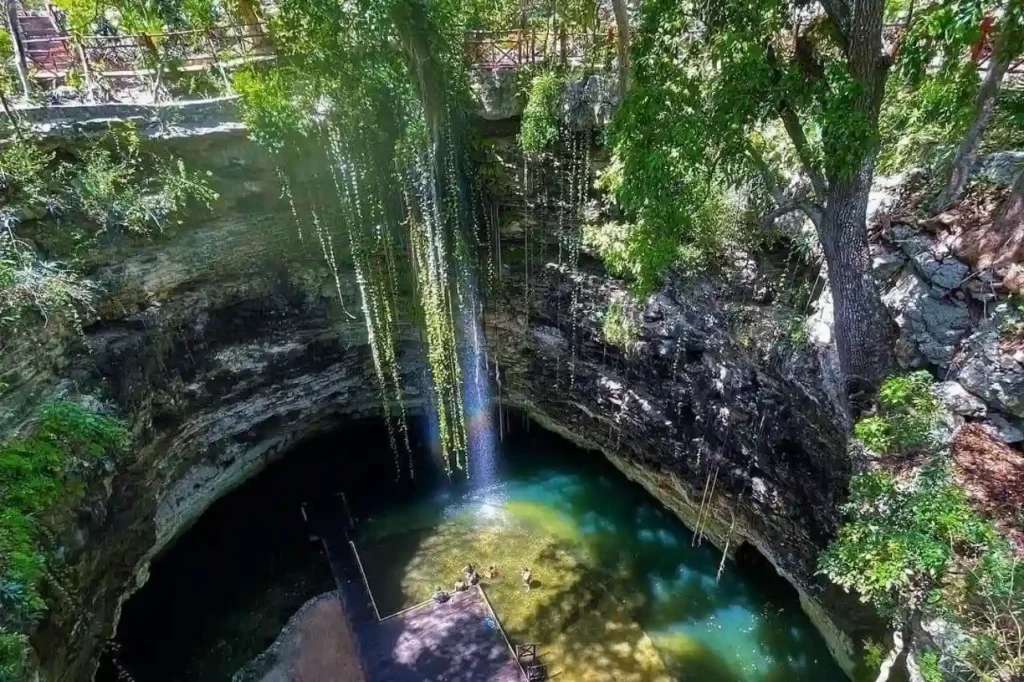
How to get there: Gran Cenote is located on the highway between Tulum and Coba, about 10 minutes from Tulum town. Take a taxi (150 pesos, $7.50 one way) or rent a bike (about 30 minutes ride, but the road is busy). The easiest is to join a cenotes Tulum tour that includes transport, or combine it with a trip to the Coba ruins.
Why this breaks Instagram: Because the water is so clear that your photos will look fake – like a swimming pool in a magazine. But the real magic is the silence. When you float on your back and look up at the vines and the sky, you’ll forget to take a picture.
4. Sian Ka’an Biosphere Reserve – Wild Tulum Far from the Crowds
If you want to escape the tourist crowds and see the real Tulum, Mexico wilderness, book a day trip to Sian Ka’an (pronounced “see-ahn kah-ahn”). This UNESCO Biosphere Reserve is a massive protected area of mangroves, lagoons, coral reefs, and jungle.
It’s a 20-minute drive from Tulum, but it feels like a different planet.
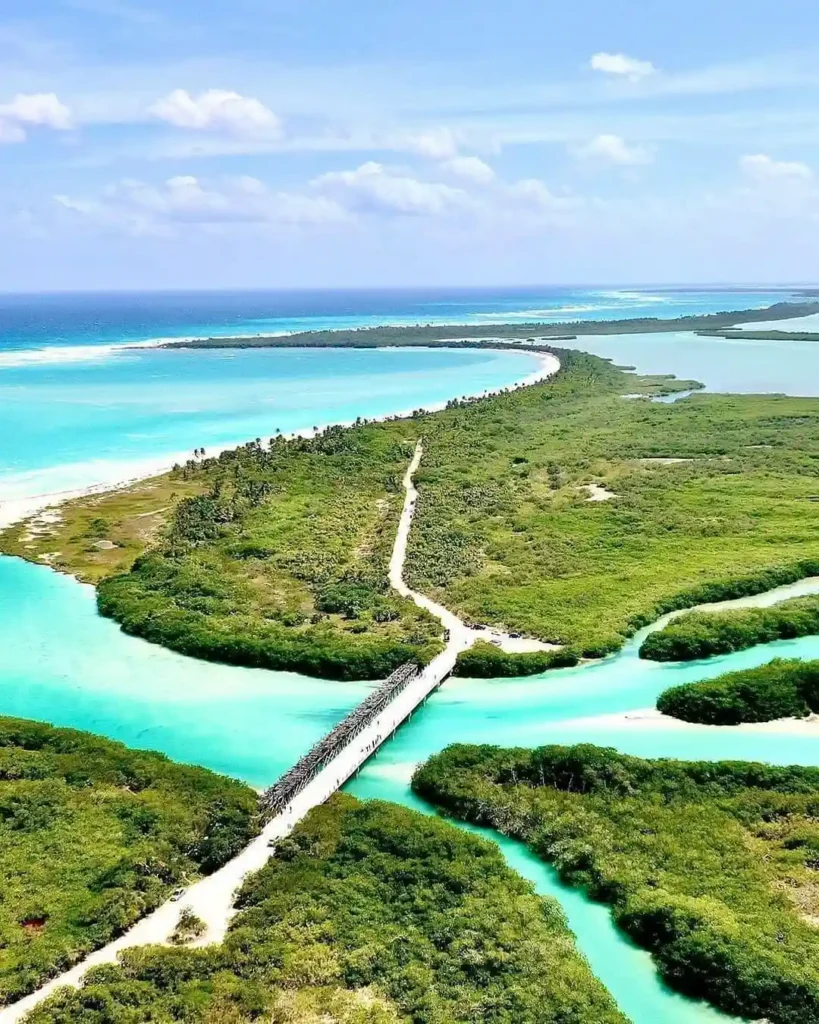
What I love most: The boat tour through the canals. You’ll glide through narrow channels carved by the Mayans centuries ago, surrounded by mangroves, ibises, herons, and crocodiles (yes, crocodiles).
The water is so clear that you can see the roots underwater. At one point, the boat enters a lagoon where you can float in the shallows – the water is warm and silky.
Best activities in Sian Ka’an:
- Boat tour (2-3 hours) – see wildlife, learn about the ecosystem, float in a natural channel.
- Snorkeling in the reef – part of the Mesoamerican Barrier Reef. You’ll see tropical fish, sea turtles, and possibly rays.
- Mayan ruins – Muyil is a small archaeological site at the entrance to the reserve. It’s not as grand as the Tulum ruins, but it’s surrounded by jungle and almost empty.
- Birdwatching – Over 300 species, including toucans, ospreys, and flamingos (seasonal).
You need a guide to enter the reserve. Don’t try to go alone – the roads are rough, and you can’t access the boat tours without a licensed operator. I booked with Community Tours Sian Ka’an, a cooperative of local Mayan guides.
The full-day tour (including boat, snorkeling, lunch, and ruins) costs 1,800 pesos ($90) – expensive by Mexican standards, but worth every peso. The guides were incredible.
How to get there: From Tulum, drive south on Highway 307 for about 20 minutes. Look for the Sian Ka’an entrance at the Muyil ruins. If you’re not renting a car, take the tour – they’ll pick you up from your hotel or hostel.
Where to eat after: On your way back, stop at El Camarón on the highway for fresh ceviche and cold beer. Nothing fancy, just delicious.
Why this breaks Instagram: Because you won’t get the perfect influencer shot. You’ll get muddy, sweaty, and bug-bitten. But you’ll also see a crocodile slide into the water three feet from your boat, and you’ll hear the jungle come alive. That’s the real Tulum.
5. Ruins Beach – The Secret Spot Below the Castle
Most people visit the Tulum ruins, take their photos from above, and leave. But there’s a hidden gem that 90% of tourists miss – Playa Ruinas, the small beach located directly below the cliffside ruins. It’s not officially open for swimming anymore (erosion concerns), but you can still access it for the most incredible photo op in Tulum.
What I love most: The perspective. From below, looking up at El Castillo and the temple on the cliff, you feel the scale of the Mayan achievement.
The beach itself is rocky but beautiful – big limestone slabs, small sandy coves, and turquoise water splashing against the rocks. It’s also usually much less crowded than the main site above.
How to access it: After you exit the Tulum ruins, turn left and walk past the exit gate. You’ll see a path leading down toward the water. Follow it for about 5 minutes. There’s a small gate – sometimes it’s open, sometimes a local “guard” asks for a small tip (20-50 pesos, $1-2.50). Pay it. It’s worth it.
Best time to go: Late afternoon, after 4 PM. The sun is lower, the light is golden, and most tourists have left the ruins. You might have the beach almost to yourself.
Pro tip: Wear water shoes. The rocks are sharp, and there can be sea urchins in the shallow water. A pair of quick-dry water shoes will save your feet.
Combine with: After Playa Ruinas, walk or bike to Matcha Mama on the beach road for a delicious açaí bowl or matcha latte. It’s a tiny, Instagram-famous stand, but the food is genuinely good.
Why this breaks Instagram: Because you’ll get a photo that no one else has – the ruins from below, with the sea and sky framing them. But more importantly, you’ll feel like you discovered a secret.
Where to Stay in Tulum – For Every Budget
Tulum has three main areas to stay, and choosing the right one will make or break your trip.
Tulum Pueblo (Downtown/Town)
This is where real people live. Cheaper, more authentic, and closer to local food. You won’t have a beach view, but you’ll save 50-70% on accommodation.
- Budget: Hostel Che – clean, social, with a pool. Dorm beds from $12/night.
- Mid-range: Hotel Tiki Tiki Tulum – small, charming, with a lovely courtyard. Private rooms from $45/night.
- Splurge: Elixir Boutique Hotel – minimalist design, rooftop pool, great value. From $90/night.
Tulum Beach Road (Zona Hotelera)
This is where the famous hotels and beach clubs are. Stunning, but expensive, and the road is bumpy and often congested.
- Budget (relative): Villas Picalu – basic cabanas on the sand. From $70/night.
- Mid-range: Kan Tulum – beachfront, simple but beautiful. From $120/night.
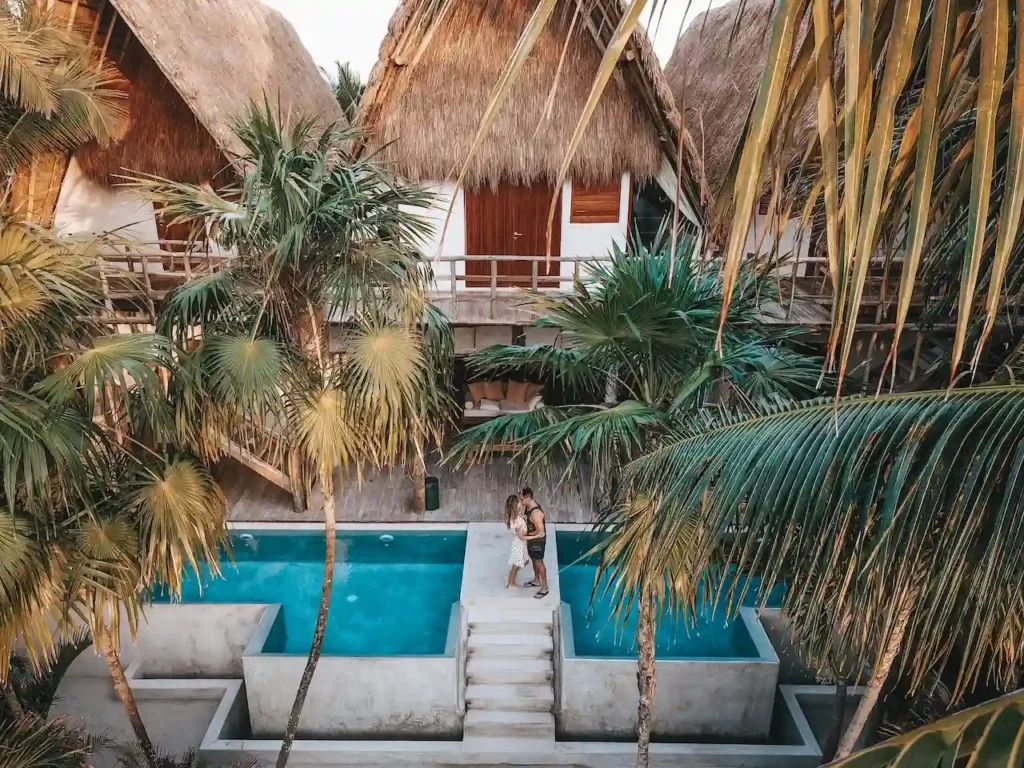
- Splurge: Azulik – the famous treehouse eco-resort. No electricity, no A/C, but stunning. From $400/night.
Aldea Zama
A newer residential area between the town and the beach. Quieter, safer, and good for longer stays or families. Many Airbnbs.
- Recommendation: Aldea Zama Lofts on Airbnb – full apartments with kitchen and pool, from $60/night.
Best Places to Eat in Tulum – No Tourist Traps
The best places to eat in Tulum are not on Instagram. They’re in town, on street corners, in markets. Here’s my curated list:
Breakfast:
- Del Cielo Bakery (Pueblo) – incredible sourdough, pastries, breakfast sandwiches. 60-120 pesos ($3-6).
- Taquería La Chiapaneca (Pueblo) – cheap, fast, delicious. Three tacos for 30 pesos ($1.50). Get the chorizo.
Lunch:
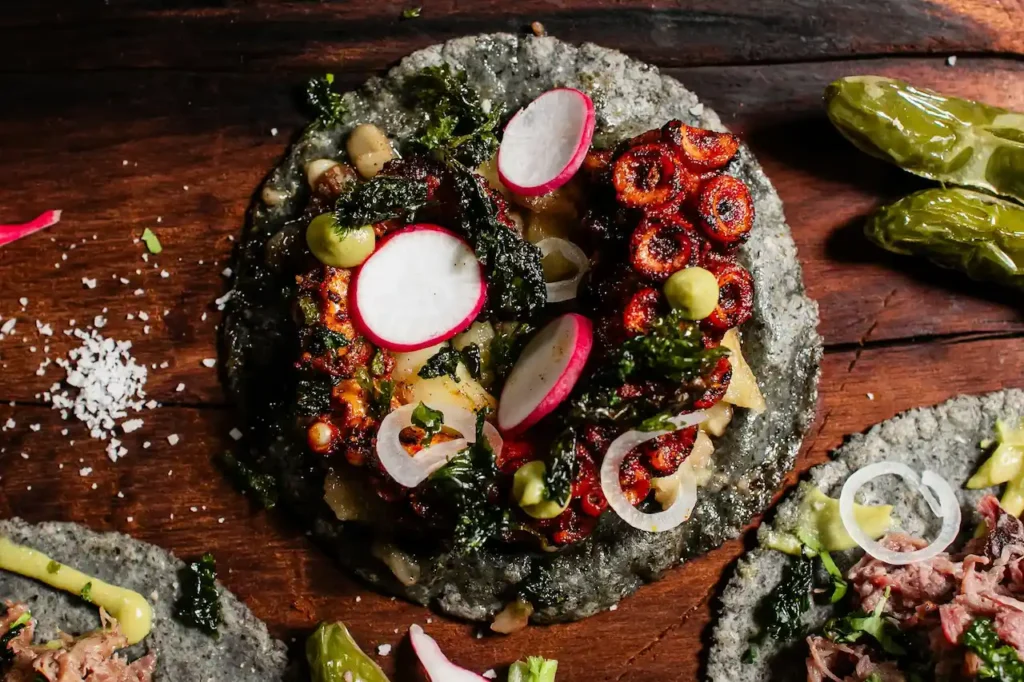
- Antojitos La Chiapaneca (Pueblo) – same family, but tlacoyos (stuffed masa cakes) and huaraches. 40-60 pesos ($2-3).
- El Camello Jr. – famous for seafood. A huge plate of fried fish or shrimp cocktail for 150 pesos ($7.50).
Dinner (casual):
- Burrito Amor – creative, huge burritos. 120-180 pesos ($6-9). The “Burrito Amor” with chicken, black beans, and chipotle sauce is my favorite.
- La Negra Tomasa – Mexican comfort food. Try the mole enchiladas or cochinita pibil. 180-250 pesos ($9-12).
Don’t Miss Out

Dinner (nicer):
- Kitchen Table – set in the jungle, with incredibly fresh ingredients. Reservations needed. 400-600 pesos ($20-30).
- Hartwood – world-famous, open-fire cooking. Hard to get a reservation, but worth it. 600-900 pesos ($30-45).
Dessert / Drinks:
- Matcha Mama (Beach Road) – açaí bowls and matcha. 120-180 pesos ($6-9).
- Casa Banana – owned by the same people as Hartwood, but easier to get into. Great cocktails and grilled meats.
Small tip: Bring your own reusable straw – many places in Tulum have banned plastic straws, and the paper ones get soggy.
How to Get Around Tulum
Getting from place to place in Tulum is half the adventure. Here’s what works.
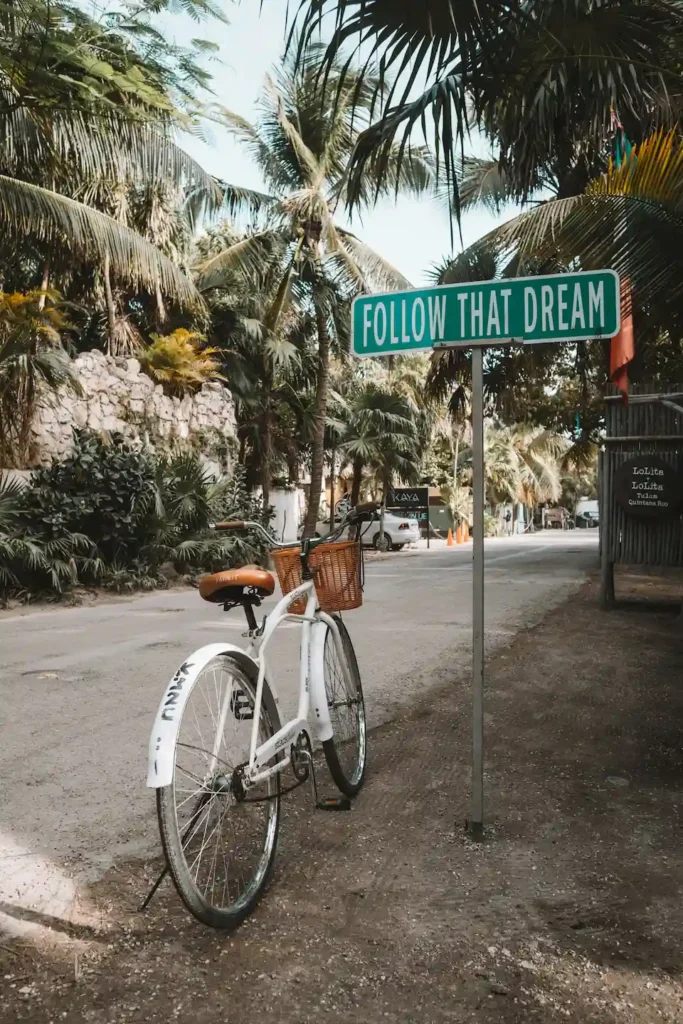
- Bicycle – The best way for short distances (town to beach is 3-5 km). Rentals cost 100-150 pesos ($5-7) per day. Many hotels include free bikes. The bike path along the main road is good, but the beach road is bumpy and dusty. Wear a helmet.
- Scooter – More freedom, faster. Rentals cost 250-400 pesos ($12-20) per day. You can explore cenotes and ruins easily. If you’re not experienced, practice first – the roads have speed bumps (topes) every few hundred meters.
- Colectivo – White vans that run along Highway 307. They cost 20-40 pesos ($1-2) and go to the ruins, cenotes, and down to the beach road. Wave them down like a bus. Cheap and effective, but they don’t go deep into the hotel zone.
- Taxi – The most expensive option. A trip from town to the beach costs 150-250 pesos ($7-12). Always agree on the price before getting in. Taxis in Tulum have a reputation for overcharging – be firm.
- Rent a car – If you plan to explore the whole Riviera Maya (Coba, Chichén Itzá, cenotes), a car is worth it. Rent through a reputable company like Easy Way or Avant. Expect $30-50 per day plus insurance. Important: Take a video of the car before you drive off – insurance scams are common.
My choice: Bicycle for short trips, colectivo for ruins/cenotes, and a taxi only when I’m tired or it’s dark. And always carry a portable phone charger – using GPS and taking photos drains your battery fast.
Best Time to Visit Tulum
Tulum has two main seasons: dry and rainy. Here’s the breakdown.
- Peak dry (December – April):
- Weather: Sunny, low humidity, perfect.
- Crowds: Very crowded.
- Prices: Highest.
- Shoulder (May – June):
- Weather: Hot, occasional rain, still good.
- Crowds: Moderate.
- Prices: Moderate.
- Rainy (July – October):
- Weather: Hot, humid, afternoon storms, hurricanes possible.
- Crowds: Low.
- Prices: Lowest.
- Sweet spot (Late November, May):
- Weather: Best weather + fewer crowds.
- Crowds: Medium.
- Prices: Medium.
My recommendation: Visit in late November (after the rainy season ends but before the Christmas crowds) or May (after Easter, before summer heat peaks). You’ll get near-perfect weather and manageable crowds.
Avoid: March and April (Spring Break – insane crowds and prices) and September/October (peak hurricane risk).
What to Pack for Tulum
Tulum is casual but stylish. You can wear shorts and sandals almost everywhere, even at nice restaurants. But there are a few essentials.
- Reef-safe sunscreen – mandatory for cenotes and the ocean. This one is great.
- Bug spray – the jungle has mosquitoes, especially at dawn and dusk. Bring DEET-free repellent or use natural citronella.
- Water shoes – for rocky beaches and cenotes. These are affordable and durable.
- Lightweight long-sleeve shirt – for sun protection and cenotes (where sunscreen is banned).
- Dry bag – for phone, wallet, and keys at the beach or cenote. A 5-liter dry bag is perfect.
- Power bank – as mentioned. You’ll be out all day.
- Reusable water bottle – tap water is not drinkable in Tulum, but many hotels and restaurants have filtered water stations. A bottle with a filter saves money and plastic.
- Cash – Many small restaurants, colectivos, and market stalls don’t take cards. ATMs are available but sometimes run out of cash. Best to withdraw in Tulum Pueblo.
How Much Does a Tulum Vacation Cost?
Tulum is more expensive than other parts of Mexico, but you can still do it on a budget. Here’s a realistic daily breakdown for a budget traveler (not including flights):
- Accommodation (dorm or budget hotel): $15-30
- Food (street food and market stalls): $10-15
- Transport (bike rental and colectivos): $5-10
- Activities (one ruin or cenote per day): $10-25
- Total per day: $40-80
Don’t Miss Out

For a more comfortable mid-range trip (private room in town, nice dinners, tours):
- Accommodation: $50-100
- Food: $20-35
- Transport: $10-20 (scooter rental or taxis)
- Activities: $25-50
- Total per day: $105-205
Yes, you can spend $500 a day at a luxury beach resort. But you don’t need to. My 5-day trip to Tulum (including flights from the US) cost me about $600 total. I stayed in hostels, ate tacos, biked everywhere, and had an incredible time.
Is Tulum Worth It?
I went to Tulum expecting a fake, overpriced, Instagram-obsessed nightmare. I found a place that is genuinely beautiful, surprisingly wild, and full of energy. Yes, the beach road is overdeveloped, and the prices have risen. But the ruins are real. The cenotes are magical. The jungle is alive. And the food is among the best in Mexico.
The 5 spots I’ve shared – the cliffside ruins, Playa Paraíso, Gran Cenote, Sian Ka’an, and the secret beach below the castle – are the heart of Tulum. They’re the reason millions of people visit every year. And they’re the reason I’ll go back.
So if you’re planning a Tulum vacation, ignore the haters. Go. See it for yourself. Bring your camera, but don’t forget to put it down sometimes. Float in a cenote. Eat a taco. Watch the sunset from the beach. And let Tulum break your Instagram – in the best possible way.