
- This article contains affiliate links. I may receive a commission if you purchase from them, at no extra cost to you.
When most people think of Brazil, they imagine Rio’s Christ the Redeemer, Copacabana beach, and maybe the Amazon. And those are incredible. But Brazil is so much bigger than its postcards. I learned that on a trip where I decided to squeeze the iconic sights and a few off-the-radar spots into just four days. It was intense, it was beautiful, and it completely changed how I see this country.
This Brazil itinerary is for travelers who want to see the soul of Rio and escape the crowds to discover something unexpected. You’ll hike through tropical forests, stand in awe of giant statues, swim in waterfalls that aren’t on every Instagram feed, and eat food that will ruin you for all future steaks. And you’ll do it all in four days without losing your mind.
Let me show you my perfect Brazil trip itinerary – a mix of world-famous landmarks and hidden gems that most tourists miss.
Table of contents ⇅
Quick Overview of This 4 Day Brazil Itinerary
Here’s what each day looks like at a glance:
Day 1: Arrive in Rio de Janeiro, check into a hotel in Santa Teresa or Botafogo, visit the Selarón Steps, take the bondinho (cable car) up Sugarloaf Mountain for sunset, enjoy a churrascaria dinner.

Day 2: Early morning hike to Christ the Redeemer (before the crowds), explore the Botanic Garden, then take a local bus to the hidden gem – Pedra do Telégrafo for a ridiculous cliff photo, followed by sunset at Prainha Beach.
Day 3: Day trip to a hidden waterfall paradise: Cachoeira do Horto (within Tijuca Forest) or venture further to the stunning, less-visited Escadaria do Pai Inácio. Includes a local street food lunch. Return to Rio for samba night.
Day 4: Morning in the historic port area (Porto Maravilha), including the colorful Olympic murals and the futuristic Museum of Tomorrow, then transfer to the airport for departure.
But let me break it down day by day with all the details you actually need: where to sleep, what to eat, how much it costs, and the little secrets that make it special.
Practical Tips for This Brazil Travel Itinerary
Best Time to Visit Brazil for This Itinerary
Brazil is massive, but for Rio and the surrounding areas (which are in the southeastern region), the best months are April to October. That’s the dry season in Rio. You’ll get sunny days, lower humidity, and cooler temperatures (70-80°F / 21-27°C).
- June to August is winter in Brazil, but in Rio it feels like a pleasant summer. Nights can be a bit cooler (60°F / 15°C), so bring a light jacket.
- December to March is summer – hot, humid, and rainy. It’s also peak tourist season (Carnival is in February or early March). Prices skyrocket, and lines are insane. I recommend avoiding February if you don’t like crowds.
- The sweet spot: Late April (after Easter) and September (before the October school holidays). Fewer tourists, pleasant weather, and lower prices.

Safety in Rio – What You Actually Need to Know
Let’s talk about safety because everyone asks. Rio has a bad reputation, but most tourists have a perfectly safe time if they follow a few simple rules.
- Do not wear flashy jewelry or expensive watches. Leave the Rolex at home.
- Keep your phone in a zipped pocket or a cross-body anti-theft bag. Don’t walk around holding it out.
- Avoid empty streets at night. Stick to well-lit, busy areas like Copacabana, Ipanema, Leblon, and Santa Teresa (at night, take an Uber).
- Do not hike alone on poorly marked trails. Stick to popular ones like the Christ Trail or Sugarloaf.
- Use Uber instead of hailing taxis on the street. It’s cheaper and safer.
- Carry only enough cash for the day. Leave your passport in the hotel safe.

Honestly, I felt safer in Rio than in parts of San Francisco or Paris. Just be smart.
Money & Costs for Your Brazil Vacation Itinerary
Brazil’s currency is the Brazilian Real (BRL). As of this writing, $1 USD ≈ 5.5 BRL. I’ll use BRL for local costs and show USD approximations.
Brazil is not as cheap as Bolivia or Peru, but it’s still affordable compared to Europe or the US. Here’s what you can expect to spend per day on a budget:
- Budget accommodation (hostel dorm): 50-80 BRL ($9-15)
- Mid-range hotel (private room, guesthouse): 150-250 BRL ($27-45)
- Sit-down meal (local restaurant): 25-40 BRL ($5-7)
- Churrascaria (all-you-can-eat steakhouse): 80-120 BRL ($15-22)
- Street food snack (coxinha, pastel): 5-10 BRL ($1-2)
- Beer at a boteco (local bar): 6-10 BRL ($1-2)
- Uber ride across town: 15-30 BRL ($3-5)
- Bus fare: 4.50 BRL ($0.80)
For this 4-day itinerary, excluding flights, I spent around 600 BRL ($110) on food, local transport, and attractions.
Add accommodation – say 4 nights at a decent guesthouse for 200 BRL/night (800 BRL total) – and you’re looking at roughly 1,400 BRL ($255) for the whole trip. That does not include your flight to Brazil, but once you’re in Rio, it’s very manageable.
What to Pack for This Brazil Itinerary
You’ll be doing a mix of city walking, hiking, and beach time. Pack light.
- Lightweight hiking shoes or sturdy sneakers – you’ll need grip on the trails.
- Swimsuit – for beaches and possibly waterfalls.
- Quick-dry towel – hostel pools and day trips.
- Sun protection – high-SPF sunscreen, a hat, and polarized sunglasses.
- Light rain jacket – even in the dry season, afternoon showers happen.
- Portable phone charger – you’ll use maps and take many photos. A power bank is essential.
- Universal adapter – Brazil uses Type N outlets (three round prongs) and sometimes Type C. A universal adapter covers you.


Day 1: Iconic Rio – Sugarloaf & Santa Teresa Magic
Your Rio de Janeiro itinerary starts right.
Morning – Arrival and Check-In
Fly into Rio’s Galeão International Airport (GIG) or Santos Dumont (SDU). SDU is closer to the city and much smaller – I prefer it.
From the airport, take a prepaid taxi or Uber. Uber from GIG to Zona Sul (Copacabana/Ipanema/Santa Teresa) costs about 40-60 BRL ($7-11). Don’t take the random touts offering rides – stick with the official app.
Where to stay in Rio for this itinerary:
I recommend two neighborhoods – Santa Teresa (bohemian, hilly, artsy) or Botafogo (central, cheaper, near the metro).
- Budget hostel: Books Hostel in Botafogo – very social, clean, good kitchen. Dorm bed 50 BRL ($9).
- Mid-range guesthouse: Casa Clara in Santa Teresa – beautiful views, breakfast included. Private room 180 BRL ($33).
- Splurge (but still decent): Mama Ruisa – a boutique hotel in Santa Teresa with incredible style. 350 BRL ($65).
Our Favorite Hotels in
📍 Rio de Janeiro
Late Morning – Escadaria Selarón (Selarón Steps)
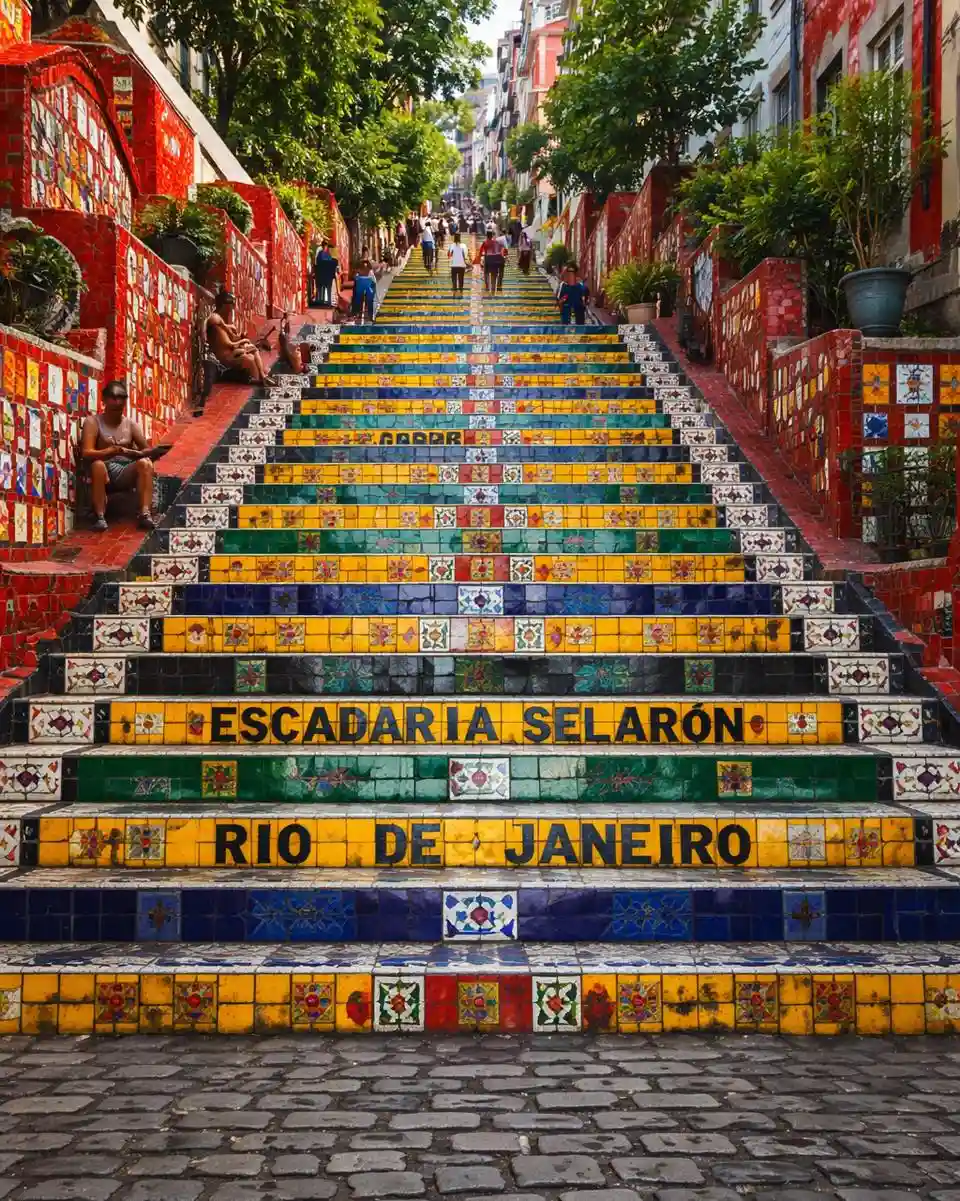
Start at the famous Selarón Steps, located between the neighborhoods of Lapa and Santa Teresa. The Chilean-born artist Jorge Selarón spent over 20 years covering the 215 steps with tiles from all over the world – over 2,000 tiles in more than 60 countries’ colors. He called it “my tribute to the Brazilian people.”
What to look for: A tile from your own country if you can find it. I spent 20 minutes hunting for a US tile (it’s there, near the top). Also, look for Selarón’s own painted panel of a pregnant Black woman – that’s his signature.
Cost: Free.
Time needed: 30-45 minutes.
Tip: Go early (before 10 AM) to avoid the crowds. By noon it’s a zoo.
Lunch – Lapa’s Best Boteco
From the steps, walk five minutes to Bar do Gomes. This unassuming corner bar has been serving Rio’s best bolinho de bacalhau (codfish fritters) for decades. Order two fritters, a cachaça (sugarcane liquor) or a cold cerveja (beer), and just watch the neighborhood wake up. Cost: around 20 BRL ($3.50) for a satisfying snack.
If you want something heartier, walk to Casa da Sueli, a tiny family restaurant with a prato feito (complete meal of rice, beans, steak, farofa, salad, and fried egg) for 25 BRL ($4.50). It’s ridiculously good.
Afternoon – Sugarloaf Mountain (Pão de Açúcar)
Take a taxi or Uber to the base of the Sugarloaf cable car at Praia Vermelha (Red Beach). The cable car goes in two stages: first to Morro da Urca (220m), then to the top of Sugarloaf (396m).





Cost: 160 BRL ($29) round-trip – one of the more expensive attractions in Rio. But the view is worth it.
Best time to go: Late afternoon, aiming to be at the top about 1 hour before sunset. You’ll see the sun set behind the mountains, the Christ statue glowing in the distance, and the city lights turning on. It’s magical.
Curiosity: The cable car was opened in 1912, making it the third cable car in the world and the first in Brazil. The second-stage car holds 65 people and rotates 360 degrees for a panoramic view on the way up.
📌 Book Your Tickets Here
Hidden gem: Instead of the cable car, you can hike up Morro da Urca for free (30 minutes, easy trail). But you still need to pay for the second-stage cable car to the top, or you can just enjoy the lower viewpoint. I recommend paying for the whole thing – it’s once in a lifetime.
Evening – Dinner in Santa Teresa
After sunset, take an Uber (10 BRL) to Santa Teresa for dinner. This neighborhood is famous for its winding cobblestone streets, colonial mansions, and fantastic restaurants.
My recommendation: Aprazível. It’s set in a beautiful old house with a terrace overlooking the bay. The food is modern Brazilian with a seasonal tasting menu. It’s not cheap – expect 100-150 BRL ($18-27) for a full meal with drinks – but it’s a special experience. Reservations recommended.
Cheaper alternative: Tasca do Chico – authentic petiscos (small plates), live samba on certain nights, laid-back vibe. A meal costs 40-60 BRL ($7-11).
Day 1 total cost (budget to mid-range):
- Uber from airport: 50 BRL
- Hostel dorm: 50 BRL
- Lunch: 25 BRL
- Sugarloaf: 160 BRL
- Dinner: 60 BRL
- Total: 345 BRL ($63)
Day 2: Christ the Redeemer, Botanical Garden & Hidden Cliff
Today you hit the big one – Cristo Redentor – but with a twist: we’re beating the crowds and then escaping them entirely.
Morning (7 AM) – Christ the Redeemer (Cristo Redentor)
The official ticket for the train up Corcovado Mountain costs 90 BRL ($16.50) round-trip. The train departs from the Cosme Velho station. Buy your tickets online in advance – the website works fine. The train leaves about every 30 minutes, starting at 8 AM.

Alternative (cheaper, more active): Hike the Parque Lage trail – a 3.5 km (2.2 miles) trail through Tijuca Forest that ends at the base of the statue. It’s a bit steep but doable in 1.5 hours. You still need a ticket for the final elevator/access to the statue (about 20 BRL). I’ve done both; the hike is more rewarding, but save it for a day when you have more time.
Once you’re up there, the statue is 30 meters tall (plus 8 meters of pedestal). The outstretched arms span 28 meters. It was completed in 1931 and was declared one of the New7Wonders of the World in 2007.
📌 Book Your Tickets Here
Don’t miss: The view from the opposite side of the statue – you can see the Rodrigo de Freitas Lagoon, Ipanema, and the mountains. Also, there’s a small chapel inside the pedestal (the Chapel of Our Lady of Aparecida). It’s often overlooked.
Late Morning – Botanical Garden (Jardim Botânico)
From Cosme Velho, take a 10-minute Uber to the Botanical Garden (15 BRL). Entrance is 15 BRL ($2.70). This is not a typical botanical garden – it’s a massive, lush park with 8,000 species of plants, many from the Amazon and Atlantic forests.
Must-see highlights:
- The avenue of imperial palms – 140 palm trees planted in the 1840s, towering 30 meters high.
- The Japanese garden with koi ponds and a bamboo forest.
- The Orchid House (over 300 species).
- The Victoria amazonica water lilies – they grow large enough to hold a small child.
- The lizard sightings – you’ll see many iguanas and tame lizards lounging on the paths.
Curiosity: The garden was founded in 1808 by King Dom João VI of Portugal, who arrived in Brazil fleeing Napoleon. He created it to acclimatize spice plants from Asia. The imperial palms were planted to mark the opening of the first public walkway.
Lunch – Aconchego Carioca (Local Favorite)
Exit the garden and walk to Aconchego Carioca on Rua Jardim Botânico. This is a boteco (Brazilian pub) with incredible petiscos. Their signature dish is bolinho de carne seca (dried meat croquettes with goat cheese). Another must-try is the pastel de camarão (shrimp pastry). A meal for two with beer costs 60-80 BRL ($11-15).
Afternoon – Hidden Gem: Pedra do Telégrafo
Now for the hidden gem that most tourists miss. Pedra do Telégrafo is a rock formation at the western edge of Rio, near Barra da Tijuca.

It’s famous for a very specific photo: you climb onto a ledge hanging over a cliff, and the angle makes it look like you’re dangling 1,000 feet above the ocean. It’s totally safe – the rock is wide and flat.
How to get there: From the Botanical Garden, take an Uber to Barra de Guaratiba (30-40 minutes, 35 BRL). The trailhead is at Ilha da Gigoia. The hike is moderate, about 1 hour uphill, well-marked. Wear good shoes.
Timing: Start the hike around 2 PM. You’ll reach the rock around 3 PM, wait in a short line (the local photographer queues people up), take your photo, and then you can continue to the top for a 360° view of the coast. The light is beautiful.
Cost: Free (no entrance fee). You pay the photographer a small tip (5-10 BRL) if you want them to take your photo with their camera. Or just use your phone – the queue system ensures everyone gets a turn.
Alternative (closer to Rio): If the hike sounds like too much, you can visit Mirante Dona Marta. It’s a viewpoint with a stunning, postcard-perfect view of Sugarloaf and the bay, often less crowded than Christ or Sugarloaf. Free, reachable by car or organized minibus.
Late Afternoon – Prainha Beach
After Pedra do Telégrafo, take a short Uber (15 BRL) to Prainha Beach. This is a small, cove-like beach surrounded by lush hills. It’s much quieter than Copacabana or Ipanema. The waves are strong, so swimming is for experienced ocean swimmers only – but the scenery is spectacular. Bring a drink, sit on the sand, and watch the sunset.
Evening – Return to Rio & Samba Dinner
Head back to Zona Sul by Uber (50 BRL, 45 minutes). Tonight, experience live samba. Pedra do Sal (in the neighborhood of Saúde) is the birthplace of samba. Every Monday and Friday night, a free street party happens with live samba rodas (circles of musicians).
It’s local, safe (go early, leave by 10 PM), and electric. Otherwise, Rio Scenarium in Lapa is a famous three-story club with antique decor and live samba – entrance 40 BRL ($7), drinks a bit pricey but worth it.
Day 2 total cost:
- Christ train: 90 BRL
- Botanical Garden: 15 BRL
- Lunch: 40 BRL
- Ubers to Pedra do Telégrafo & Prainha: 80 BRL
- Dinner/samba cover: 60 BRL
- Hostel: 50 BRL
- Total: 335 BRL ($61)
📌 Don’t Miss Out

Day 3: Hidden Waterfalls & Tijuca Forest Adventure
Today is all about escaping the city entirely and discovering a side of Rio that few travelers see.
Morning – Cachoeira do Horto (Waterfall within the City)
Did you know there’s a waterfall inside the Tijuca Forest, just 20 minutes from Ipanema? Cachoeira do Horto is a small but beautiful cascade that spills into a natural pool. It’s not well-known because the entrance is unmarked – you literally have to know where to go.
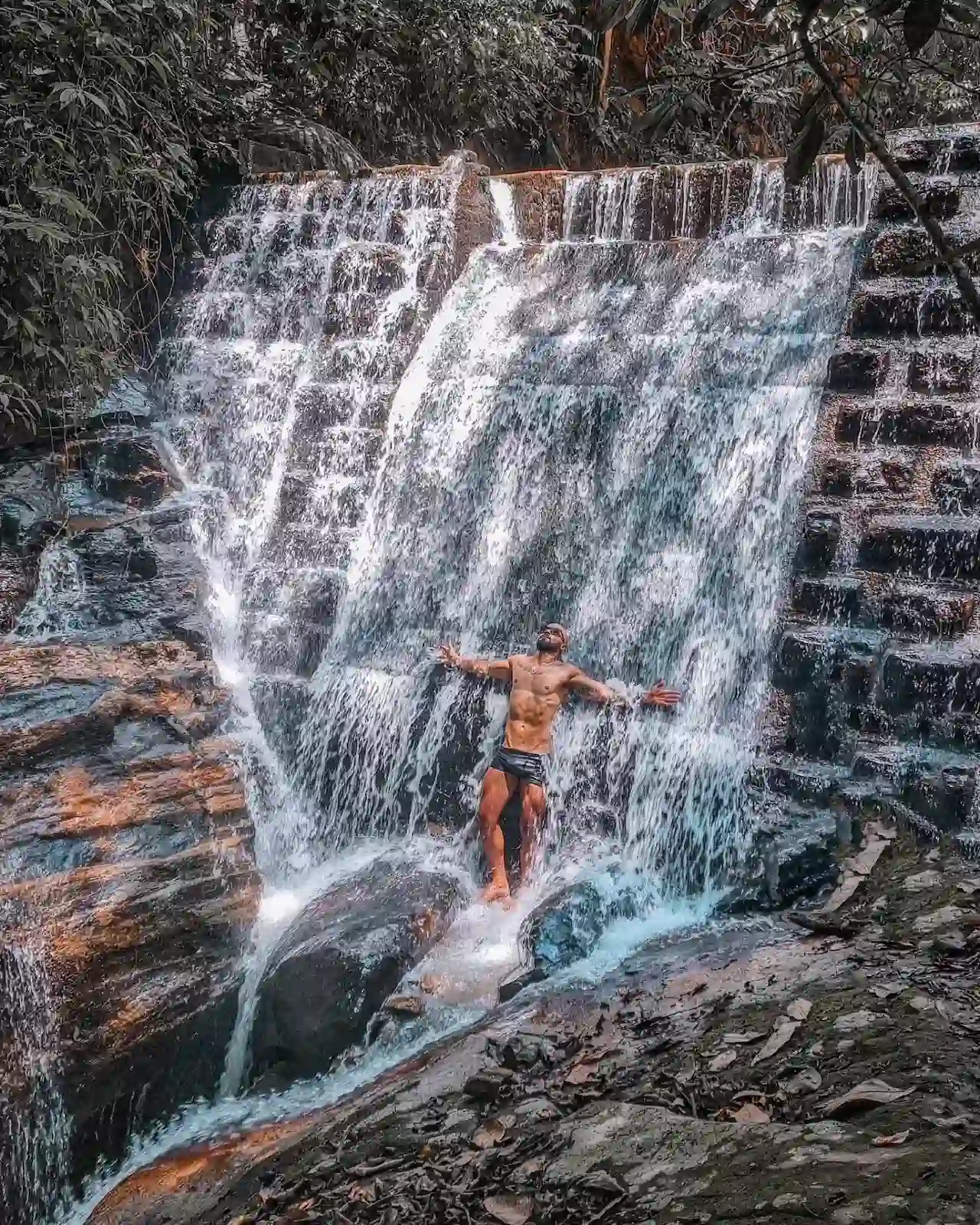
How to get there: Take an Uber to Horto Florestal (the neighborhood). Ask the driver to leave you at Estrada da Vista Chinesa, 2200. You’ll see a small gate and a path. Follow the trail for 10 minutes – you’ll hear the falls before you see them.
Cost: Free.
Best time: Morning, before the local families arrive with their coolers and speakers.
What to bring: Swimsuit, water sandals (rocks can be slippery), and a towel.
Curiosity: This area was once part of a coffee plantation. The waterfall’s water is clean and safe for swimming (locals drink from it further up, but I wouldn’t). The pool is not deep – about 1-2 meters – perfect for cooling off.
Late Morning – Hidden Gem: Mirante do Roncador (Ronnie Lessa Viewpoint)
From the waterfall, hike up a steep but short trail (15 minutes) to Mirante do Roncador, also known as the “Gávea Rock viewpoint.” This spot gives you a jaw-dropping view of the Gávea Rock, the Dois Irmãos, and the entire South Zone. It’s rarely crowded.
Lunch – Feira de São Cristóvão (Northeastern Market)
For a truly immersive experience, take an Uber to Feira de São Cristóvão (20 minutes from Horto). This massive indoor market is a cultural center for Brazil’s Northeast region – the food, music, art, and smells are incredible.
What to eat: Acarajé (deep-fried black-eyed pea balls stuffed with shrimp, vatapá, and caruru) – a Bahian specialty. One acarajé costs 15 BRL ($2.70). Also try baião de dois (rice with beans, cheese, and jerked beef) and caldo de cana (sugarcane juice). Walk around listening to live forró music. It’s chaotic and wonderful.
Cost: Lunch for 30-40 BRL ($5.50-7)
Afternoon – Optional: Escadaria do Pai Inácio (Hidden Staircase)
If you’re still hungry for more hidden gems, there’s a lesser-known staircase called Escadaria do Pai Inácio near Santa Teresa. It’s smaller than Selarón’s steps but completely covered in blue and white Portuguese tiles, creating a serene, almost Mediterranean vibe. It’s located at Rua Pai Inácio, 155. Free, quiet, and very photogenic.
Evening – Sunset at Arpoador Rock
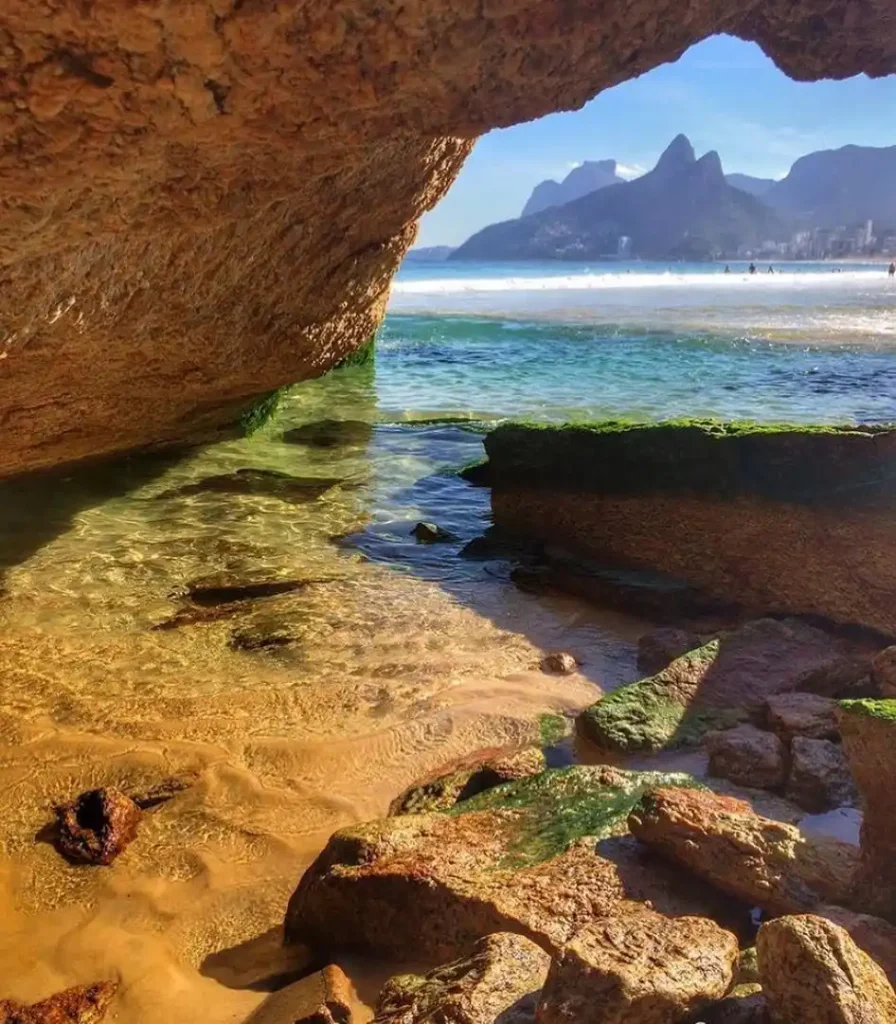
Head back to Ipanema for sunset at Arpoador Rock, the point between Copacabana and Ipanema beaches. This is where locals go to watch the sun dip into the ocean.
Arrive about 40 minutes before sunset, climb the rock (there are stairs), and join the crowd that cheers and claps as the sun disappears. It’s a Rio tradition.
After sunset: Walk along Ipanema’s sidewalk to Cervantes – a legendary sandwich shop open late. Their signature is the sanduíche de pernil (roast pork with pineapple and mozzarella). 30 BRL ($5.50). Cash only.
Day 3 total cost:
- Ubers: 40 BRL
- Market lunch: 35 BRL
- Sandwich: 30 BRL
- Hostel: 50 BRL
- Total: 155 BRL ($28)
Day 4: Porto Maravilha & Departure
Your last morning in Rio – let’s explore the revitalized port area.
Morning – Porto Maravilha (Marvelous Port)
The Porto Maravilha urban renovation project transformed Rio’s decrepit port district into a cultural hub.

Start at the Museum of Tomorrow (Museu do Amanhã) – a futuristic, spaceship-like building designed by Santiago Calatrava. The museum explores science, sustainability, and the future of our planet. It’s highly interactive.
Cost: 30 BRL ($5.50).
Time needed: 1.5 hours.
Curiosity: The building’s “spikes” move with the wind, and the structure reflects the lagoon below – it’s an architectural masterpiece.
Next, walk three minutes to the ArtRio–Olympic Boulevard, which is covered in enormous murals by artist Eduardo Kobra. The most famous is the “We Are All One” (Etnias) mural, depicting indigenous faces from five continents. It’s 15 meters high and 200 meters long – one of the largest street art murals in the world.
Hidden gem nearby: The Pedra do Sal (which we mentioned for samba) is also here – you can see it in daylight. And the Aquário Marinho do Rio (Aquarium) is excellent for families, but the ticket is 50 BRL.
Late Morning – The Real Hidden Gem: Ilha Fiscal
This is a deep cut. Ilha Fiscal is a Neo-Gothic castle on a tiny island in Guanabara Bay, visible from the Museum of Tomorrow but rarely visited. It was the site of the last Imperial Ball before the republic was proclaimed in 1889.
You can take a 30-minute boat tour from the marina (15 BRL) and tour the castle’s ornate halls, armory, and gardens. It’s like stepping into a 19th-century fairy tale.
Cost: 15 BRL for the boat + tour.
Opening hours: Wednesday to Sunday, from 10 AM to 4 PM. Check in advance.
Lunch – Confeitaria Colombo
From the port, take a 10-minute Uber to the Confeitaria Colombo in the city center (Rua Gonçalves Dias). This Belle Époque café opened in 1894 and looks like a palace of mirrors, stained glass, and carved wood.
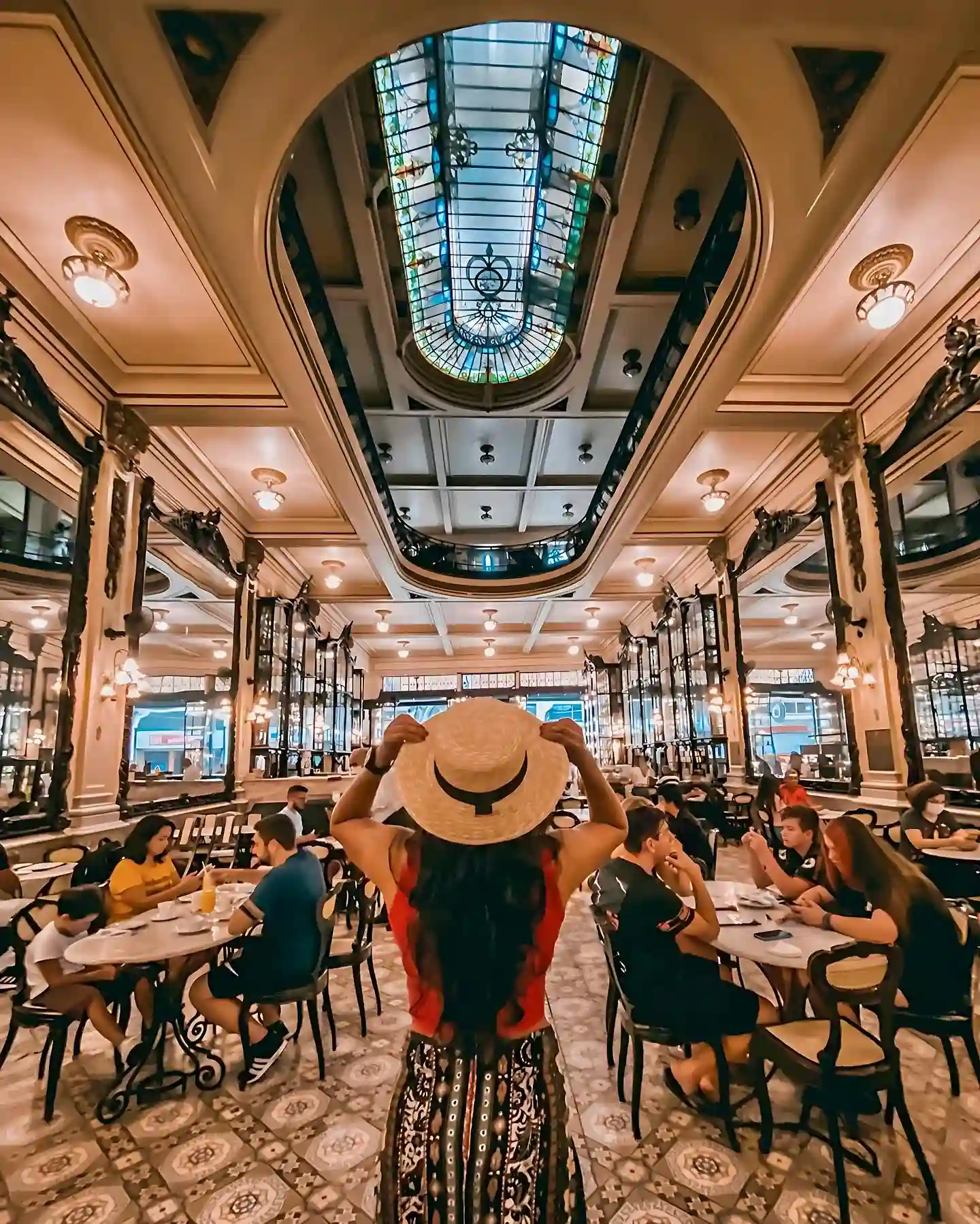
You can have a light lunch of pastéis (pastries) and coffee. A cafezinho and a pão de queijo (cheese bread) cost 15 BRL. Sit in the main hall, not the back annex – the architecture is the point.
Afternoon – Transfer to Airport
Depending on your flight time, you have two good options:
- If you have 3+ hours: Visit the Parque Lage (free) at the foot of Corcovado. It’s a mansion turned art school with a beautiful courtyard and a café in the garden. You can see the Christ statue looming above. Easy to reach from Zona Sul.
- If you’re short on time: Head straight to Santos Dumont (SDU) or Galeão (GIG). Uber to SDU costs 25 BRL from Zona Sul; to GIG costs 60-80 BRL.
Day 4 total cost:
- Museum of Tomorrow: 30 BRL
- Ilha Fiscal boat: 15 BRL
- Lunch: 20 BRL
- Uber to airport: 60 BRL
- Total: 125 BRL ($23)
Total Cost for This 4 Day Brazil Itinerary
Add up the daily totals (mid-range, single traveler, private room in guesthouse):
- Day 1: 345 BRL
- Day 2: 335 BRL
- Day 3: 155 BRL
- Day 4: 125 BRL
- Accommodation (4 nights at 150 BRL/night): 600 BRL
Total: 1,560 BRL ($285 USD)

That’s incredibly affordable for a 4-day trip to Rio, including the main attractions, a hidden gem waterfall, cliff photos, and great food. If you choose a fancier hotel or more expensive restaurants, double it – but you’ll still be under $600.
Flights to Rio from the US can be found for $500 – $700 round-trip from major hubs (Miami, Fort Lauderdale, Houston, Atlanta). So a week in Brazil, including airfare, can be done for $1,000-1,200 – a steal.
📌 Don’t Miss Out
More Hidden Gems in Rio | If You Have Extra Time
If you can stretch to 5 or 6 days, here are other off-radar spots I love:
- Praia do Abricó – Rio’s first official nudist beach (optional!), hidden behind a mountain in Grumari. A beautiful wild beach, even if you keep your clothes on.
- Solar do Jambeiro – a restored 19th-century mansion in Santa Teresa with cultural exhibits and a gorgeous garden. Free.
- Sítio Roberto Burle Marx – a UNESCO World Heritage site outside Rio, designed by the famous landscape architect. It’s a stunning garden with 3,500 species of plants. Requires a booked tour.
- Ilha de Paquetá – a car-free island in the bay, reached by ferry (1 hour). Rent a bike, ride past colonial mansions, and eat fresh fish. Perfect for a peaceful day away from the city.
Where to See Samba and Forró in Rio – A Quick Guide
- Pedra do Sal (Saúde) – Monday and Friday nights, free, very local. Go at 7 PM, leave by 10 PM.
- Rio Scenarium (Lapa) – Wednesday to Saturday, 30-50 BRL cover, historic three-story house with antiques. Tourist-friendly but authentic.
- Carioca da Gema (Lapa) – Tuesday to Saturday, smaller, intimate, great live samba. Cover 30 BRL.
- Feira de São Cristóvão – Northeastern forró every day, free entry, live music in the food court.
Is This the Best Brazil Itinerary for You?
This best Brazil itinerary is perfect for first-time visitors who want to see the icons but also crave authentic, off-the-beaten-path experiences. It’s not rushed – you’ll have time to breathe, eat, and absorb Rio’s unique energy.
This Brazil vacation itinerary is less suitable if you’re looking for luxury resorts, a nightlife marathon, or deep Amazon expeditions (you’d need a different trip). But for a long weekend or a quick addition to a larger South America destinations trip (like combining with Peru or Argentina), it’s unbeatable.
I left Rio wishing I had more time, but I didn’t feel cheated. I saw Christ the Redeemer without the crowds, climbed a rock for a hilarious vacation photo, swam in a forest waterfall, and ate food that made me close my eyes in pleasure. And I spent less than $300 on the ground.
You can do this. Book the flight, pack light, and fall in love with Brazil.
As an Amazon Associate, I earn from qualifying purchases. Last updated: 2026-10-25.
