
- This article contains affiliate links. I may receive a commission if you purchase from them, at no extra cost to you.
China is a country of superlatives—the world’s longest wall, the largest ancient palace, a civilization that stretches back five millennia. But the places that stopped me cold weren’t the ones I’d read about in guidebooks.
They were the ones who felt like the earth had forgotten it was supposed to be ordinary. A forest of stone pillars rising from a canyon so deep it clouds. A river that painted mountains in swirls of turquoise and gold. A monastery clinging to a cliffside like a prayer.
These eight amazing places in China will rearrange your sense of what’s possible.
Table of contents ⇅
1. Zhangjiajie National Forest Park – The Avatar Mountains
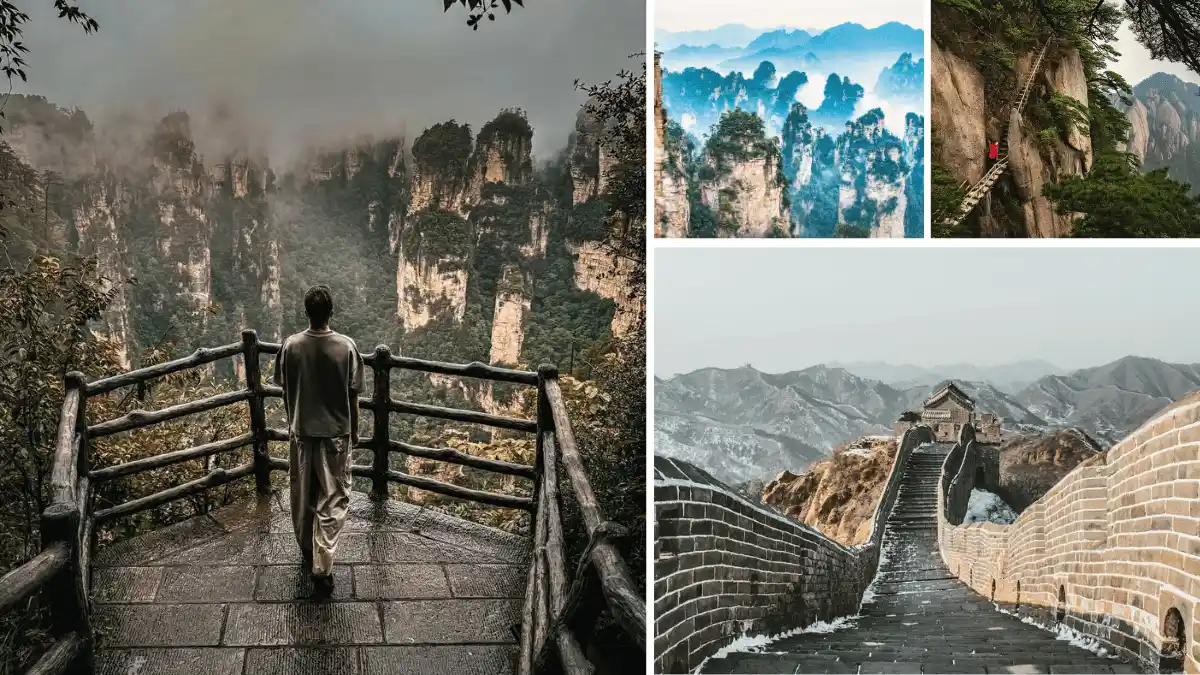
You’ve seen these peaks before—they inspired the floating Hallelujah Mountains in Avatar. But no screen can prepare you for standing at the edge of the Zhangjiajie sandstone pillars, watching clouds drift through valleys that drop 3,000 feet.
There are over 3,000 of these quartzite columns, some topped with pine trees that have clung to the rock for centuries.
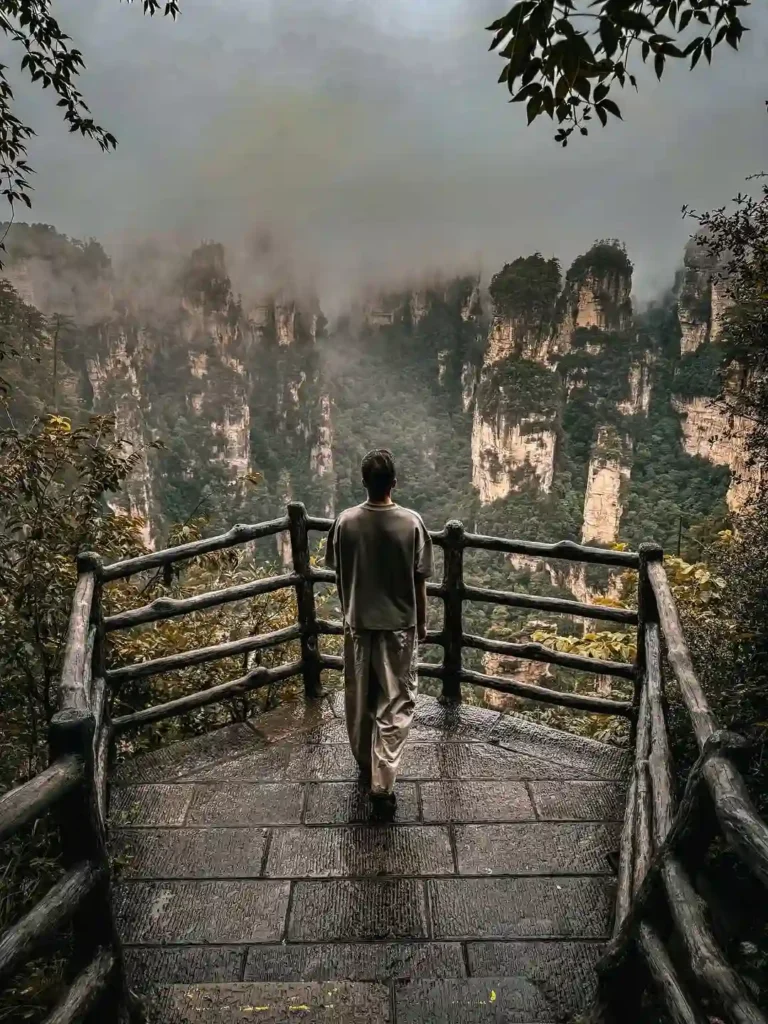
The Experience: The Bailong Elevator (the world’s tallest outdoor lift) shoots you up the side of a cliff in 90 seconds. Once on the mesa, you’ll walk the Grand Canyon Skywalk, a glass-bottomed bridge that lets you look straight down into the abyss.
For a quieter moment, hike the Golden Whip Stream trail—it winds through the canyon floor, with the towers rising on either side like silent guardians.
Where to Stay: Wulingyuan town is the gateway. Book a hotel near the east entrance to beat the tour buses.
2. Jiuzhaigou Valley – Fairyland on Earth
Jiuzhaigou is a valley of turquoise lakes, multi‑level waterfalls, and Tibetan villages that feel suspended in time. The water here is so clear you can see the submerged trees, their branches coated in calcium carbonate like white coral. In autumn, the surrounding hills explode in red, orange, and gold, reflecting in the pools below.
The Must‑See Spots: Five‑Flower Lake changes color with the angle of the sun—from emerald to sapphire to pale aquamarine. Nuorilang Waterfall is 320 meters wide, a curtain of white that seems to stretch forever. Long Lake sits at the highest elevation, often ringed by snow even in May.
Local Tip: The valley is at high altitude (up to 3,100 meters). Take it slow, drink water, and be prepared for cooler temperatures even in summer. The park’s shuttle buses are excellent—use them to hop between scenic points and save your energy for the short trails.
Product Recommendation: For capturing the vibrant colors of Jiuzhaigou, a lightweight travel tripod is a game‑changer. This compact tripod fits in a daypack and lets you take steady long‑exposure shots of the waterfalls.
3. The Great Wall at Jinshanling – The Wild Side
Everyone visits the Great Wall. Most go to Badaling or Mutianyu, where the Wall is restored, the crowds are thick, and the experience feels like a theme park.
The secret is Jinshanling, a section 130 km from Beijing where the Wall snakes across ridgelines for miles, unrestored and untamed. You can hike for hours and see only a handful of people.
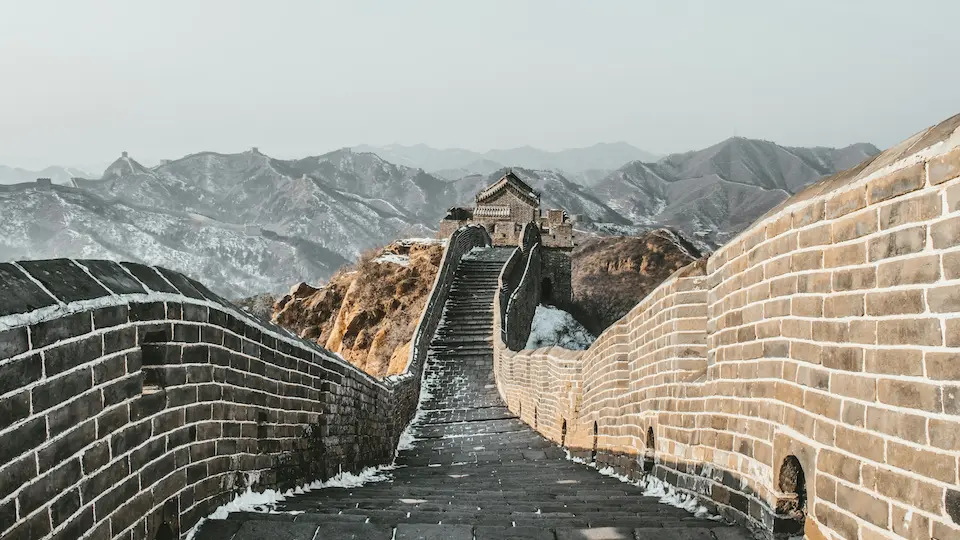
The Experience: Start at the east gate early in the morning. The Wall here is partially restored, partially crumbling, with watchtowers every few hundred meters. Walk west toward Simatai; the terrain is challenging, but the views—with the Wall disappearing into misty mountains—are the ones you came for.
Local Tip: Hire a local guide at the entrance. They’ll drive you to the best starting point, carry water, and share stories you won’t find in any book. Bring snacks—there’s nothing on the Wall itself.
4. The Li River & Guilin – The Ink‑Brush Landscape
The landscape around Guilin and Yangshuo is the one that adorns Chinese scrolls: limestone karsts rising like dragon’s teeth from the Li River, fishermen with cormorants on bamboo rafts, rice paddies that glow green after rain. It’s been inspiring poets for 1,300 years, and it still works.
The Experience: Take the 4‑hour river cruise from Guilin to Yangshuo. Sit on the top deck and watch the karsts drift by—each one has a name (Elephant Trunk Hill, the Nine Horses) and a legend. In Yangshuo, rent bicycles and ride through the countryside, past villages and fields, until you find a quiet spot to watch the sunset behind the peaks.
Local Tip: Avoid the cruise during Chinese national holidays (May, October). The river gets crowded, and the magic dims. Instead, consider a bamboo raft on a quieter stretch near Xingping—that’s the view on the 20‑yuan note.
5. Huangshan – The Yellow Mountains
The Yellow Mountains are China’s most celebrated mountain range, famous for “four wonders”: peculiarly shaped pines, dramatic rock formations, seas of clouds, and hot springs.
The peaks rise above 1,800 meters, and the landscapes are so otherworldly that generations of painters have tried (and failed) to capture them.
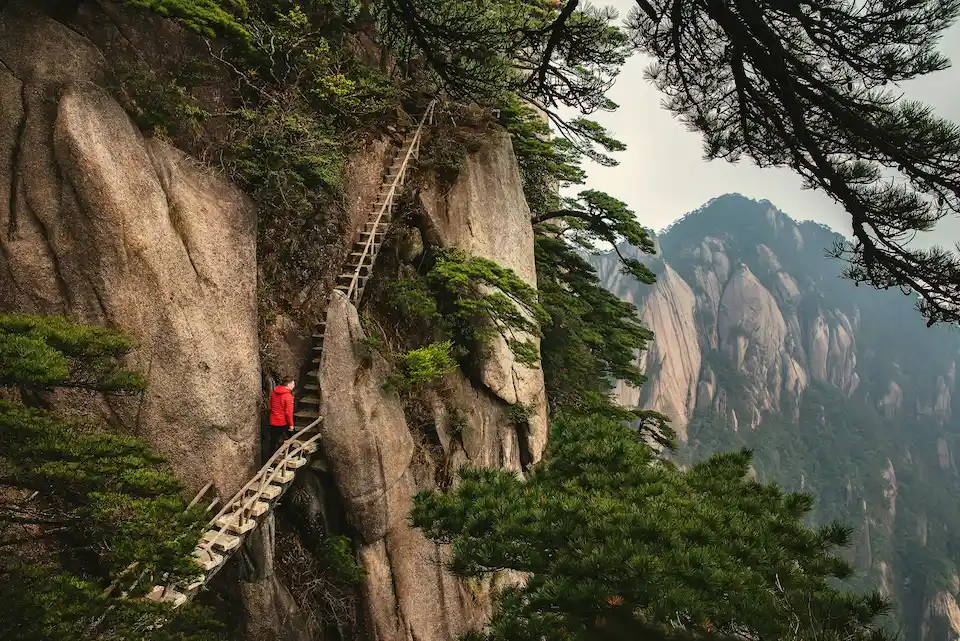
The Experience: Take the cable car up from the south gate. The real experience is the walk along the ridges between peaks, past pines that look like bonsai giants, through stone arches that open onto views of mist-filled valleys. Stay overnight on the mountain to catch sunrise from Lion Peak or Bright Summit.
Local Tip: Book a room at one of the mountaintop hotels well in advance—they fill up months ahead. The beds are basic, but waking up on the mountain, watching clouds roll below your window, is worth any discomfort.
Product Recommendation: A portable phone charger is non‑negotiable for a two‑day hike in Huangshan. This high‑capacity power bank will keep your phone alive for photos and maps.
6. The Leshan Giant Buddha – A Stone Sentinel
Carved into a cliff face where three rivers converge, the Leshan Giant Buddha is the largest stone Buddha in the world—71 meters tall, with ears long enough to hold a table for eight. Construction began in 713 AD and took 90 years.
Local legend says the Buddha was built to calm the turbulent waters that had claimed countless boats. After its completion, the rivers grew calm.
The Experience: Walk the narrow cliffside path that descends past the Buddha’s side, so you’re at eye level with his serene face by the time you reach the bottom. The scale is impossible to grasp from photos: his smallest fingernail could hold a person.
Visit early in the morning to avoid the crowds and midday heat. Combine it with a boat tour on the river for a view of the full statue from the water—the perspective is humbling.
7. Zhangye Danxia National Geological Park – The Rainbow Mountains
Most mountains are shades of gray and green. The Danxia mountains in Gansu province are striped in red, orange, yellow, white, and green—like a geological candy cane.
The colors come from layers of sandstone and mineral deposits laid down over 24 million years, then folded by tectonic forces into waves of rock.
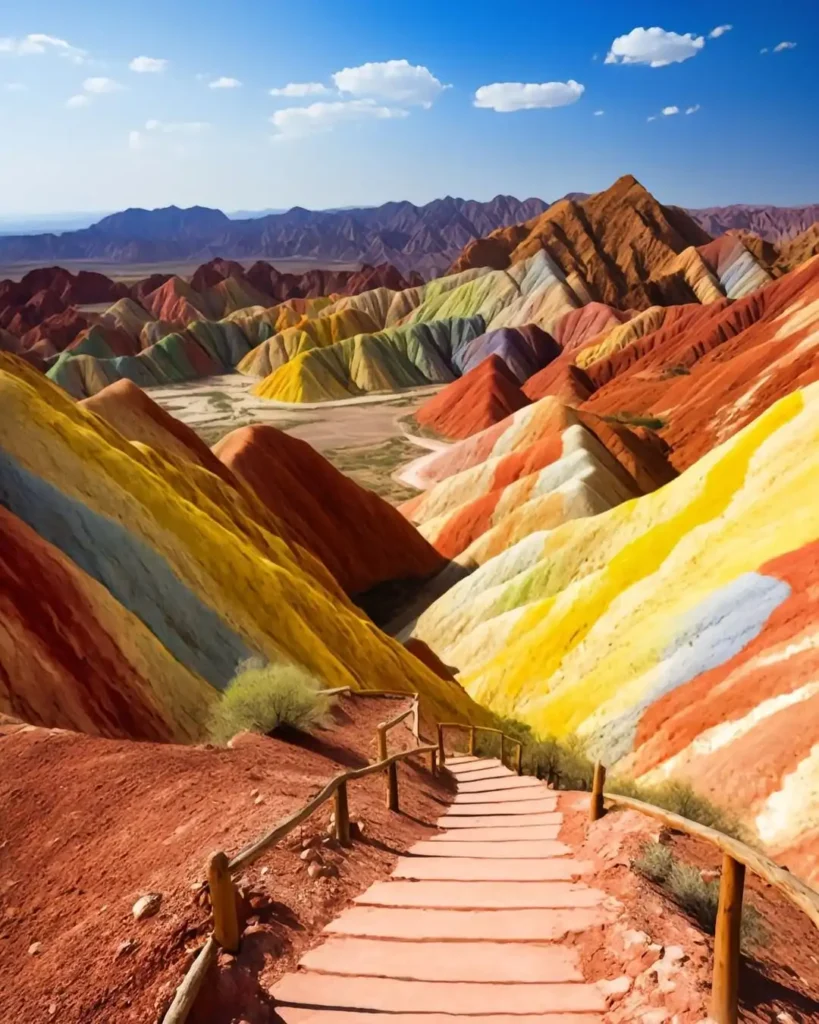
The Experience: The park has boardwalks that let you walk through the most vibrant sections. The light changes everything: early morning and late afternoon bring out the reds and oranges; midday can wash them out. The viewpoint at the top of the main ridge gives you the classic postcard shot.
Zhangye is remote. Fly into Zhangye Ganzhou Airport from Xi’an or Lanzhou, then take a taxi to the park. Stay overnight nearby so you can be at the gate when it opens—sunrise over the colored hills is worth the early start.
8. The Potala Palace & Lhasa, Tibet
At 3,700 meters, the Potala Palace rises above Lhasa like a fortress of faith. Thirteen stories of red and white stone, housing the winter quarters of the Dalai Lamas for centuries.
The climb to the top is a pilgrimage in itself—the air is thin, the stairs are steep, and every few steps you’ll stop to catch your breath and take in the view of the surrounding mountains.
The Experience: Walk the pilgrim path that circles the palace with Tibetans spinning prayer wheels, their murmured mantras mixing with the wind. Inside, you’ll see golden stupas, ancient thangkas, and the meditation cave of the 7th‑century king who first built a palace here.
You need a permit to enter Tibet. Book through a licensed tour operator well in advance, and plan to spend at least two days in Lhasa acclimatizing before attempting the Potala. Drink butter tea (it tastes better than it sounds) and take it slow.
When to Go & How to Travel
Seasons:
- Spring (April–May): Wildflowers, mild weather, fewer crowds. Ideal for Zhangjiajie, Guilin, and the Yangtze.
- Autumn (September–October): Clear skies, crisp air, and autumn colors. Perfect for Jiuzhaigou and Huangshan.
- Summer (June–August): Hot, humid, and crowded, but the high-altitude spots (Tibet, Jiuzhaigou) are pleasant.
- Winter (December–February): Cold, but the Great Wall can be dusted with snow—a magical sight.
Getting Around:
China’s high‑speed rail network is the best in the world. Trains connect most major cities and are faster, cheaper, and more comfortable than flying for routes under 1,000 km. For remote places like Zhangye and Jiuzhaigou, fly into the nearest regional airport and then hire a driver.
Don’t Miss Out
Staying Connected:
Traveling in China means navigating a different digital landscape—Google is blocked, maps are different, and translation apps are essential. Having reliable data is critical. Airalo offers an eSIM that works seamlessly across the country, so you’re not hunting for Wi‑Fi or wrestling with local SIM cards.
Packing for China’s Diverse Climates:
You might need everything from a down jacket (Tibet, Huangshan) to lightweight shirts (Guilin, Yangshuo). Layer, layer, layer. A good pair of walking shoes is essential—you’ll be on your feet far more than you expect.
Product Recommendation: A durable, comfortable backpack makes all the difference. This Osprey daypack has been with me through Zhangjiajie and the Great Wall; it’s light enough for day hikes but sturdy enough to carry water and layers.
These eight amazing places in China are not a checklist. They’re invitations to step into landscapes that feel like dreams. You’ll walk where poets walked, stand where ancient engineers moved mountains, and watch clouds drift through valleys that have looked the same for millions of years. China is vast, and a single trip can only scratch the surface. But these are the scratches that run deep.
Save this list. Book the tickets. Go find your own wonder.