- This article contains affiliate links. I may receive a commission if you purchase from them, at no extra cost to you.
Ireland does something to people. I’ve watched it happen to friends who arrived for a long weekend and started browsing property listings by day three. There’s a reason for that. It’s not just the postcard scenery—the green hills, the stone walls, the dramatic coastlines. It’s the way the light changes every ten minutes. It’s the sound of a fiddle drifting out of a pub door at 9 PM. It’s the way a stranger will stop to give you directions and end up telling you about their grandmother’s recipe for brown bread.
This Ireland itinerary is built around that feeling. Ten days is long enough to slow down, to stop rushing from photo spot to photo spot, and to actually settle into the rhythm of the country. You’ll start in Dublin, wind your way down through Kilkenny and Cork, trace the Ring of Kerry, cross the Dingle Peninsula, and finish along the Wild Atlantic Way in Galway and Connemara.
By the end, you’ll understand why people move here. And you might start looking at flights one-way.
Table of contents ⇅
Why This 10-Day Ireland Itinerary Works
Ireland looks small on a map. It isn’t.
The roads are narrow, the speed limits are optimistic, and a 90-kilometer drive can take you three hours if you’re stopping for photos, sheep, and a mid-morning scone. That’s why so many travelers try to see the whole island in a week and come home exhausted and vaguely disappointed.
This Ireland itinerary takes a different approach. It moves in one direction—roughly clockwise from Dublin, down through the southeast and southwest, up the west coast, and back across the middle. No backtracking. No wasted hours in the car.
You’ll cover the country’s greatest hits: Trinity College, the Rock of Cashel, Blarney Castle, the Ring of Kerry, the Dingle Peninsula, the Cliffs of Moher, Galway, and Connemara. But you’ll also hit the smaller, stranger, more memorable places—a woolen mill in a valley, a famine cottage on a hillside, a pub with no television and no music, just conversation.
The pace is deliberate. Some days are packed. Others leave room for the kind of wandering that Ireland rewards.
Day 1: Dublin – Arrival and First Impressions
Morning: Landing at Dublin Airport
Dublin Airport is compact and efficient by international standards, which is a blessing after a long flight. Immigration is usually quick for North American and EU passport holders, and baggage claim rarely takes more than twenty minutes.
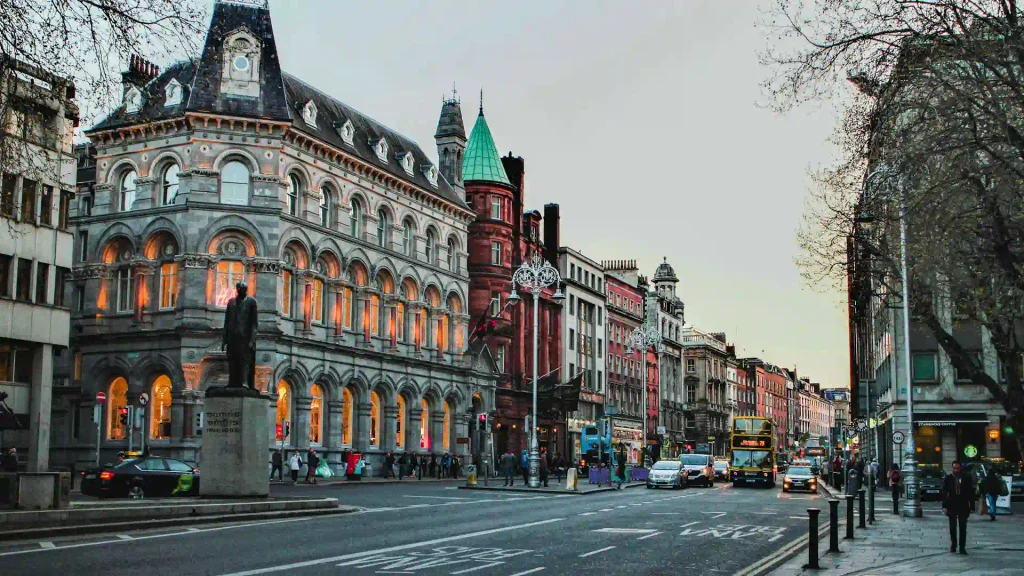
Getting into the city:
- Aircoach or Dublin Express – The most reliable options. Both run frequently to the city center and take 30–45 minutes depending on traffic.
- Taxi – Readily available outside both terminals. Expect 25–35 minutes to the city center.
- Public bus (Route 16 or 41) – The cheapest option, but slower and less convenient with luggage.
A quick word on money: Ireland uses the euro. Cards are accepted almost everywhere, including small pubs and cafés. But keep a bit of cash for rural markets, small shops, and the occasional pub that hasn’t updated its card machine since 2011.
Afternoon: Trinity College and the Book of Kells
Once you’ve dropped your bags, walk straight into the heart of the city. Trinity College is the perfect first stop—it’s ancient, it’s beautiful, and it immediately signals that you’re somewhere with real history.
What to see:
- The Book of Kells – A 9th-century illuminated manuscript of the Gospels, displayed in a dimly lit room that feels appropriately reverent. Book your timed ticket online in advance; walk-up queues can stretch for over an hour in summer.
- The Long Room – The library’s main chamber is one of the most beautiful rooms in Europe. Two hundred thousand books, a barrel-vaulted ceiling, marble busts of philosophers, and the smell of old paper. It’s genuinely breathtaking.
- The campus itself – Cobblestone squares, Georgian architecture, and students rushing between lectures.
Alternative afternoon: If you’re too jet-lagged for culture, walk down Grafton Street instead. It’s Dublin’s main shopping street, full of buskers, flower sellers, and the kind of street life that makes a city feel alive. Stop at Bewley’s Oriental Café for a coffee and a bun.
Evening: Temple Bar and a Proper Dublin Dinner
Yes, Temple Bar is touristy. Yes, the pints are expensive. Go anyway. It’s the gateway drug of Dublin nights, and the atmosphere on a first evening is genuinely hard to beat.
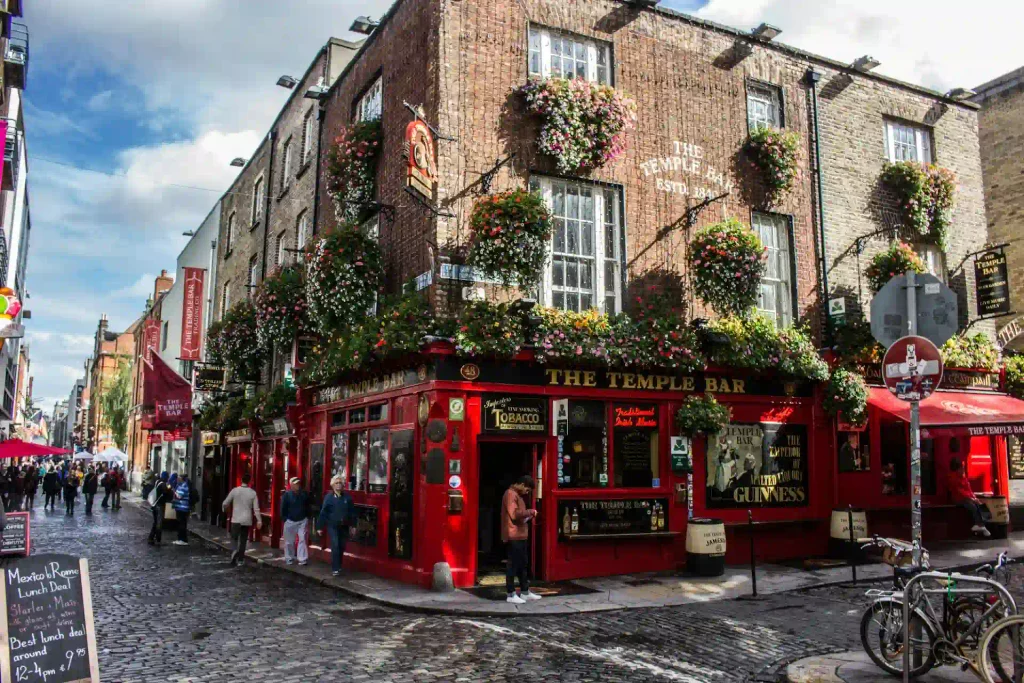
Dinner recommendation: The Winding Stair – A beloved restaurant overlooking the Ha’penny Bridge, serving modern Irish cooking with excellent local ingredients. The seafood chowder is a standout.
Alternative dining: The Church – A restaurant and bar inside a deconsecrated church. The setting is theatrical, the food is solid, and the Guinness is good.
What to order:
- Seafood chowder with brown bread
- Irish stew with lamb and root vegetables
- Guinness – Order it properly and wait for the pour. It takes about two minutes, and it’s worth it.
Where to Stay in Dublin
Handpicked Dublin Stays
The Shelbourne – Dublin’s most storied hotel, sitting directly on St. Stephen’s Green. The rooms are elegant, the service is formal but warm, and the location is unbeatable for exploring the city on foot. The afternoon tea in the Lord Mayor’s Lounge is a Dublin institution. Best for couples, special occasions, and travelers who want classic luxury. Its standout feature is the sense of history—this is where the Irish Constitution was drafted.
The Dean Dublin – A boutique hotel on Harcourt Street with a playful, design-forward personality. The rooms are compact but cleverly laid out, and the rooftop bar has one of the best views in the city. It’s ideal for younger travelers and couples who want style over formality.
The Wilder Townhouse – A beautifully restored Victorian townhouse in a quiet corner of the city center. Small, personal, and full of character. Excellent breakfast. Great for solo travelers and couples who want a quieter base.
Budget option: Jacobs Inn Hostel – Clean, well-run, and centrally located near Busáras. Private rooms are available alongside dorms. Perfect for backpackers and budget travelers.
Day 2: Dublin – History, Guinness, and the Real City
Morning: Kilmainham Gaol
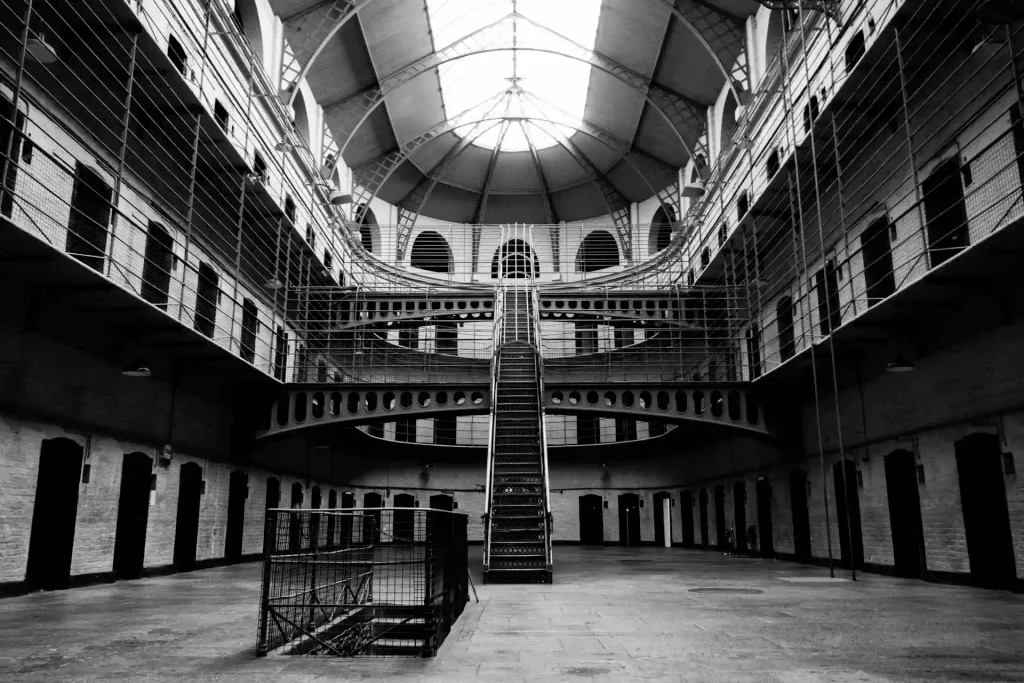
If you only do one historical site in Dublin, make it Kilmainham Gaol. This former prison held many of the leaders of the 1916 Easter Rising before their execution, and the tour is one of the most moving experiences in the country.

What to know:
- Admission is by guided tour only, and tickets sell out well in advance. Book online as soon as your dates are confirmed.
- The East Wing—a vast, echoing, glass-roofed hall—is architecturally stunning and historically haunting.
- The tour ends in the Stonebreaker’s Yard, where the leaders of the Rising were executed. It’s a quiet, powerful moment.
Late Morning: Guinness Storehouse
From Kilmainham, take a bus or taxi to St. James’s Gate for the Guinness Storehouse. It’s the most visited attraction in Ireland, and yes, it’s a corporate experience. But it’s also genuinely well done.
What to expect:
- A self-guided tour through seven floors covering brewing, history, advertising, and cooperage
- A tasting room where you learn to properly appreciate the four ingredients
- The Gravity Bar at the top, with a 360-degree view of Dublin and a complimentary pint included in your ticket
Lunch: A Proper Dublin Pub Lunch
Lunch recommendation: The Brazen Head – Officially the oldest pub in Ireland, dating back to 1198. The food is hearty, the atmosphere is legendary, and there’s live music most evenings.
Alternative: Gallagher’s Boxty House in Temple Bar – A great spot to try boxty, a traditional Irish potato pancake. The lamb boxty is excellent.
What to order:
- Boxty – Potato pancake filled with meat or vegetables
- Coddle – A Dublin working-class stew of sausages, bacon, and potatoes. Divisive, but essential.
- Beef and Guinness stew
Afternoon: St. Patrick’s Cathedral and Dublin Castle
Walk off lunch with a loop through the city’s historic core.
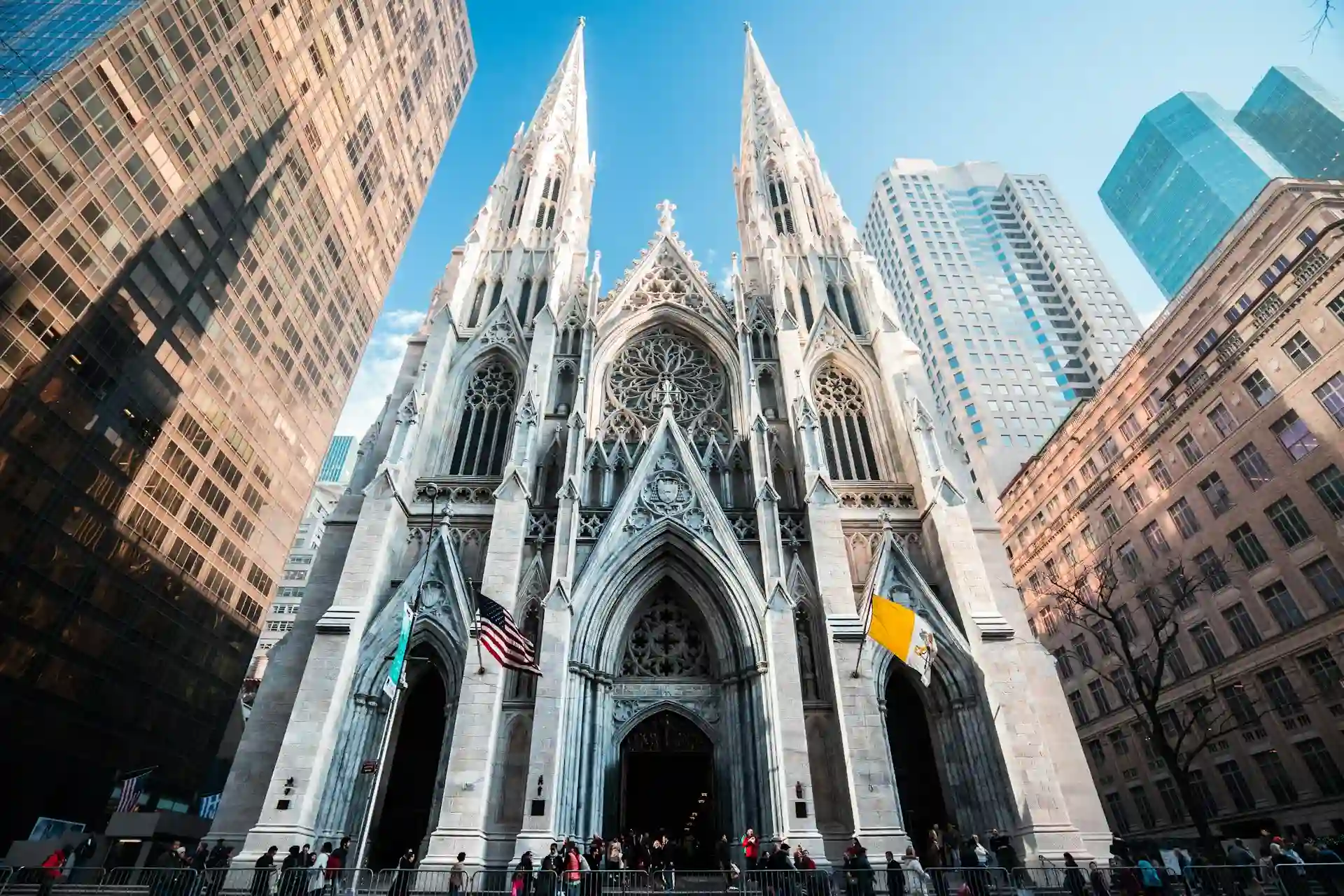
St. Patrick’s Cathedral is the largest church in Ireland and the burial place of Jonathan Swift, author of Gulliver’s Travels. The building is Gothic, atmospheric, and full of oddities—including a door with a hole in it, which once allowed lepers to receive communion.
Dublin Castle is a short walk away. The State Apartments are grand, the chapel is beautiful, and the underground excavations reveal Viking and Norman foundations.
Evening: Traditional Music in a Real Pub
Skip the Temple Bar prices tonight and head to a proper music pub.
Where to go:
- O’Donoghue’s on Merrion Row – A legendary spot for traditional music
- The Cobblestone in Smithfield – A musician’s pub, not a tourist pub. The sessions here are the real thing.
- Hughes’ Bar on Chancery Street – Small, dark, and perfect
Dinner recommendation: Etto – A small, excellent modern Irish restaurant on Merrion Row. Book ahead.
Alternative dining: Chapter One – Michelin-starred, elegant, and a splurge worth considering.
Travel tip: Traditional music sessions usually start between 9:00 and 9:30 PM. Arrive early to get a seat, order a pint, and settle in. Don’t talk loudly during a song—it’s considered rude.
Day 3: Glendalough, Wicklow, and the Garden of Ireland
Morning: Drive to Glendalough
Pick up your rental car today. This is where your Ireland itinerary shifts from city break to road trip.
Rental car advice: Book well in advance, especially in summer. Get the full insurance—Irish roads are narrow, and hedges have a habit of reaching out to scratch paintwork. Also, request an automatic if you’re not confident with a manual gearbox.
Driving in Ireland: You drive on the left. The roads are narrow. The speed limits are in kilometers per hour. And there will be sheep.
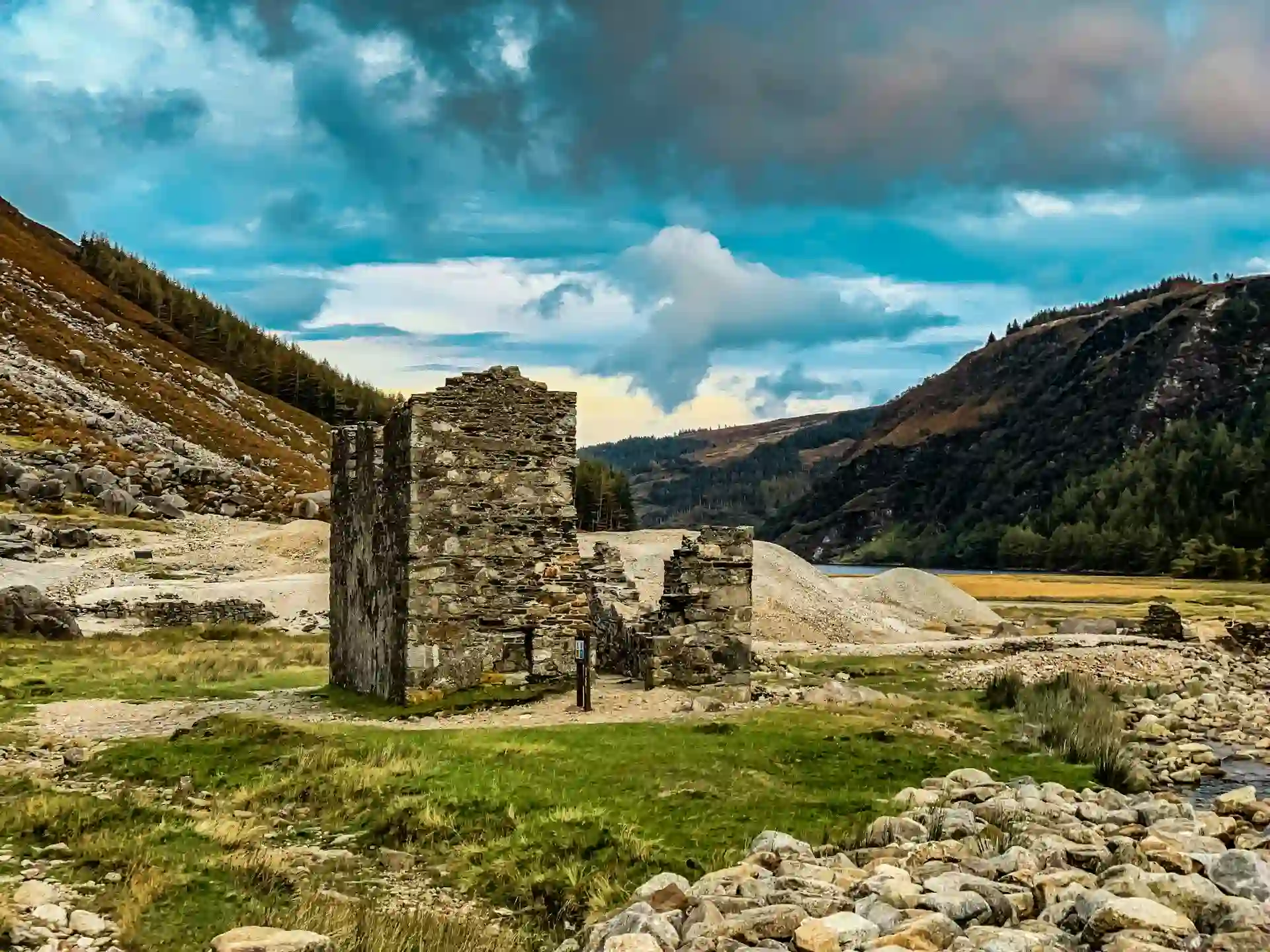
Glendalough is about an hour south of Dublin, tucked into a glacial valley in the Wicklow Mountains. It’s one of Ireland’s most important monastic sites, founded by St. Kevin in the 6th century.
What to see:
- The Round Tower – 30 meters tall, built as a bell tower and refuge
- The Gateway – The largest surviving monastic gateway in Ireland
- The Cathedral and St. Kevin’s Church – Atmospheric ruins in a graveyard full of ancient crosses
- The Upper Lake – A short walk from the monastic site, and genuinely beautiful
What to bring:
- Waterproof hiking boots – Essential for Glendalough and every coastal walk on this Ireland itinerary
- A rain jacket – Ireland’s weather changes fast
Afternoon: Wicklow Mountains and Powerscourt
Drive through the Wicklow Mountains toward Powerscourt Estate. The drive itself is the attraction—winding roads, heather-covered hills, and views that open up without warning.
Powerscourt Gardens are among the finest in Europe. The terraced gardens, the Triton Lake, and the view toward the Sugarloaf Mountain are spectacular. There’s also a waterfall nearby—Powerscourt Waterfall is the highest in Ireland.
Alternative: If you’d rather skip the gardens, drive the Sally Gap and stop at Lough Tay, often called the Guinness Lake because of its dark water and bright sandy shore. It’s a photographer’s dream.
Evening: Return to Dublin or Stay in Wicklow
Option A: Return to Dublin for the night (about 1 hour).
Option B (recommended): Stay in Enniskerry or Roundwood to break up the driving. Druids Glen Hotel & Golf Resort is a comfortable choice, and The Powerscourt Hotel is genuinely luxurious.
Dinner recommendation: The Wicklow Heather in Laragh – A cozy restaurant serving excellent local lamb and seafood.
Day 4: Kilkenny and the Rock of Cashel
Morning: Drive to Kilkenny
Head south from Wicklow toward Kilkenny, about two hours away. Kilkenny is a compact medieval city that punches far above its weight.
What to see:
- Kilkenny Castle – A 12th-century Norman castle with beautifully restored interiors and extensive grounds
- St. Canice’s Cathedral – Climb the round tower for the best view in the city
- The Medieval Mile – A walking route linking the cathedral to the castle, passing through narrow lanes and historic buildings
Lunch: A Kilkenny Pub Lunch
Lunch recommendation: Kyteler’s Inn – One of Ireland’s oldest inns, dating to 1324, and supposedly haunted by its original owner, Dame Alice Kyteler, who was accused of witchcraft.
What to order:
- Irish stew with brown soda bread
- Smoked salmon on brown bread
- A pint of Smithwick’s – It’s brewed in Kilkenny, so it’s fresher here than anywhere else.
Afternoon: The Rock of Cashel
Drive about an hour west to the Rock of Cashel, one of Ireland’s most dramatic historic sites. This limestone outcrop rises abruptly from the surrounding plain, topped by a cluster of medieval buildings.
What to see:
- St. Patrick’s Rock – The main cathedral, roofless and atmospheric
- Cormac’s Chapel – A Romanesque gem from the 12th century, with remarkably preserved carvings
- The Round Tower – 28 meters tall, and you can climb it
- The graveyard – Full of Celtic crosses and ancient tombs
Alternative: If you have time, stop at Cahir Castle, one of Ireland’s best-preserved medieval castles, about 20 minutes away.
Evening: Drive to Cork
Continue to Cork, about 1.5 hours from Cashel. Check into your hotel and have a relaxed dinner.
Dinner recommendation: The English Market area has several excellent restaurants. Market Lane is a solid choice with a menu built around local produce.
What to order:
- Murphy’s stout – Cork’s answer to Guinness, and many locals prefer it
- Spiced beef – A Cork specialty, traditionally served at Christmas
- Drisheen – A Cork blood pudding. Adventurous, but authentic.
Where to Stay in Cork
Handpicked Cork Stays
Hayfield Manor – A five-star country house hotel just outside the city center. The rooms are luxurious, the gardens are beautiful, and the restaurant is excellent. Best for couples and travelers seeking a quiet, refined base. Its standout feature is the sense of a private estate while being ten minutes from the city.
The Montenotte Hotel – Perched on a hill overlooking Cork, with stunning views and a stylish glass-fronted restaurant. Great for couples and design-conscious travelers.
The River Lee Hotel – Modern, comfortable, and well-located on the western channel of the River Lee. Good for families and business travelers.
Budget option: Kinlay House Cork – A well-run hostel in the city center with private rooms available. Good for backpackers and solo travelers.
Day 5: Cork, Cobh, and Kinsale
Morning: The English Market and Blarney Castle
Start with The English Market, one of Europe’s oldest municipal markets. It’s been trading since 1788, and it’s still a working market, not a tourist attraction.
What to buy:
- Artisan cheese – Durrus, Milleens, and Gubbeen are all local
- Fresh fish – Straight off the boats at Cobh and Kinsale
- Bread – The brown soda bread here is exceptional
- Spices and preserves – Great souvenirs that won’t break in your suitcase
Breakfast recommendation: The Farmgate Café upstairs in the market. The full Irish breakfast is excellent, and the view over the market stalls is part of the experience.
Then drive 15 minutes to Blarney Castle. Yes, you kiss the stone. Yes, it’s slightly gross. Yes, you should do it anyway.
What to know:
- The stone is at the top of a narrow spiral staircase. It’s not for the claustrophobic.
- The castle grounds are gorgeous—woodland walks, a poison garden, and a fern garden.
- Go early. By 11 AM, the queues are substantial.
Alternative: If kissing a stone isn’t your thing, Cork City Gaol is a fascinating museum, and the Crawford Art Gallery is free and excellent.
Afternoon: Cobh – The Last Port of the Titanic
Drive 25 minutes to Cobh, a small harbor town with an outsized place in history. This was the last port of call for the Titanic, and it was also the main departure point for millions of Irish emigrants during the famine.
What to see:
- The Titanic Experience – A well-designed museum in the original White Star Line ticket office
- St. Colman’s Cathedral – A soaring neo-Gothic cathedral dominating the hillside
- The Deck of Cards – A row of brightly colored houses that’s become a photography icon
Evening: Kinsale
Drive 40 minutes west to Kinsale, a charming harbor town that’s become one of Ireland’s gastronomic capitals.
What to do:
- Walk the harbor and the Scilly Walk
- Visit Charles Fort, a star-shaped 17th-century fortress
- Explore the colorful streets and galleries
Dinner recommendation: The Black Pig – A wine bar and bistro with excellent food and a warm atmosphere.
Alternative dining: Fishy Fishy – A Kinsale institution for seafood.
What to order:
- Kinsale crab – Sweet and delicate
- Mussels in white wine and cream
- Seafood chowder with homemade brown bread
Day 6: Killarney and the Ring of Kerry
Morning: Drive to Killarney
From Cork or Kinsale, drive west toward Killarney—about 1.5 to 2 hours. Killarney is the gateway to some of Ireland’s finest scenery, and it’s a good base for two nights.
What to see:
- Muckross House and Gardens – A Victorian mansion on the shores of Lough Leane
- Muckross Traditional Farms – A living history museum showing rural Irish life in the 1930s
- Ross Castle – A 15th-century tower house on the lake
Lunch: Killarney Town
Lunch recommendation: Bricín – Known for its boxty and its excellent Irish cuisine.
What to order:
- Boxty – Try the smoked salmon version
- Irish lamb – Local and delicious
Afternoon: The Ring of Kerry
The Ring of Kerry is a 179-kilometer circular route around the Iveragh Peninsula. It’s one of Ireland’s most famous drives, and it deserves the hype.
What to see along the way:
- Killarney’s Ladies’ View – A famous viewpoint over the lakes
- Molls Gap – Dramatic mountain scenery
- Waterville – A seaside village with a Charlie Chaplin connection
- Derrynane Beach – Stunning white sand
- The Skellig Ring – A detour that many travelers miss. It includes Skellig Michael, a UNESCO World Heritage site, and Valentia Island.
Alternative: If you’d rather not drive, there are organized coach tours and bike rentals available in Killarney.
What to bring:
- Binoculars – For spotting seabirds, seals, and distant islands along the coast
- A windproof jacket – The coastal viewpoints are exposed
Evening: Return to Killarney
Dinner recommendation: The Tomies – A modern Irish restaurant with excellent local produce.
Alternative dining: Celtic Whiskey Bar & Larder – Great food and an enormous whiskey selection.
Nightcap: Courtney’s Bar – A traditional pub with live music most nights.
Where to Stay in Killarney
Handpicked Killarney Stays
The Europe Hotel & Resort – A luxury resort on the shores of Lough Leane with a world-class spa, an excellent restaurant, and views that will make you want to cancel your flight home. Best for couples and travelers who want to splurge. Its standout feature is the lakeside setting and the infinity pool overlooking the water.
Aghadoe Heights Hotel & Spa – Perched on a hill with panoramic views of the lakes and mountains. Elegant rooms, excellent service, and a superb spa. Great for couples.
Killarney Park Hotel – A refined town-center hotel with a warm atmosphere and an excellent restaurant. Good for families and couples.
Budget option: Killarney International Hostel – Clean, friendly, and well-located. Perfect for backpackers.
Day 7: The Dingle Peninsula
Morning: Drive to Dingle
From Killarney, drive west to the Dingle Peninsula—about 1.5 hours. The Dingle Peninsula is often described as the most beautiful part of Ireland, and once you’ve seen it, that description feels like an understatement.
What to see on the way:
- Inch Beach – A long, dramatic stretch of sand
- The Conor Pass – Ireland’s highest mountain road, with views that feel unreal
- Dingle Town – A colorful harbor town with a strong traditional music culture
Late Morning: Slea Head Drive
The Slea Head Drive is a loop around the western tip of the peninsula. It’s shorter than the Ring of Kerry but arguably more dramatic.
What to see:
- Slea Head – The westernmost point, with views toward the Blasket Islands
- The Blasket Islands – Visible on clear days, and reachable by ferry
- Dunmore Head – Featured in Star Wars: The Last Jedi
- Beehive Huts – Ancient stone structures, possibly over 2,000 years old
- Gallarus Oratory – A perfectly preserved early Christian stone chapel
Alternative: If you prefer a slower pace, spend the day in Dingle Town. Explore the shops, visit the Dingle Distillery, and take a harbor cruise to see Fungi the Dolphin, a bottlenose dolphin who has lived in the harbor for decades.
Lunch: Dingle Town
Lunch recommendation: The Chart House – Excellent modern Irish cooking in a cozy setting.
Alternative: Out of the Blue – A seafood restaurant that only serves what’s caught that day.
What to order:
- Dingle Bay crab – Sweet and fresh
- Seafood chowder
- Murphy’s ice cream – Made in Dingle, and genuinely some of the best in the world. Try the sea salt flavor.
Evening: Music in Dingle
Dingle has one of the strongest traditional music scenes in Ireland. Pubs like O’Sullivan’s Courthouse, Dick Mack’s, and The Small Bridge have sessions most nights.
Dinner recommendation: The Global Village – A long-standing favorite with excellent food and a warm atmosphere.
Day 8: The Cliffs of Moher and Galway
Morning: Drive to the Cliffs of Moher
From Dingle, drive north toward County Clare—about 2.5 to 3 hours. Your destination is the Cliffs of Moher, Ireland’s most visited natural attraction.
What to expect:
- The cliffs rise 214 meters above the Atlantic and stretch for 14 kilometers
- On clear days, you can see the Aran Islands and the mountains of Connemara
- The visitor center is built into the hillside and includes an excellent exhibition
Alternative: If you want to see the Cliffs without the crowds, Hag’s Head and the Kilkee Cliffs offer similar drama with a fraction of the visitors.
What to bring:
- A windproof, waterproof jacket – The wind at the Cliffs can knock you sideways
- Waterproof walking shoes – The paths are exposed and often wet
- A waterproof phone pouch – For photos in the spray
Lunch: Doolin
Lunch recommendation: Gus O’Connor’s Pub in Doolin – A legendary traditional music pub with excellent food.
What to order:
- Seafood chowder
- Clare lamb
- Brown bread with smoked salmon
Afternoon: The Burren and Galway
Drive through the Burren, a strange and beautiful limestone landscape that looks like the surface of the moon. Stop at Poulnabrone Dolmen, a 5,000-year-old portal tomb.
Continue to Galway—about 1.5 hours from Doolin. Galway is Ireland’s cultural capital, a vibrant city with a strong arts scene, excellent food, and a famously friendly atmosphere.
What to see in Galway:
- The Latin Quarter – Colorful streets, buskers, and excellent pubs
- The Spanish Arch – A 16th-century arch on the banks of the River Corrib
- Galway Cathedral – A modern cathedral with a striking interior
- The Claddagh – The historic fishing village, home of the Claddagh ring
📌 Don’t Miss Out
Evening: Galway Nightlife
Galway has one of the best pub scenes in Ireland. The Quays, Tig Cóilí, and The Crane Bar are all excellent for traditional music.
Dinner recommendation: Ard Bia at Nimmos – A beautiful restaurant in a converted warehouse overlooking the river.
Alternative dining: Kai – A Michelin Bib Gourmand restaurant with a seasonal menu.
What to order:
- Galway oysters – A local specialty, best in autumn
- Fish pie
- A pint of Guinness – Or try Galway Hooker, a local craft beer
Where to Stay in Galway
Handpicked Galway Stays
The g Hotel & Spa – A bold, design-led hotel on the edge of the city. The rooms are dramatic, the spa is excellent, and the restaurant is strong. Best for couples and travelers who want something stylish. Its standout feature is the striking interiors by Philip Treacy.
Glenlo Abbey Hotel & Estate – A country house hotel with its own golf course, a lakeside setting, and two vintage railway carriages that have been converted into a restaurant. Best for couples and special occasions. Its standout feature is the Pullman Restaurant—dining in a 1920s Orient Express carriage.
The Twelve Hotel – Located in Barna, just outside Galway, with spacious rooms and an excellent restaurant. Good for families and travelers with a car.
Budget option: Snoozles Galway City Centre – A modern hostel with private rooms and a great location. Perfect for solo travelers and backpackers.
Day 9: Connemara and Kylemore Abbey
Morning: Drive into Connemara
Connemara is a region of wild bogland, dramatic mountains, and empty beaches. It’s one of the most beautiful parts of Ireland, and it’s best explored slowly.
What to see:
- The Twelve Bens – A dramatic mountain range
- Roundstone – A charming fishing village
- Dog’s Bay and Gurteen Bay – Two stunning beaches with white sand
- Clifden – The main town in Connemara, with a good food scene
Late Morning: Kylemore Abbey
Kylemore Abbey is a 19th-century neo-Gothic castle set against a backdrop of mountains and a lake. It’s now home to a Benedictine community of nuns.
What to see:
- The Abbey – Beautiful interiors and a fascinating history
- The Victorian Walled Garden – Restored to its original design, with glasshouses and formal beds
- The Gothic Church – A small, exquisite chapel
Lunch: Clifden
Lunch recommendation: Guys Bar & Snug – Excellent seafood and a warm atmosphere.
What to order:
- Connemara lamb
- Mussels
- Seafood chowder
Afternoon: Return to Galway
Drive back to Galway, taking the coastal route if time allows. Stop at Spiddal for a look at the craft village, and Rossaveal if you’re curious about the Aran Islands ferry.
Alternative: If you have an extra day, take a ferry to Inis Mór (the largest of the Aran Islands). The island has prehistoric forts, early Christian ruins, and a landscape that feels like the edge of the world.
What to bring for the ferry:
- Motion sickness bands – The crossing can be choppy
- A dry bag – For protecting your camera and phone
Evening: Final Night in Galway
Dinner recommendation: Loam – A Michelin-starred restaurant with a seasonal menu and a focus on local producers.
Alternative dining: Aniar – Also Michelin-starred, with a tasting menu built around west of Ireland ingredients.
Nightcap: The Crane Bar – One of the best places in Ireland for traditional music. The sessions upstairs are legendary.
Day 10: Return to Dublin and Departure
Morning: Drive Back to Dublin
From Galway, the drive to Dublin takes about 2.5 hours via the M6 motorway. It’s a straightforward, if less scenic, drive.
Alternative route: If you have time, detour through Clonmacnoise, an early Christian monastery on the banks of the River Shannon. It’s one of Ireland’s most important monastic sites and rarely crowded.
If you’re flying out of Shannon: Shannon Airport is only 1.5 hours from Galway and is a much easier departure point than Dublin. Consider this when booking flights.
Afternoon: Last-Minute Dublin
If your flight is in the evening, spend the afternoon doing whatever you missed at the start of the trip.
Options:
- The National Museum of Ireland – Free, excellent, and full of treasures
- The Little Museum of Dublin – A charming, quirky museum on St. Stephen’s Green
- Phoenix Park – One of the largest enclosed city parks in Europe, with wild deer
- Grafton Street – For last-minute souvenirs
Souvenir ideas:
- Irish whiskey – From the airport duty-free or a specialist shop
- Aran sweaters – Authentic ones come from the Aran Islands
- Irish linen – Beautiful and durable
- Barry’s Tea – A true Irish staple
- Tayto crisps – The definitive Irish snack
Evening: Departure
Getting to Dublin Airport:
- Aircoach or Dublin Express – Frequent and reliable
- Taxi – 30–45 minutes depending on traffic
- Allow extra time – Dublin Airport can be busy, and security queues can be long
Driving in Ireland: What You Need to Know
Most travelers on a 10-day Ireland itinerary will rent a car, and for good reason. Public transport is decent between major towns, but it won’t get you to the Cliffs of Moher at sunset or the middle of Connemara.
The essentials:
- Drive on the left. This is the single most important thing. It feels wrong for about an hour, and then it clicks.
- Roads are narrower than you expect. Especially in the west. Stone walls are often inches from the road edge.
- Speed limits are in km/h. Motorways are 120 km/h, national roads 100 km/h, regional roads 80 km/h, and local roads 60 km/h. On local roads, you’ll rarely hit 60.
- Roundabouts are common. Give way to traffic already on the roundabout, which comes from your right.
- Tolls exist on some motorways. The M50 around Dublin is barrier-free and requires an eFlow account or online payment. The M6 and M4 have toll booths.
Car rental tips:
- Book early. Prices rise sharply closer to the date.
- Get full insurance. Irish roads are unforgiving.
- Request an automatic if you’re not comfortable with a manual.
- Check the fuel policy. Most rentals are full-to-full.
- Bring your driving license and an International Driving Permit if your license isn’t in English.
GPS and navigation: Mobile signal is patchy in parts of the west. Download offline maps before you go, or rent a GPS unit with your car. A car phone mount is a small but genuinely useful thing to pack.
Ireland Travel Tips
The weather is genuinely unpredictable. Ireland doesn’t have a rainy season; it has rain. And sun. Sometimes within the same hour. Pack layers and waterproofs, and don’t plan your trip around the forecast—it changes constantly.
Book accommodation in advance. In summer, popular towns like Dingle, Killarney, and Galway sell out weeks or months ahead. In winter, many smaller hotels and B&Bs close.
Pubs are the social heart of Ireland. Don’t just drink in them—talk. The Irish are famously conversational, and a chat with a local will often lead to the best recommendations of your trip.
Tipping is appreciated but not obligatory. In restaurants, 10–15% is standard if service isn’t included. In pubs, rounding up is fine. Tipping in taxis is not expected.
Learn a few words of Irish. Even “go raibh maith agat” (thank you) will get a smile. Place names make more sense when you understand the language—Dún Laoghaire, Baile Átha Cliath, Inis Mór.
Cash vs card. Cards are accepted almost everywhere, but small rural shops, some B&Bs, and market stalls may prefer cash. Keep €50–€100 on you.
Buy a Heritage Card if you’re visiting lots of sites. The OPW Heritage Card gives you access to dozens of historic sites, including the Rock of Cashel, Kilmainham Gaol, and many others. It pays for itself quickly.
Don’t overplan. The best moments in Ireland tend to be unplanned—a detour to a beach, a conversation in a pub, a music session that goes until 2 AM. Leave room for that.
What to Pack for Ireland
Here’s the truth about packing for Ireland: less than you think, better than you think, and always waterproof.
What you don’t need to bring:
- An umbrella you care about. Irish wind will destroy it. Bring a cheap one, or better yet, a hooded waterproof jacket.
- Heavy jeans. They take forever to dry, and if they get wet, you’ll be miserable. Bring quick-drying trousers instead.
- Fancy shoes. You’ll be walking on wet grass, gravel, and cobblestones. Leave the heels at home.
- A hairdryer. Every hotel and most B&Bs have one.
- Too many outfits. Nobody notices. Nobody cares. Irish style is practical and understated.
The packing hacks that actually matter:
- Pack in layers, not outfits. A merino base layer, a fleece mid-layer, and a waterproof shell will handle 90% of Irish weather.
- Bring two pairs of shoes minimum. One pair will be wet at any given moment. Rotating them gives each pair time to dry.
- Use packing cubes. You’ll be moving hotels frequently on this Ireland itinerary. Cubes make repacking fast and keep wet items separate from dry ones.
- Bring a small dry bag. It’s perfect for keeping your camera, phone, and wallet dry on boat trips and rainy hikes.
- Buy your Aran sweater in Ireland. They’re better quality, and you’ll wear it for the rest of the trip. Just leave room in your suitcase.
- Pack a travel towel if you’re staying in hostels or B&Bs without towels included.
- Bring a universal adapter. Ireland uses Type G plugs—the same three-pin rectangular plugs as the UK.
- Leave space in your bag. You will buy wool, whiskey, and books.
📌 Don’t Miss Out

The essentials:
- A waterproof, packable rain jacket – The single most important item on this list
- Merino wool base layers – Warm when wet, odor-resistant, and quick-drying
- Waterproof walking shoes or boots – You’ll use these every single day
- A universal travel adapter for Ireland – Type G plug, 230V
- A portable power bank – For long driving days and photo-heavy afternoons
- A reusable water bottle – Irish tap water is excellent
- Wool socks – Your feet will thank you
Irish Food Guide
Irish food has a reputation for being plain. That reputation is outdated. Here’s what to eat and where to find it.
The classics:
- Full Irish breakfast – Eggs, bacon, sausages, black and white pudding, baked beans, grilled tomato, mushrooms, toast, and brown bread. It will keep you going all day.
- Irish stew – Lamb or mutton with potatoes, carrots, and onions. Simple and deeply satisfying.
- Seafood chowder – Creamy, rich, and best eaten by the sea.
- Boxty – A potato pancake, served with various fillings.
- Coddle – A Dublin specialty. Sausages, bacon, and potatoes, slow-cooked.
- Bacon and cabbage – The traditional Irish dinner. Humble but delicious.
- Brown soda bread – The single best thing about Irish cuisine. Served with everything.
Seafood specialties:
- Galway oysters – Best in autumn, served raw with lemon
- Kinsale crab – Sweet and delicate
- Smoked salmon – Especially from the Burren Smokehouse
- Mussels – Often served in white wine and cream
Drinks:
- Guinness – Obviously. Order it in Dublin, where it tastes best.
- Murphy’s – Cork’s stout. Locals will tell you it’s better.
- Irish whiskey – Jameson, Powers, Redbreast, and dozens of smaller distilleries
- Poitín – Traditional Irish moonshine. Strong. Approach with caution.
- Irish coffee – Whiskey, coffee, sugar, and cream. Best after a cold walk.
Snacks and sweets:
- Tayto crisps – The definitive Irish snack. Cheese and onion is the classic.
- Barry’s Tea – Ireland’s favorite tea. You’ll be offered a cup constantly.
- Cadbury’s Dairy Milk – Tastes different here. Better, somehow.
- Yellowman – A traditional honeycomb candy, sold at markets.
Ten days in Ireland will change the way you think about travel. This Ireland itinerary isn’t about ticking off landmarks. It’s about slowing down, getting lost on a back road, and discovering that the best parts of Ireland aren’t on any list.
You’ll stand on the Cliffs of Moher with the wind trying to push you backward. You’ll sit in a pub in Dingle while a fiddle player and a bodhrán player somehow fill the entire room with sound. You’ll drive through Connemara and realize you haven’t seen another car in twenty minutes. You’ll eat brown bread so good that you’ll try, and fail, to recreate it at home.
Ireland has a way of making you feel like you’ve been there before. Maybe that’s the emigrant history. Maybe it’s the storytelling culture. Or maybe it’s just that the Irish are exceptionally good at making strangers feel like friends.
By the time you’re driving back to Dublin, you’ll understand why people move here. And you’ll probably start looking at property listings, just for fun. That’s how it starts.
Go n-éirí an bóthar leat—may the road rise to meet you.