- This article contains affiliate links. I may receive a commission if you purchase from them, at no extra cost to you.
Europe in December is a continent lit by thousands of small, temporary villages. Wooden chalets appear overnight in medieval squares, the air smells of cinnamon and charcoal, and the cold becomes an excuse to stand closer together, cup of something hot in hand.
But not all Christmas markets in Europe are created equal. Some are vast, corporate funfairs. Others are intimate, local, and quietly perfect. The trick is knowing which is which—and, just as importantly, knowing when to go and what to eat when you get there.
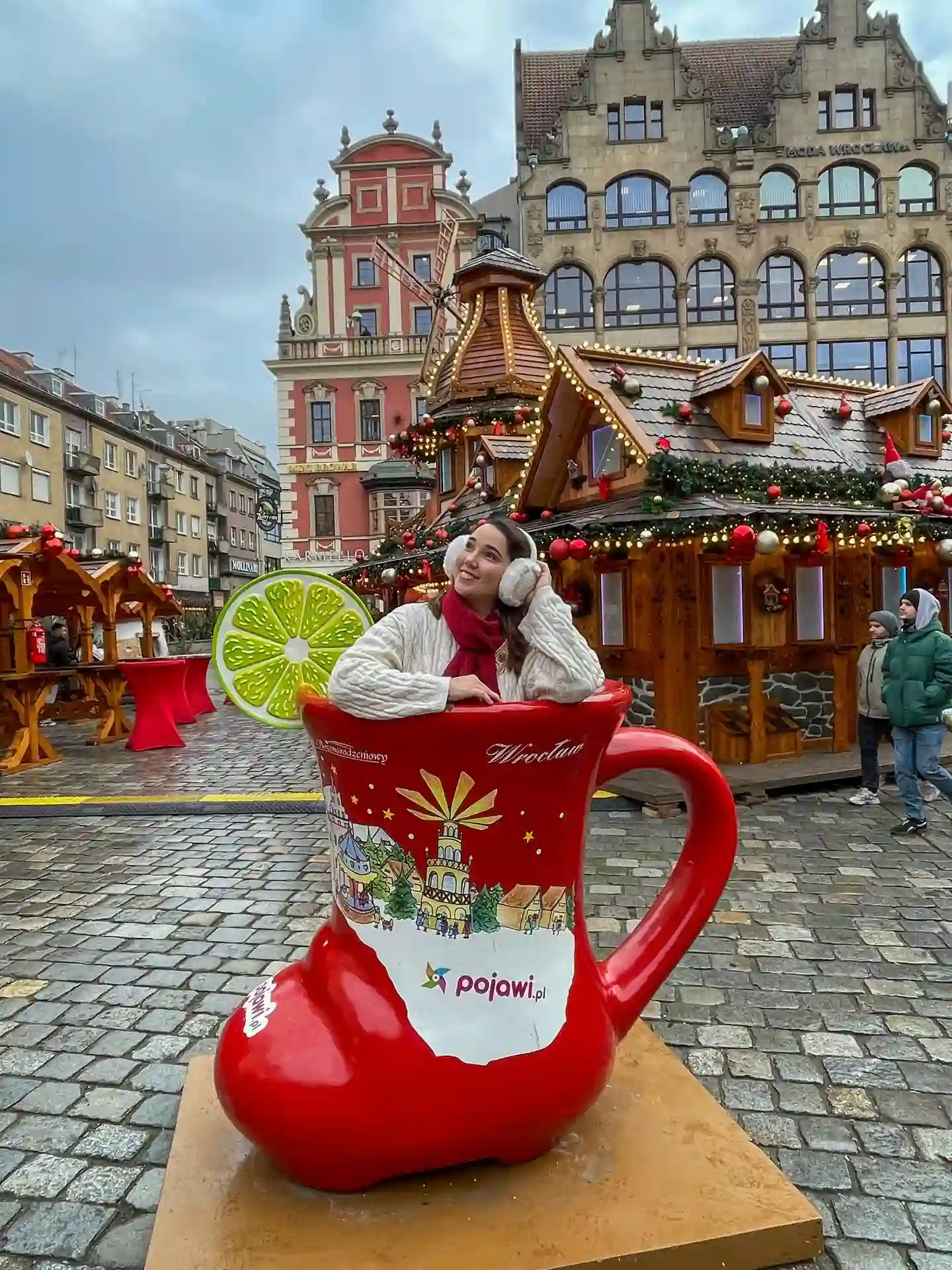
This guide groups the continent’s best markets by country, with practical notes on the food you shouldn’t miss and the timing that makes all the difference.
Go during the day to browse, shop, and see the stalls clearly. Come back after dark for the lights, the atmosphere, and the photographs. That single rhythm will improve almost every market on this list.
Germany: The Original Christmas Market Country
Germany is where the modern Christmas market was born, and the country still does it with more conviction than almost anywhere else.
The tradition runs deep, the food is hearty, and the markets are woven into the life of the cities rather than bolted on for tourists.
1. Nuremberg Christkindlesmarkt
Nuremberg’s Christkindlesmarkt is the standard against which other German markets are measured. It opens with a prologue delivered by the Christkind from the balcony of the Frauenkirche, and the stalls spread across the Hauptmarkt in front of the Gothic church. The atmosphere is traditional, family-focused, and unapologetically nostalgic.
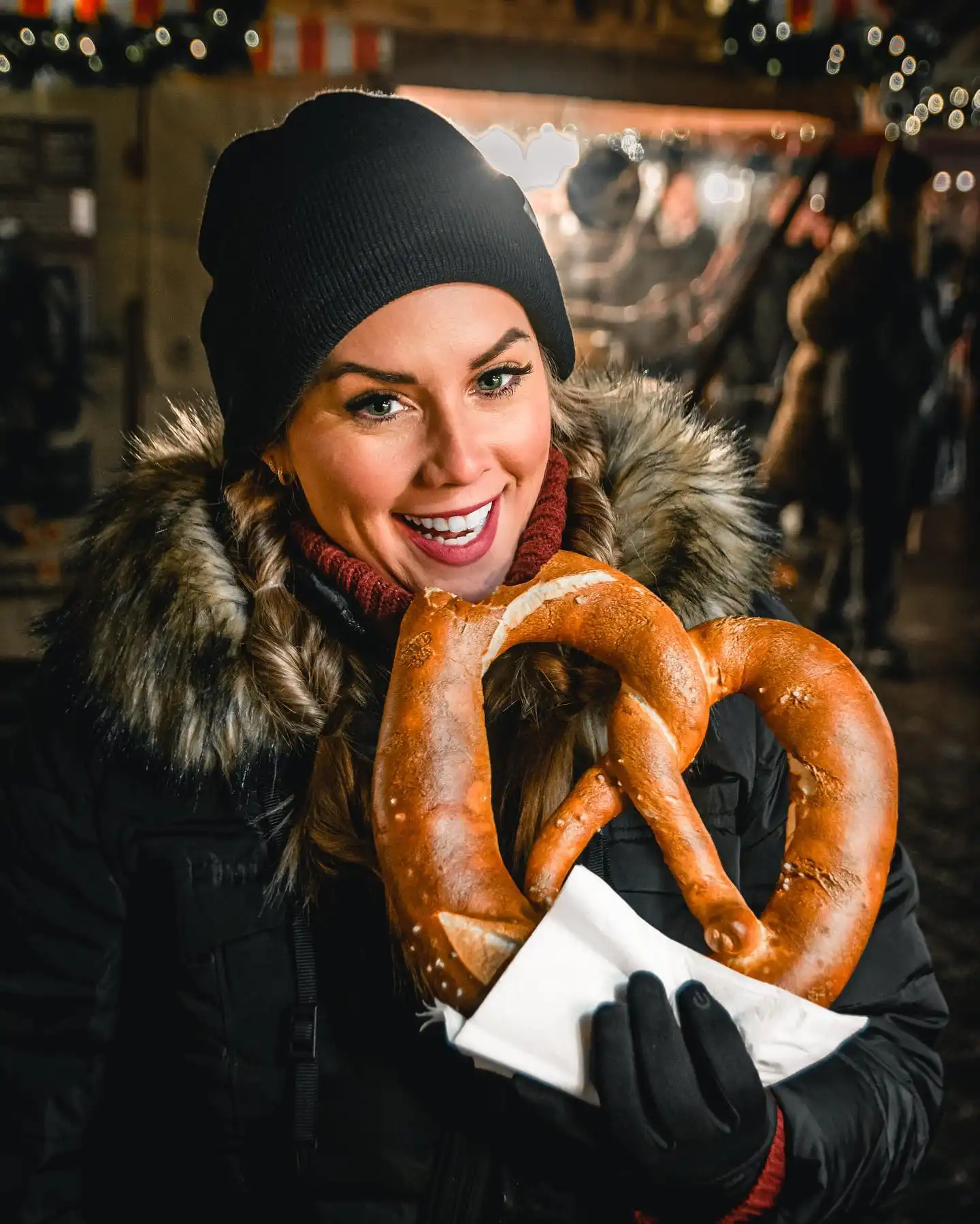
What you must eat: The city’s signature snack is Drei im Weggla—three small, thin Nürnberger Rostbratwurst in a soft roll, often with mustard. It costs a few euros and is eaten standing up. For something sweet, look for Elisenlebkuchen, the city’s protected gingerbread, which is softer and more almond-heavy than the hard biscuits sold elsewhere.
Drink Nürnberger Glühwein, and if you want the local favourite, ask for the blueberry version, Heidelbeerglühwein, made from blueberry wine rather than grapes.
Best time to go: Weekday daytime is calmer for browsing and shopping. Come back after dark for the lights, the crowds, and the Feuerzangenbowle—a dramatic mulled drink made by setting a sugar cone soaked in rum on fire and letting it drip into the wine below.
2. Cologne Cathedral Market
Cologne’s main market sits directly beneath the twin spires of the cathedral, which is reason enough to visit. The setting is dramatic, and the market is large enough to wander for an hour or two without feeling cramped.
Cologne also has several smaller themed markets nearby, including a medieval market and an LGBTQ+ market, so you can string together a varied day.
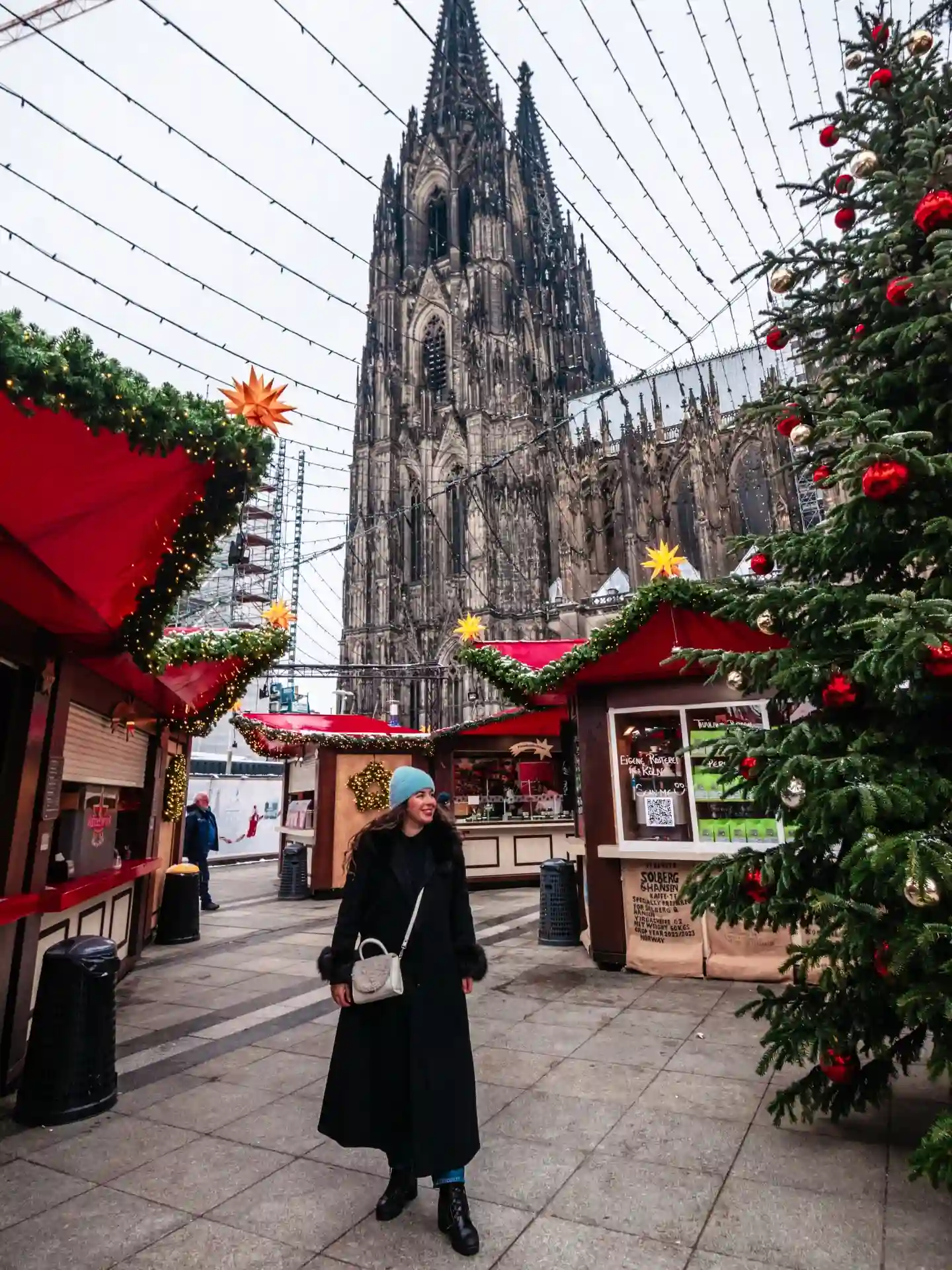
What you must eat: Reibekuchen—potato fritters served with apple sauce or sour cream—are the local winter staple. Pair them with Glühwein or a hot chocolate, and finish with roasted almonds.
Best time to go: Late afternoon into early evening, when the cathedral is illuminated and the stalls are fully open. The market closes before Christmas Eve, so plan accordingly.
3. Berlin’s WeihnachtsZauber at Gendarmenmarkt
Berlin has dozens of markets, but the WeihnachtsZauber on the Gendarmenmarkt is the most elegant. The square is framed by the Konzerthaus and the French and German cathedrals, and the stalls focus on crafts, artisanal food, and quality gifts rather than mass-produced souvenirs.
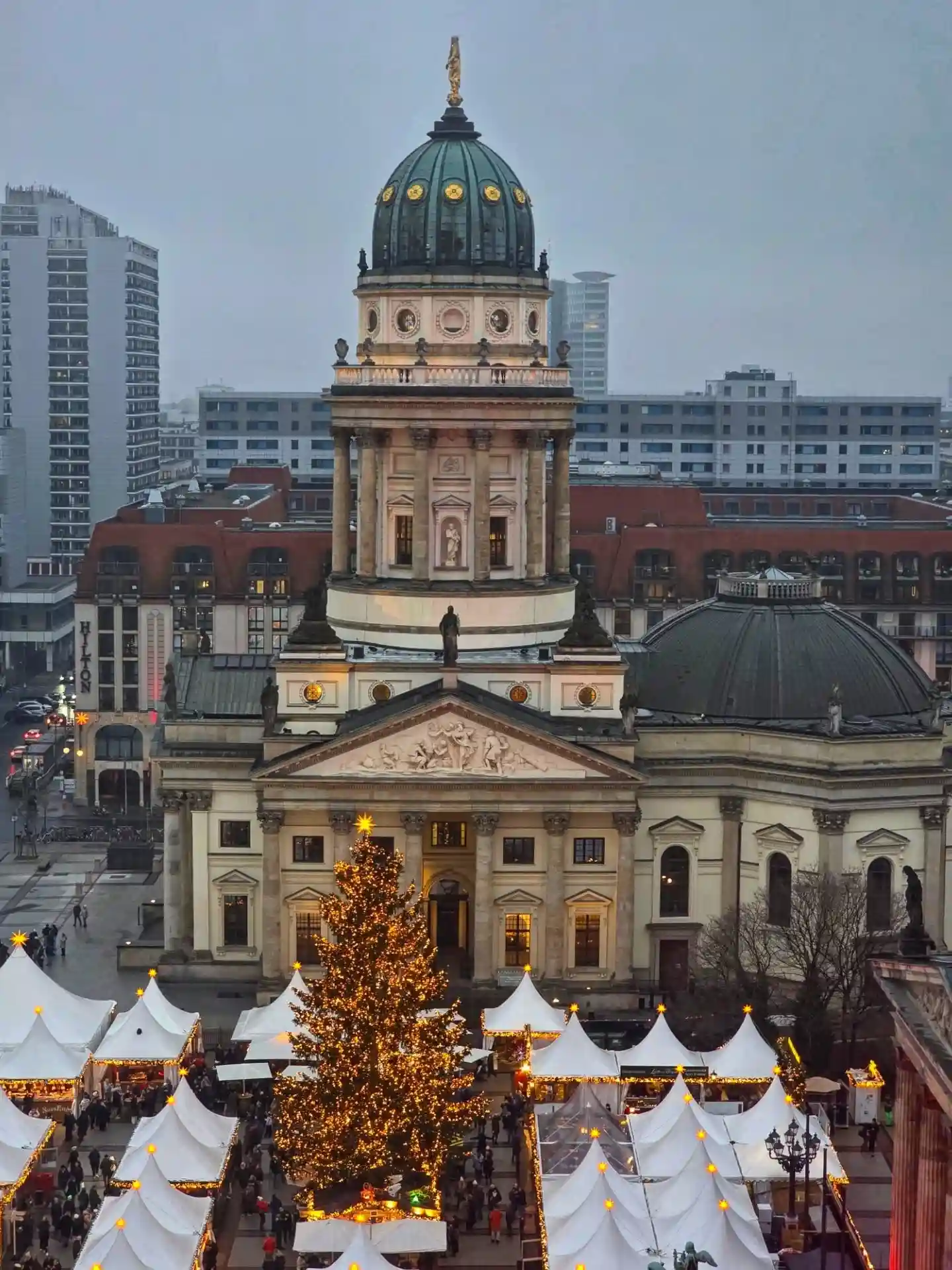
What you must eat: This is a market for grazing rather than for one signature dish. Look for Käsespätzle (cheesy egg noodles), Flammkuchen (Alsatian-style flatbread), and a glass of Glühwein while you browse the craft tents.
Best time to go: Weekday evenings, ideally in early December. The market requires a small entry fee, which keeps the crowds slightly more manageable than at the free markets.
Our Favorite Hotels in
📌 Berlin
Austria: Imperial Squares and Alpine Backdrops
Austria’s markets are about atmosphere as much as shopping. The settings—imperial palaces, Baroque squares, Alpine foothills—do half the work, and the food is designed to warm you from the inside out.
4. Vienna Rathausplatz Christkindlmarkt
Vienna’s largest and most famous market fills the square in front of the neo-Gothic City Hall. A giant tree, an ice rink, and a heart-shaped light installation over the main walkway make it the city’s most photographed December scene.
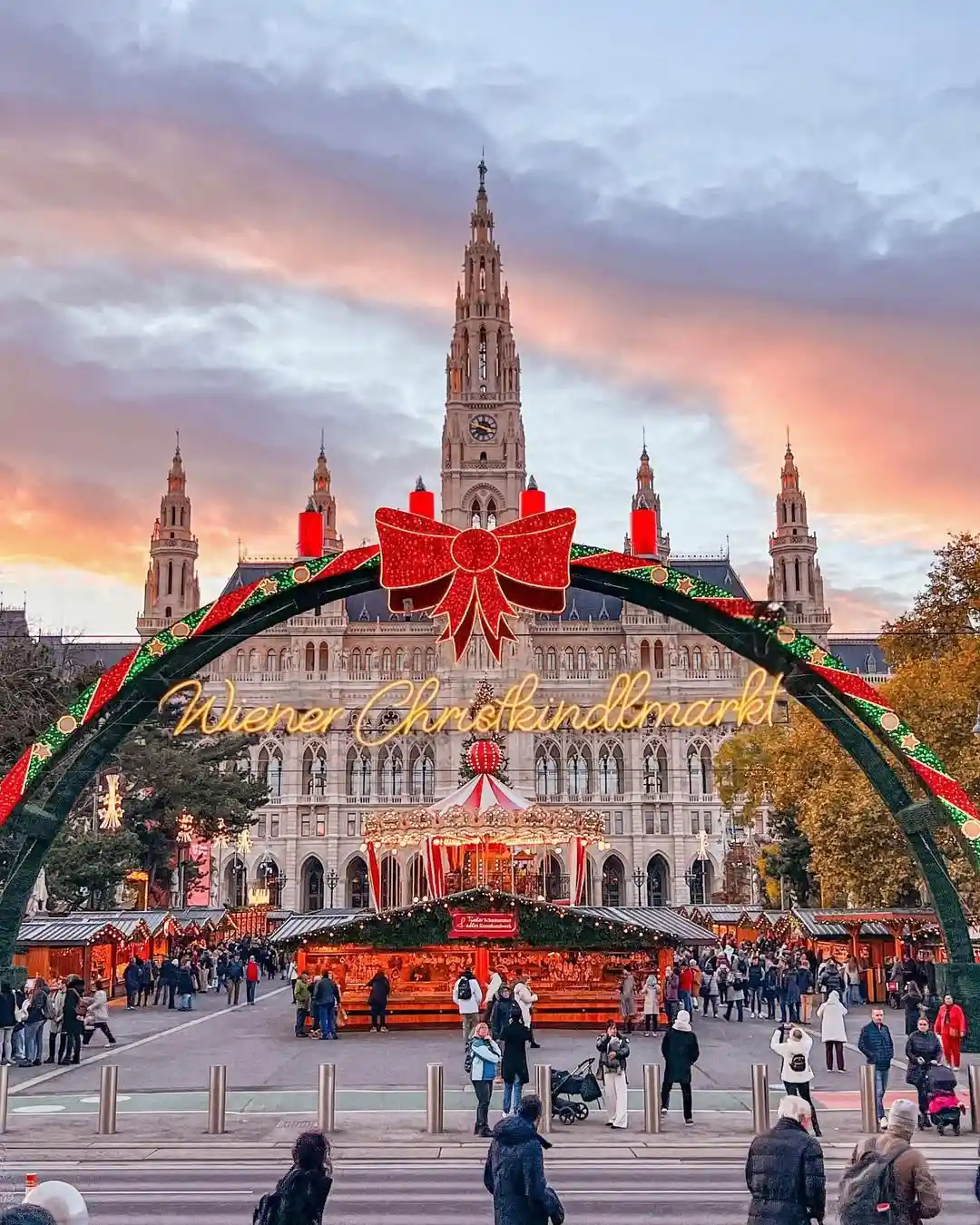
What you must eat: Vienna is the city of the punch as much as the Glühwein. The Rathausplatz has dozens of punch varieties—berry, citrus, rum—and the mugs are collectible. For food, look for Käsekrainer (a cheese-filled sausage) and Langos (fried dough with garlic and sour cream).
Best time to go: Weekday afternoons, ideally between 3 and 6 PM, in the first two weeks of December.
This is the golden window: the lights are on, the crowds are manageable, and the punch queues are short. Weekend evenings are the worst time to visit the Rathausplatz—avoid them if you can.
5. Schönbrunn Palace Christmas Market
The market in front of Schönbrunn Palace is smaller and more artisanal than the Rathausplatz. The backdrop—the Habsburgs’ summer palace, lit in gold—is unmatched, and the stalls focus on ceramics, hand-painted baubles, and wooden toys rather than mass-produced gifts.
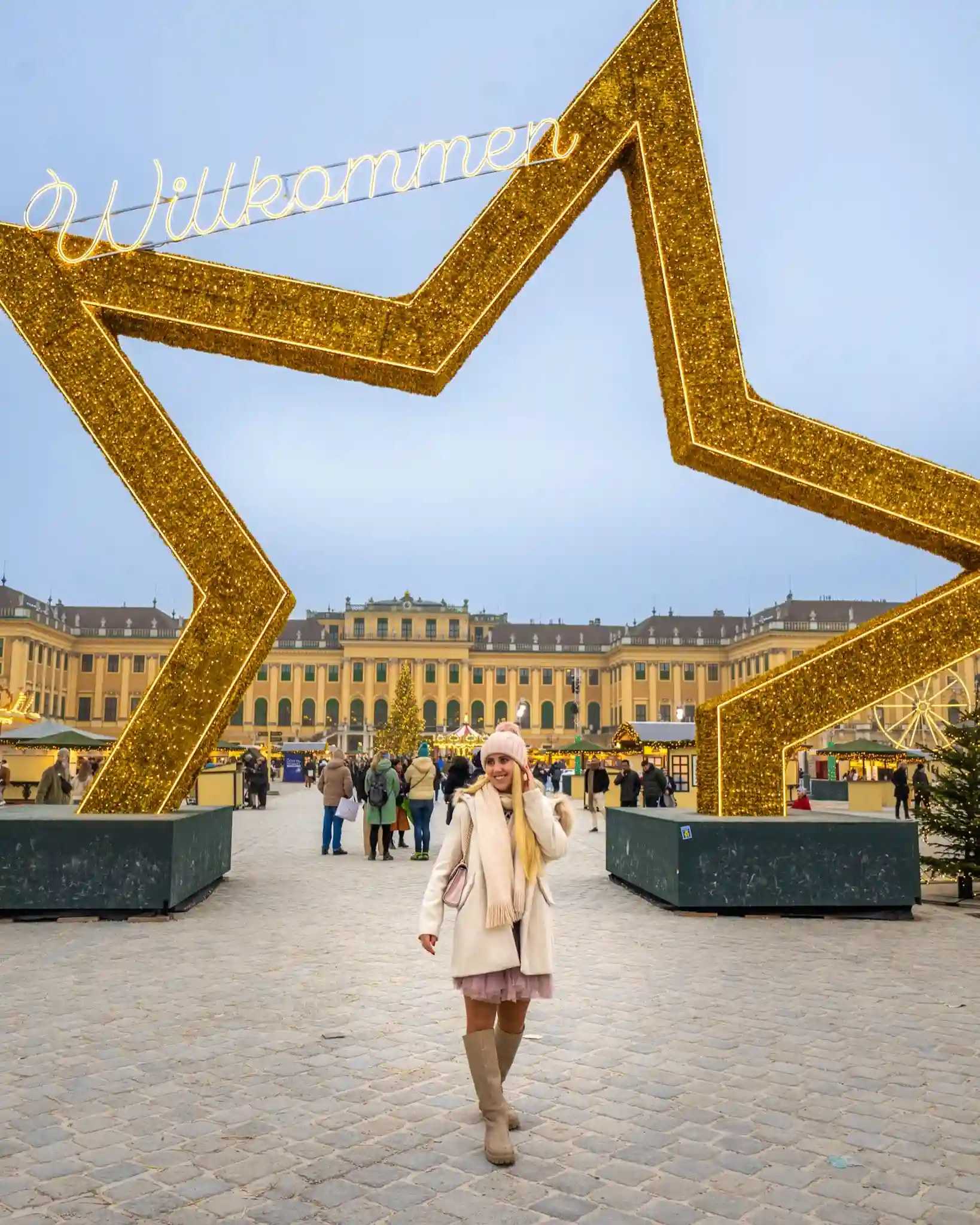
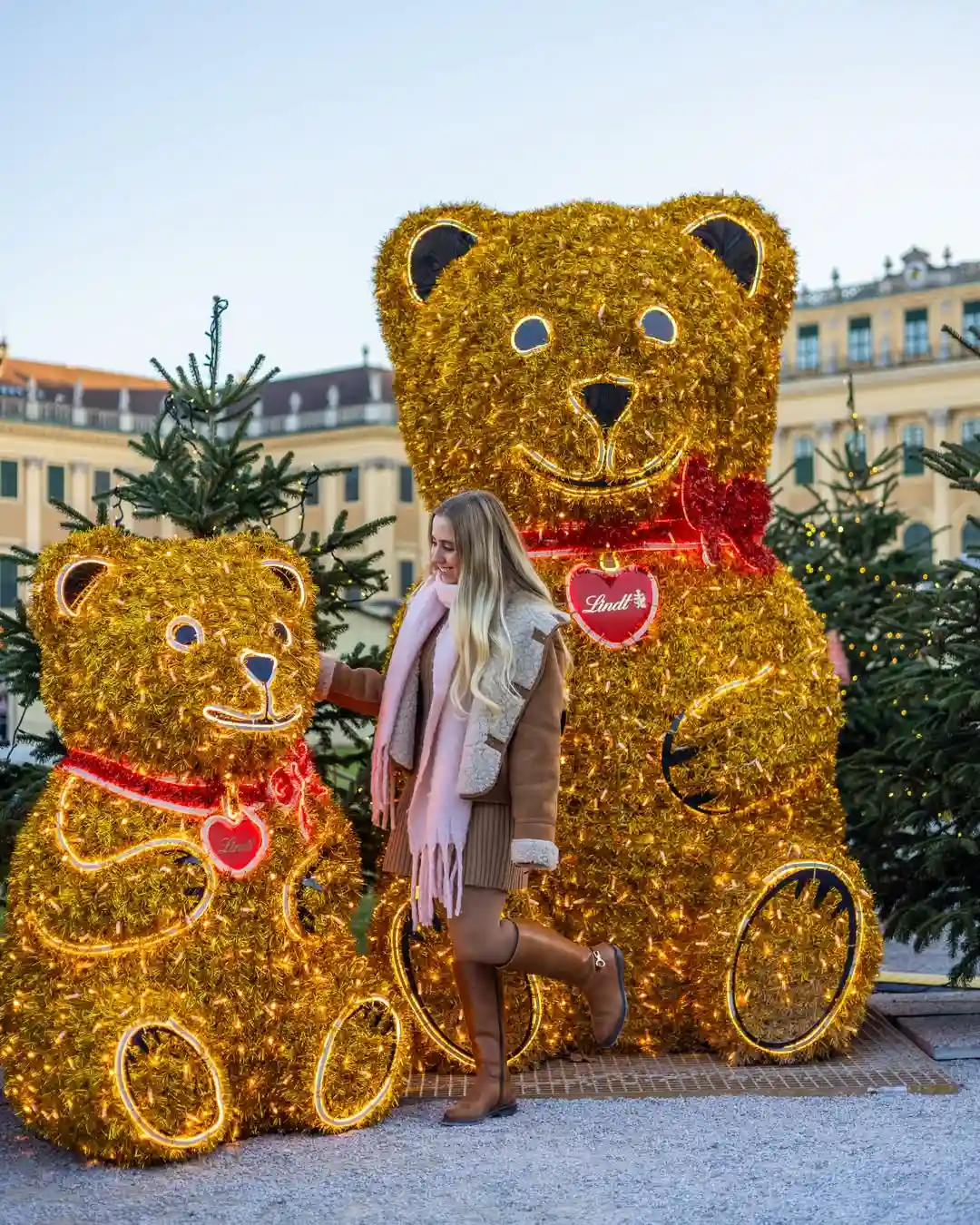
What you must eat: Apfelstrudel with vanilla sauce, and a cup of Glühwein or Kinderpunsch (the alcohol-free version). The market is ideal for a slower, more elegant evening.
Best time to go: Late afternoon, before the palace closes. Combine it with a visit to the palace interiors, which are less crowded in winter than in summer.
6. Salzburg Christkindlmarkt
Salzburg’s market on Domplatz and Residenzplatz is the Alpine answer to Vienna’s imperial pomp. The fortress hovers above the old town, choirs sing from the cathedral steps, and the stalls sell Lebkuchen, Bauernkrapfen (farmhouse doughnuts), and hot Glühwein in ceramic mugs.
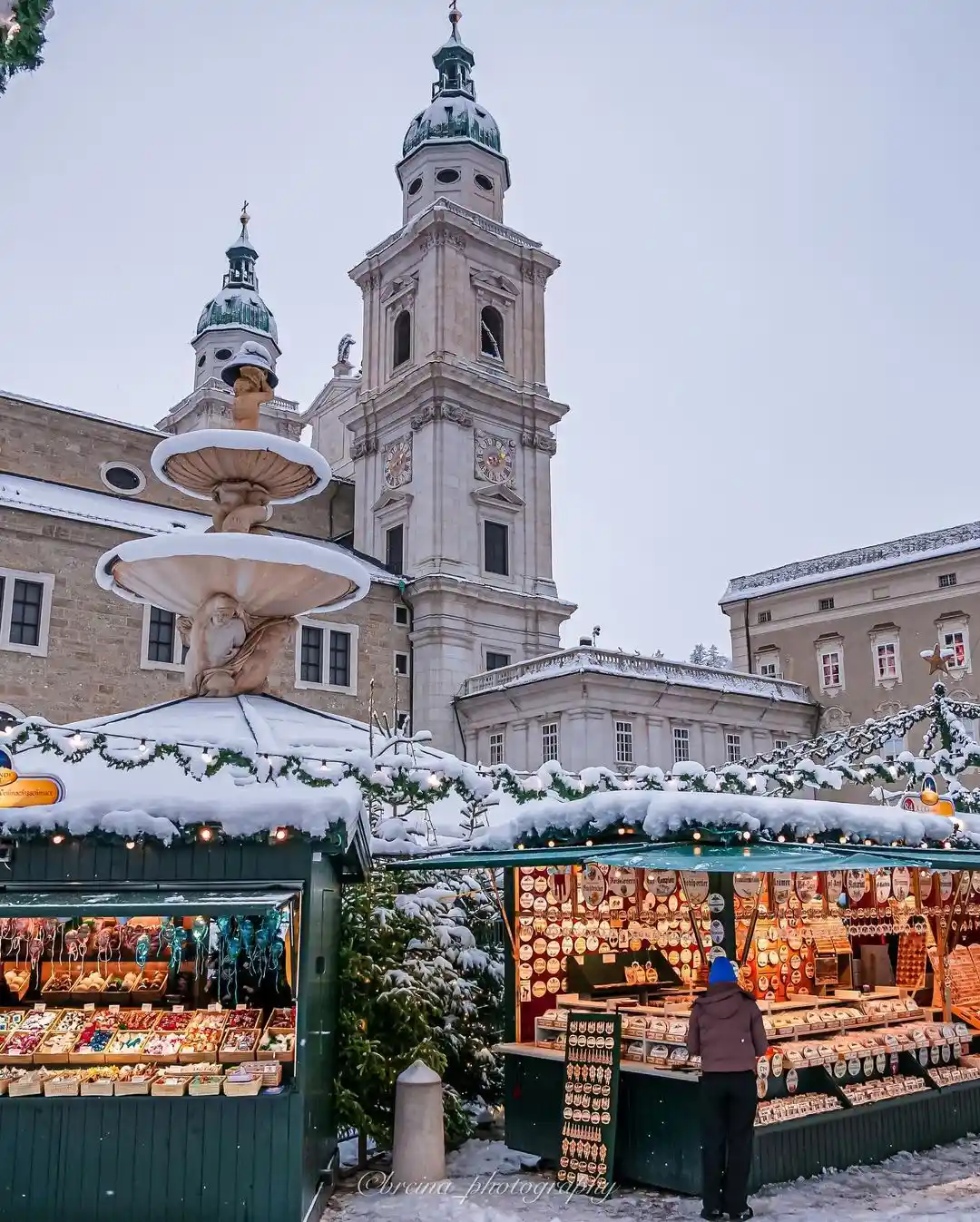
What you must eat: Salzburger Nockerln (a sweet, soufflé-like dessert) is the city’s signature, but it’s better in a restaurant than at a stall. At the market, focus on Bauernkrapfen and Lebkuchen.
Best time to go: Weekday afternoons and early evenings. The market stays open through Christmas and New Year, which makes it one of the few major markets you can visit after 25 December.
Our Favorite Hotels in
📌 Salzburg
France: The Storybook Version of Christmas
France’s Christmas markets are concentrated in Alsace, where the half-timbered houses, canals, and wine culture create a setting that feels almost too perfect.
The food is distinct from Germany’s—lighter, more wine-focused, and unmistakably French.




7. Strasbourg Christkindelsmärik
Strasbourg calls itself the “Capital of Christmas,” and the claim is hard to argue with. The city’s main market, Christkindelsmärik, dates back to 1570 and spreads across Place Broglie, the cathedral square, and Place Kléber. The cathedral, lit at night, is the backdrop for the largest of the eight market sites.
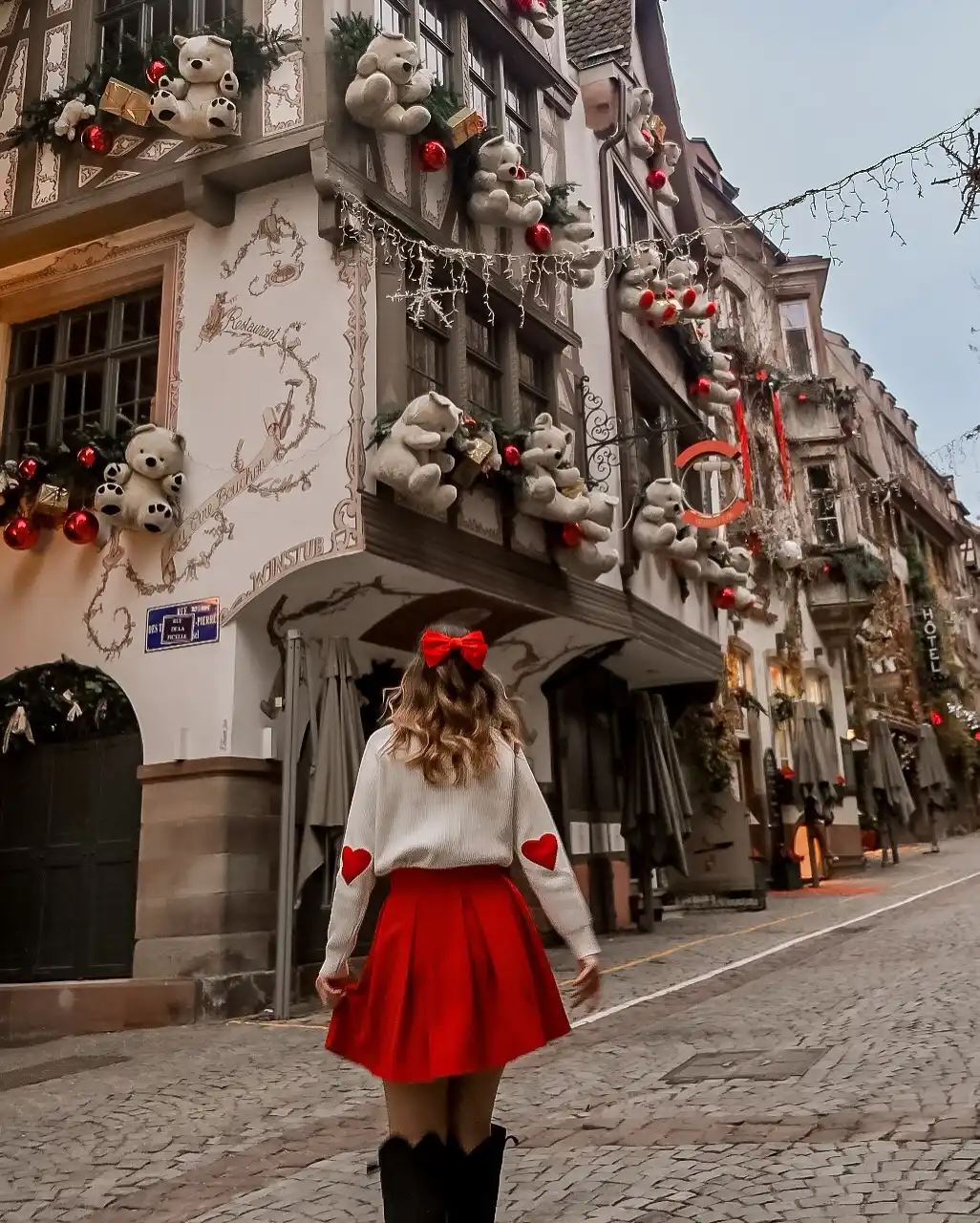
What you must eat: Vin chaud blanc—white Alsatian mulled wine, lighter and more fragrant than the red version you’ll find elsewhere.
Eat bredele (small Alsatian spiced biscuits), pain d’épices, a warm bretzel, and tarte flambée (thin, crispy flatbread with cream, onions, and bacon).
Best time to go: Mondays and Tuesdays, and mornings in general, are the calmest. Avoid Wednesday afternoons, Friday evenings, and weekends if you can. For lunch, arrive at 11:30 when the stalls open—the queues stay short for about an hour.
8. Colmar’s Six Markets
Colmar is smaller, quieter, and arguably even prettier than Strasbourg. The old town hosts six separate markets, each with a slightly different focus: Place des Dominicains for the illuminated church backdrop, Place de l’Ancienne Douane for decorations, the Koïfhus for indoor crafts, Petite Venise for families, and the Gourmet Market for a proper sit-down meal.
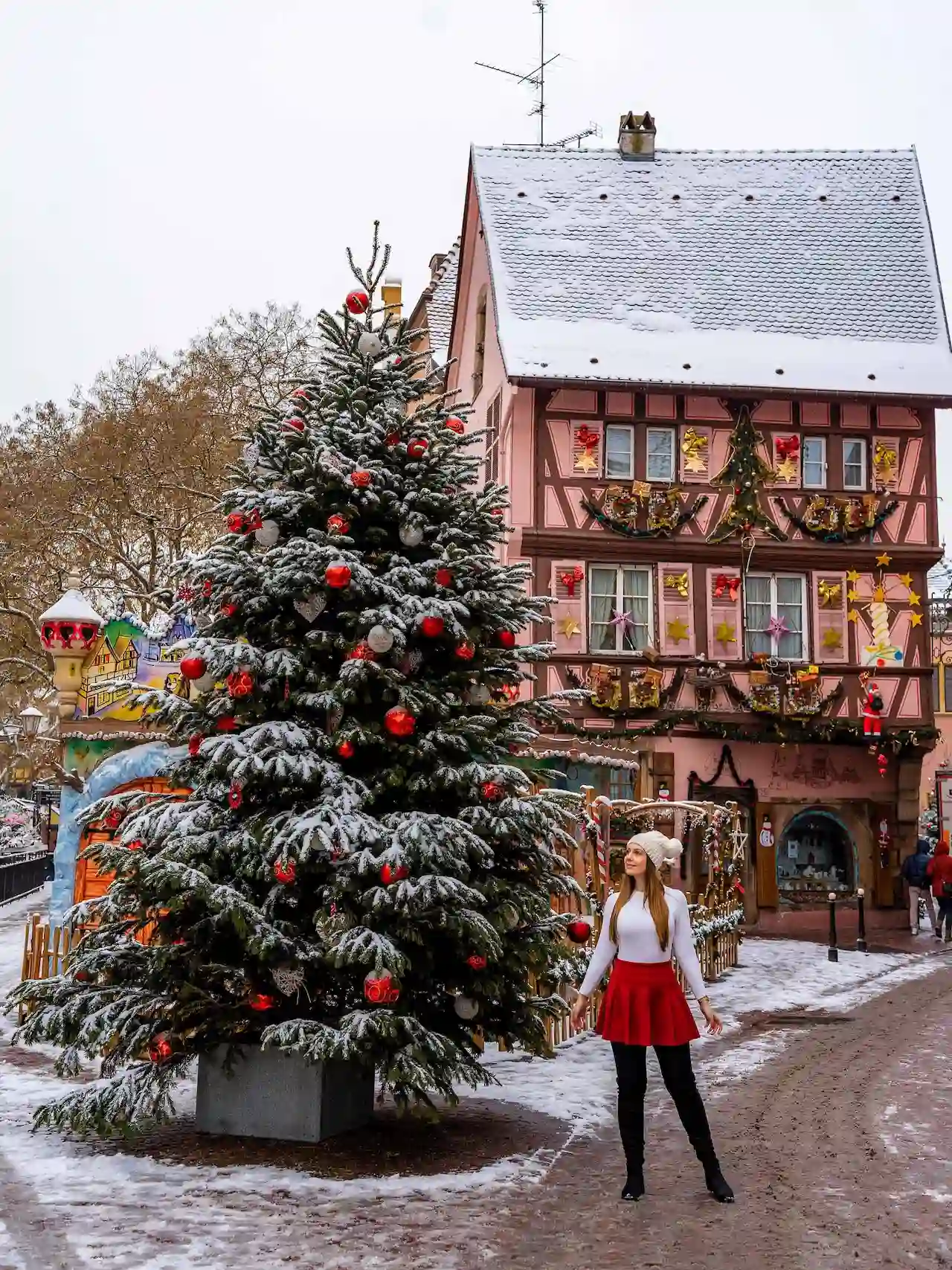
What you must eat: The Gourmet Market on Rue de la Montagne Verte is the place to sit down for choucroute, baeckeoffe, or tarte flambée. For something sweet, bredele and mannele (a brioche shaped like a little man) are everywhere.
Best time to go: A weekday morning for browsing and shopping, then Place des Dominicains after dark for the lights. The Gourmet Market stays open until early January, making Colmar a good post-Christmas option.
Our Favorite Hotels in
📌 Colmar
Czech Republic: The Fairytale Square
Prague’s Old Town Square is the most theatrical Christmas market setting in Europe. The Gothic towers of the Týn Church, the Astronomical Clock, and the giant tree create a backdrop that no amount of decoration can replicate.
10. Prague Old Town Square Market
The market runs from late November into early January—longer than almost any other major European market—and the stalls are open from 10 AM to 10 PM. The food is hearty, the svářák (mulled wine) is strong, and the atmosphere after dark is genuinely magical.
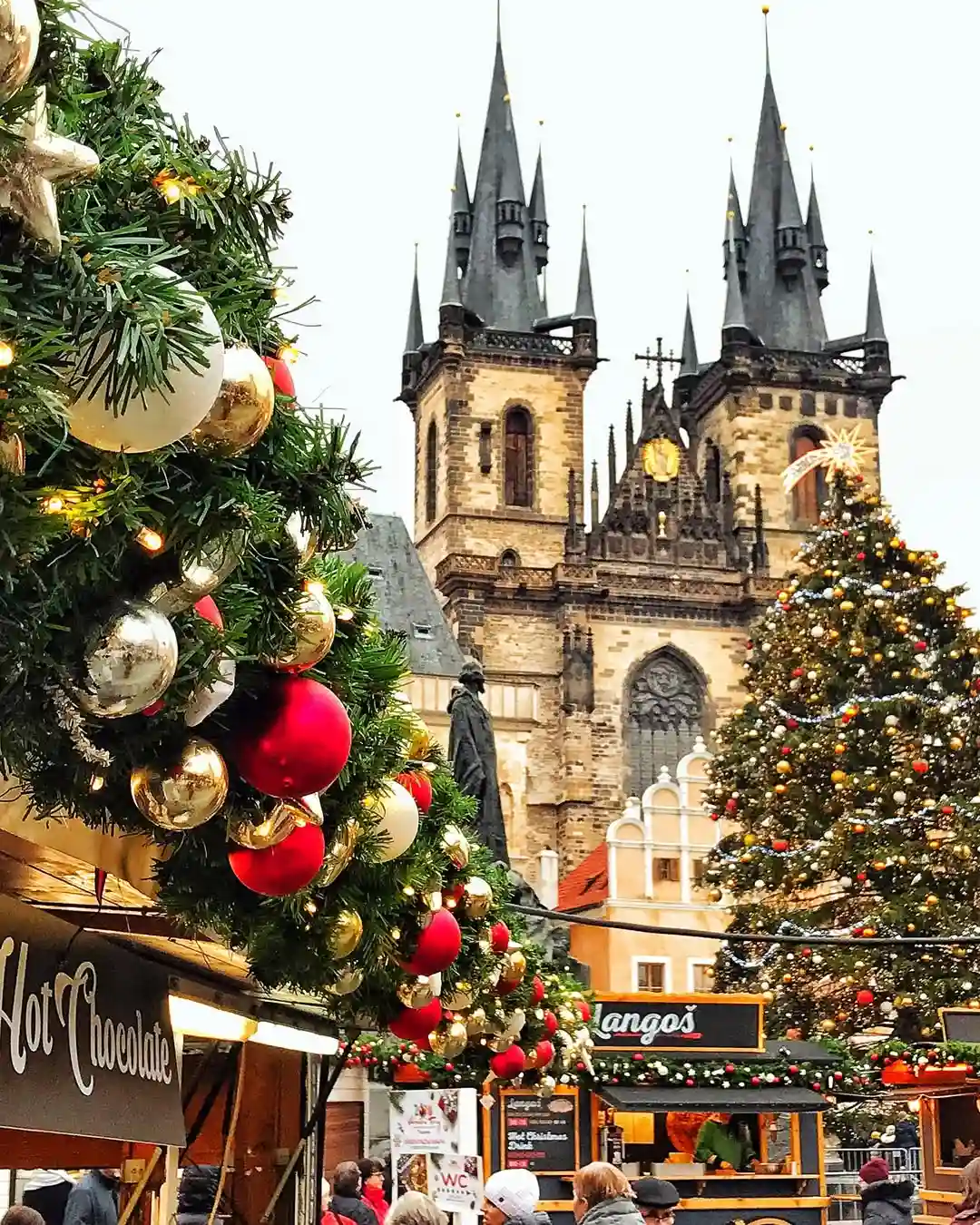
What you must eat: Trdelník—a chimney cake rolled in sugar and cinnamon, baked over coals. Eat it plain and fresh; the versions stuffed with ice cream are a tourist trap and cool too quickly. Also try ham carved from the spit and starobrněnské medoviny (Moravian mead).
Best time to go: Mornings before 11 AM for browsing and photography without the crush. After dark for the lights and atmosphere, but avoid Saturday evenings between 5 and 9 PM, when the square becomes almost impassable.
11. Wenceslas Square Market
A ten-minute walk from Old Town Square, Wenceslas Square hosts a larger, more commercial market beneath the National Museum. It’s less picturesque but livelier late at night, and it’s a good option if Old Town Square feels too dense.
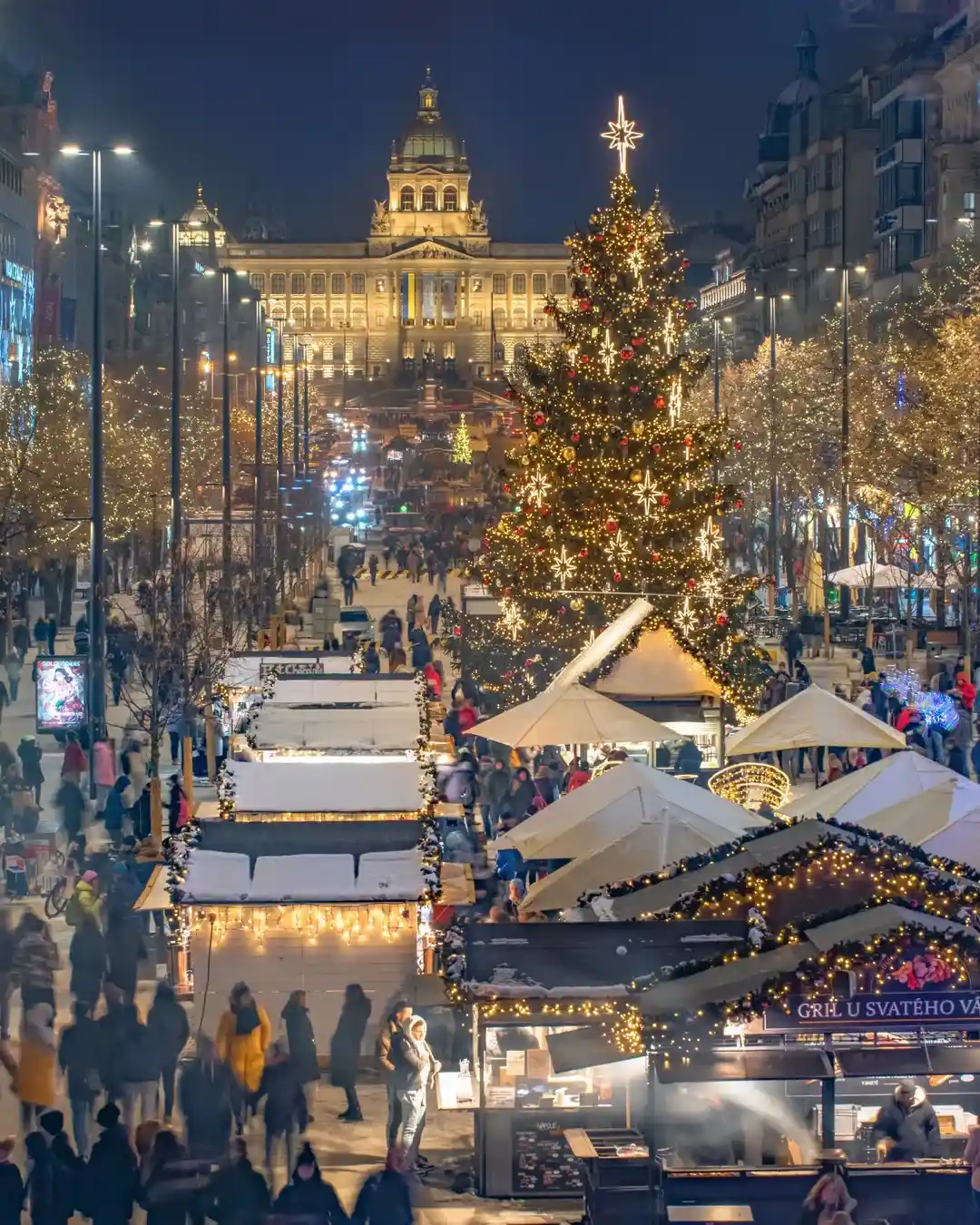
What you must eat: The same Czech classics—trdelník, klobása (sausage), and svářák—but with shorter queues than at the main square.
Best time to go: Late evening, when the crowds thin out and the stalls stay open.
Hungary: Thermal Baths and Chimney Cakes
Budapest does Christmas with a combination of grandeur and pragmatism. The markets are large, the light projections are ambitious, and the food is designed to keep you warm on a cold Danube evening.
12. Budapest Advent Basilica
The market in front of St Stephen’s Basilica is the city’s most impressive, thanks to the 3D light projection that plays across the basilica’s facade every evening. The stalls sell crafts, hot food, and an enormous amount of kürtőskalács.

What you must eat: Kürtőskalács—the Hungarian chimney cake—baked over charcoal and rolled in sugar. Look for a stall with a visible charcoal fire and a queue of locals; avoid the pre-made versions sitting under heat lamps. Also try lángos (fried dough with sour cream and cheese) and forralt bor (mulled wine).
Best time to go: Arrive around 4:30 PM, just as dusk falls and the lights come on. You’ll catch the start of the light show and beat the dinner rush. Weekday afternoons are the calmest overall.
13. Vörösmarty Square Market
The city’s oldest market, Vörösmarty tér, is more traditional than the Basilica market and slightly less crowded. It’s a good option if you want to browse crafts without the light-show crowds.
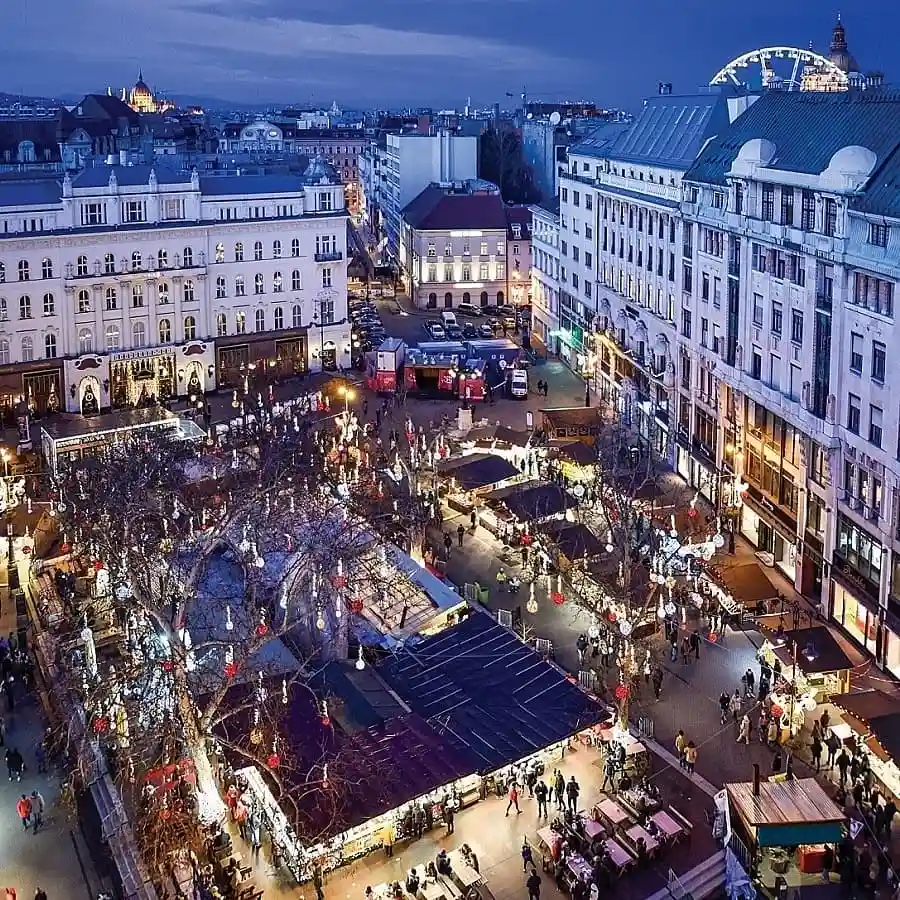
What you must eat: The same kürtőskalács and forralt bor, plus bejgli (rolled walnut or poppy seed pastry), which is the Hungarian Christmas cake.
Best time to go: Weekday afternoons, before the evening rush.
Belgium: Chocolate, Lights, and Canal-Side Charm
Belgium’s Christmas markets are smaller and more scattered than Germany’s, but they compensate with excellent food, beautiful settings, and a distinctly Belgian sense of coziness.
14. Brussels Winter Wonders
Brussels’ Winter Wonders spreads across the city centre—Grand-Place, Place Sainte-Catherine, Place de la Bourse, and the Vismet—with over 200 chalets, a light show, and an ice rink. The Grand-Place is the centrepiece, and the sound-and-light show runs every evening.
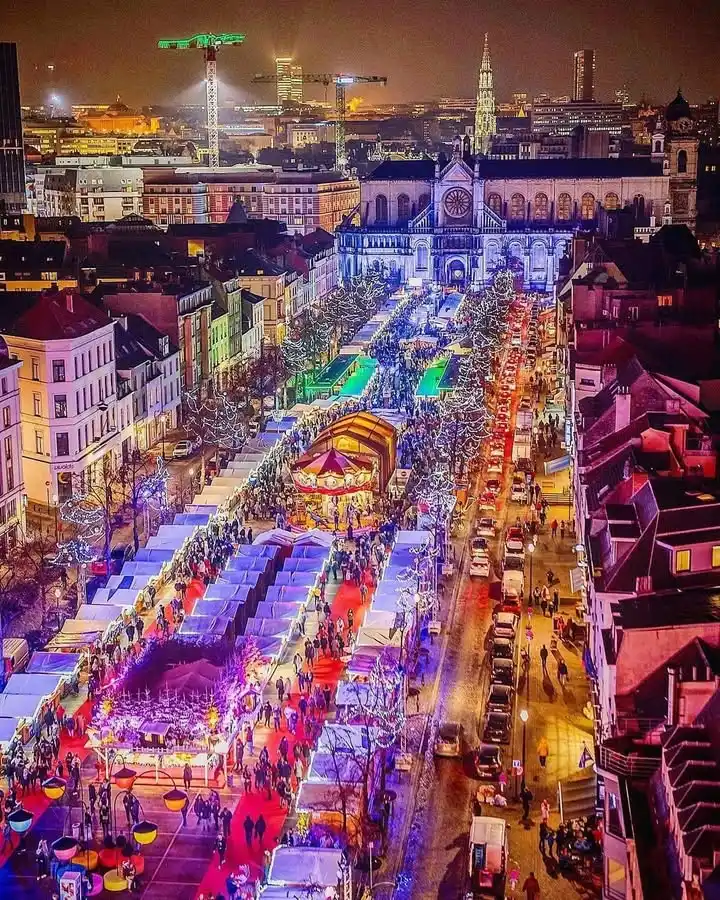
What you must eat: Belgian waffles (Liège-style, dense and pearl-sugared), speculoos, and chocolate from the city’s famous shops.
For a savoury option, look for stoemp (mashed potatoes with vegetables and sausage) or carbonnade flamande (beef stew with beer) at the Sainte-Catherine restaurants.
Best time to go: Weekday evenings, around 5–7 PM, when the lights come on and the crowds are manageable. Avoid Saturday afternoons and evenings in December, when the Grand-Place becomes extremely dense.
📌 Don’t Miss Out

15. Bruges Christmas Market
Bruges’ market is smaller and more intimate than Brussels’, set around the Markt and the Simon Stevinplein. The medieval buildings, canals, and lack of traffic make it one of the most romantic markets in Europe.
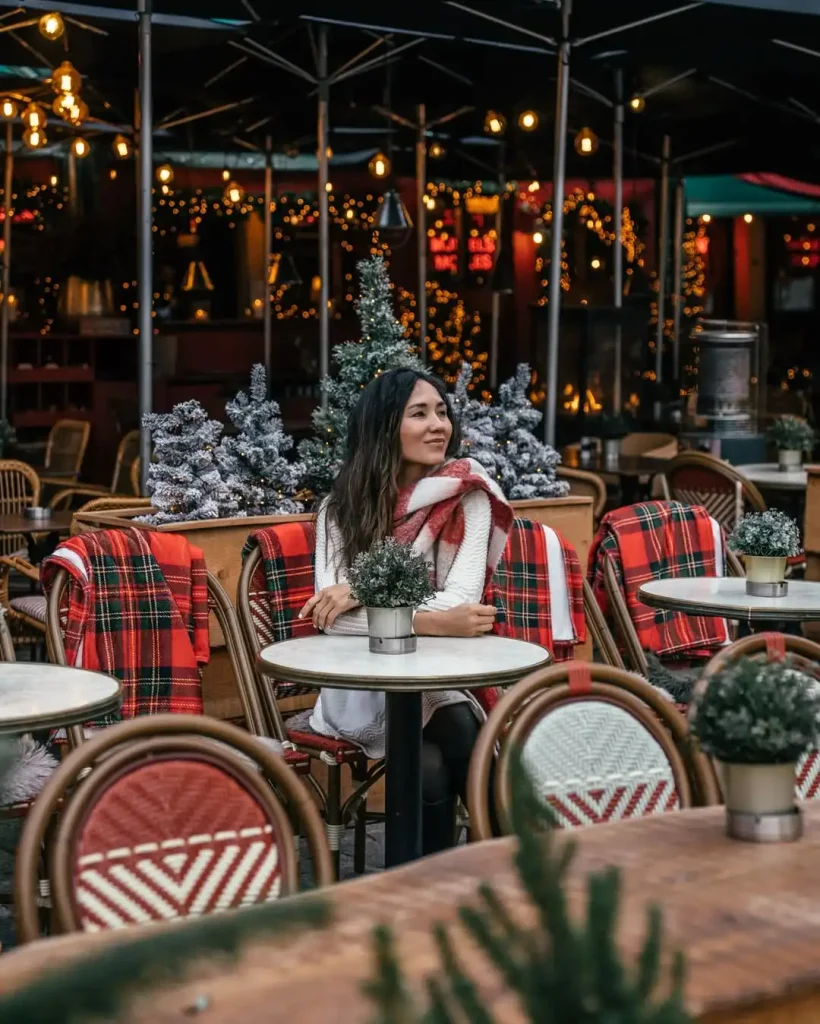
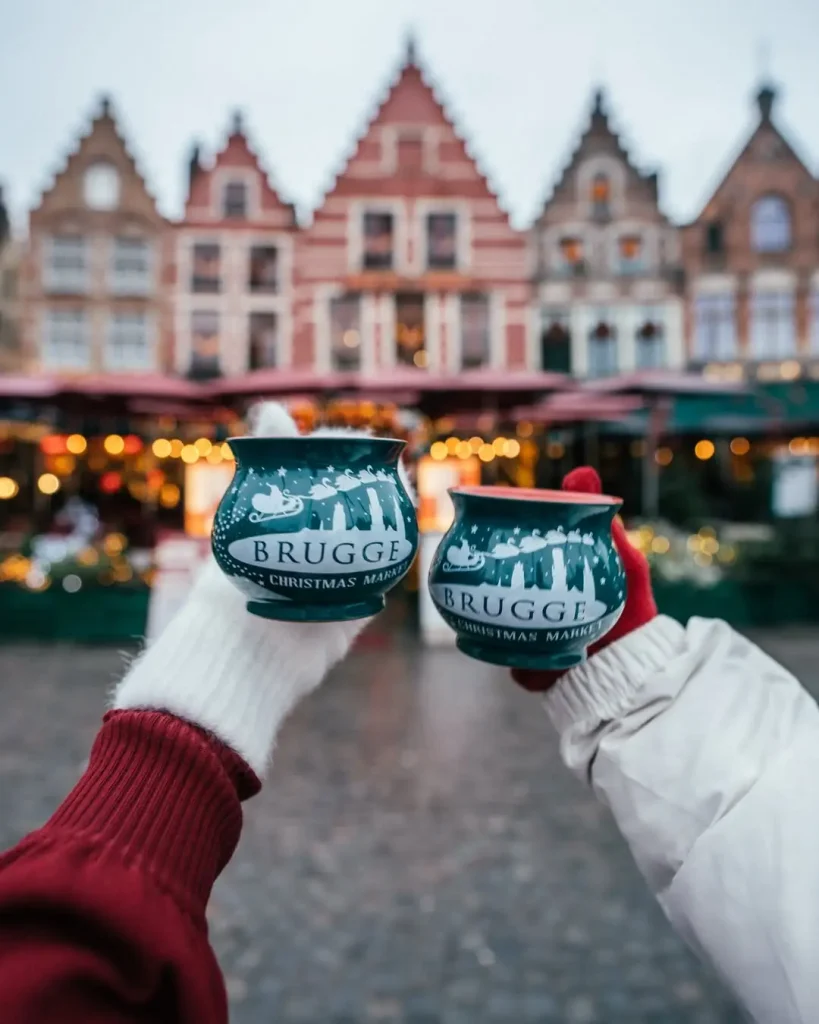
What you must eat: Frites with mayonnaise, waffles, and hot chocolate made with real melted chocolate. The market is also good for cheese and charcuterie from local producers.
Best time to go: Weekday afternoons and early evenings. Bruges is small, so the market fills up quickly on weekends.
Our Favorite Hotels in
📌 Bruges
Denmark: Hygge, Lights, and Tivoli
Copenhagen’s Christmas season is less about one market and more about a city-wide mood. Tivoli Gardens is the anchor, but the city’s streets, bakeries, and food halls all participate in the hygge (the Danish concept of cozy contentment) that defines the season.
16. Tivoli Gardens Christmas Market
Tivoli transforms into a Christmas world of lights, stalls, rides, and decorated gardens. It’s ticketed, central, and easy to combine with dinner or a walk through the city.
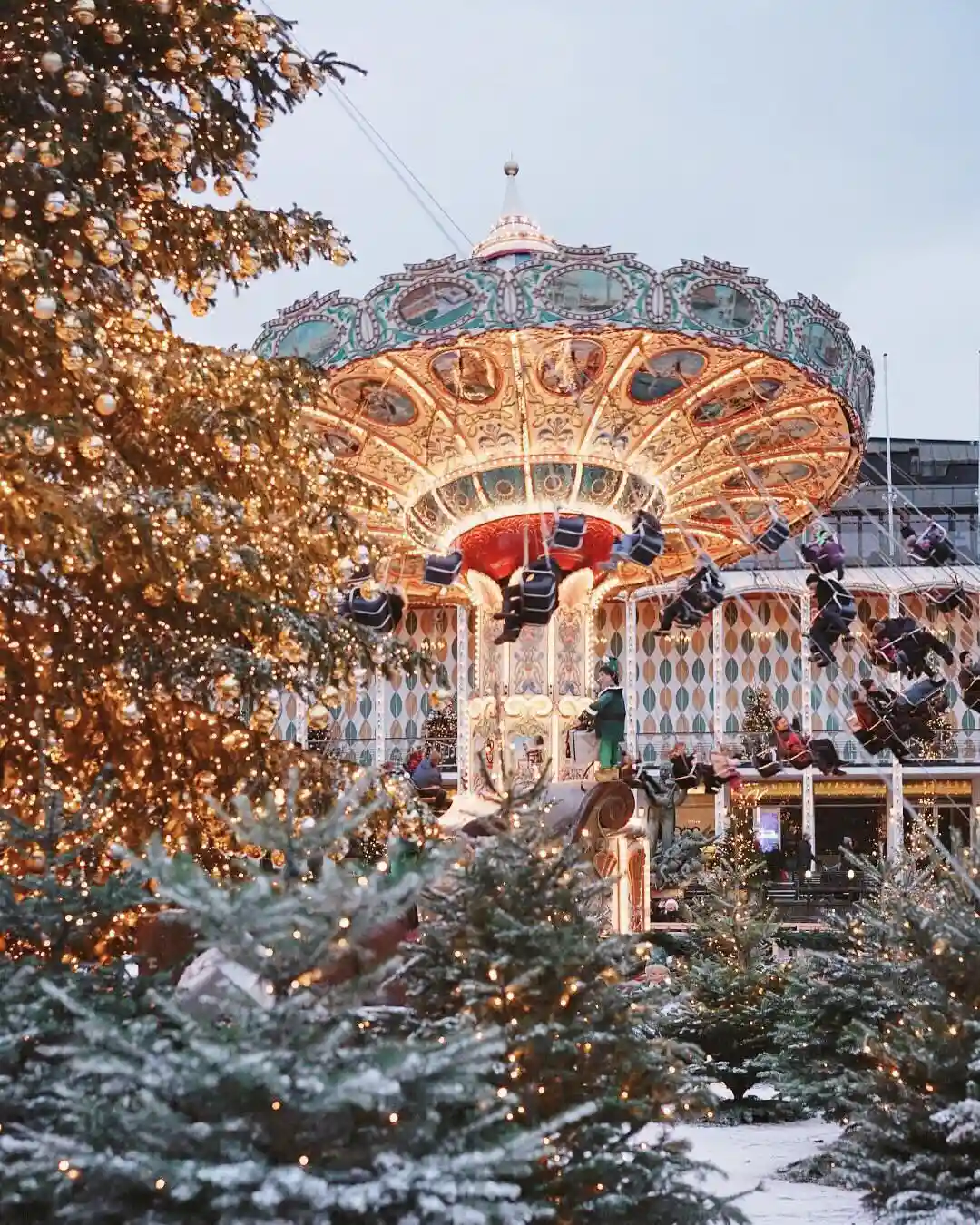
What you must eat: Gløgg (mulled wine with almonds and raisins), æbleskiver (round pancake puffs with jam), roasted almonds, and kanelsnegl (cinnamon rolls). Danish Christmas food is rich, buttery, and designed for cold weather.
Best time to go: Late afternoon into evening, when the lights come on, and the gardens feel completely transformed. Weekday evenings are quieter than weekends.
17. Nytorv and Gammeltorv Markets
The city-centre markets on Nytorv and Gammeltorv are smaller and more local than Tivoli. They’re a good stop for a quick gløgg and a pølse (Danish hot dog) while you explore the shopping streets.
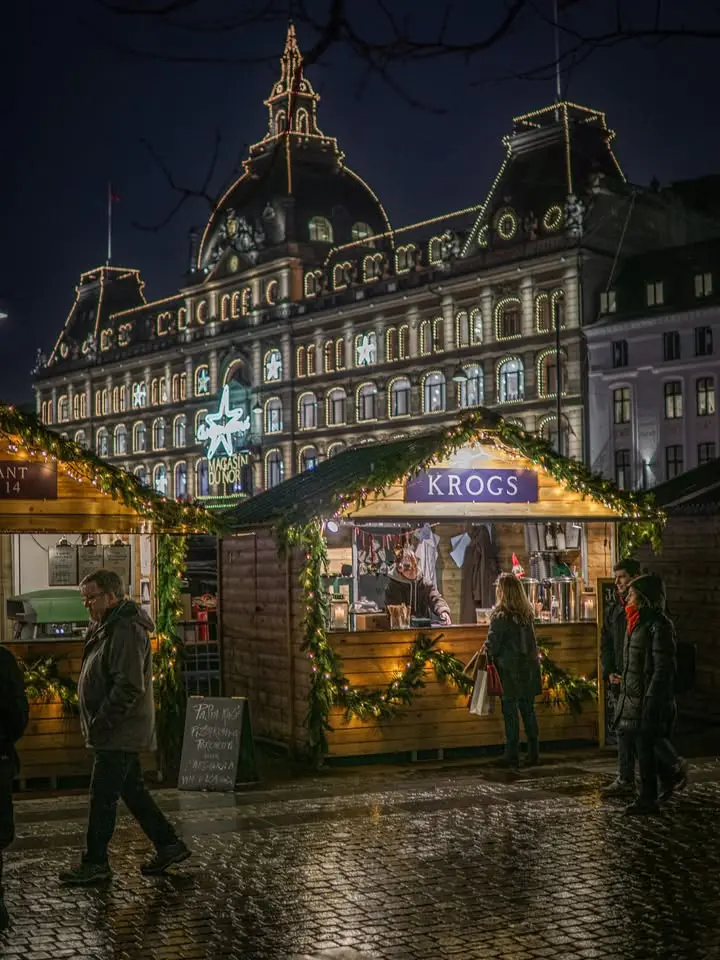
What you must eat: A pølse from a street cart, gløgg, and brændte mandler (caramelised almonds).
Best time to go: Weekday afternoons, before the after-work crowds arrive.
Estonia: The Medieval Fairytale
Tallinn’s Christmas market on Raekoja plats (Town Hall Square) is one of the most atmospheric in Northern Europe.
The medieval old town, the snow (if you’re lucky), and the giant tree in the centre of the square create a setting that feels genuinely historic rather than manufactured.
18. Tallinn Christmas Market
The market is compact—you can see it all in an hour—but most people stay longer for the food, the glögi, and the photos. The stalls sell handmade woolens, wooden toys, and local crafts, and the tree in the centre is the focal point.
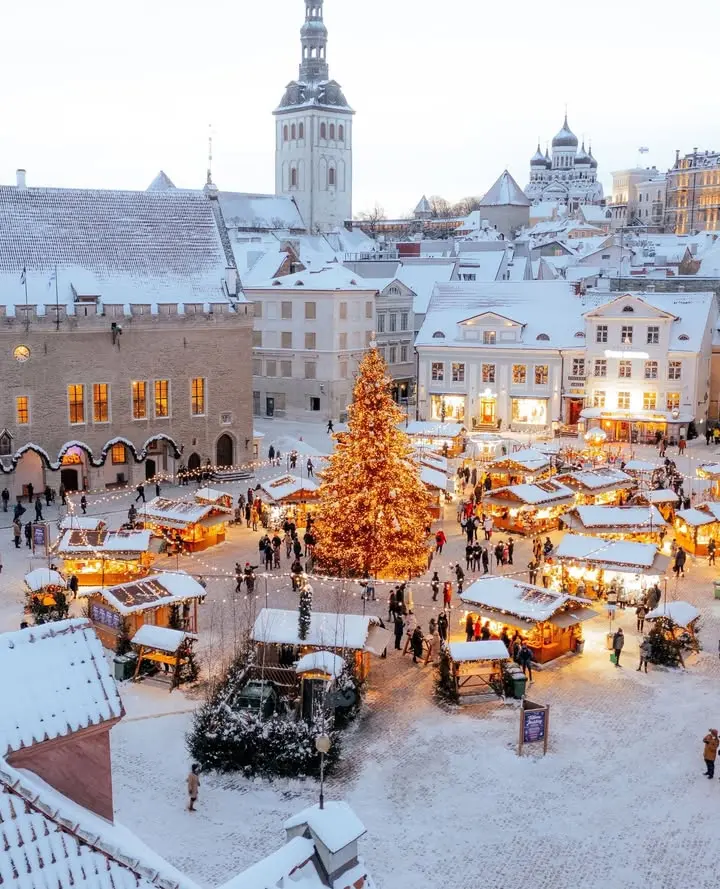
What you must eat: Black pudding with sauerkraut, potato dishes, and sweet pastries. Drink glögi—the Estonian version of mulled wine, available in both alcoholic and non-alcoholic berry versions.
Best time to go: Late afternoon or early evening, when the lights come on, and the square feels warm despite the cold. Weekday mornings are the quietest for browsing.
Poland: Big Square, Big Flavours
Krakow’s Christmas market fills the Rynek Główny—the largest medieval town square in Europe—with wooden stalls, a stage for folk performances, and a giant tree. It’s one of the best-value markets on this list, and the food is seriously good.
19. Krakow Christmas Market
The market runs from late November into early January, with stalls open from 10 AM to 8 PM (some food stalls later).
The setting—the Cloth Hall, St Mary’s Basilica, and the square itself—is spectacular, and the market feels integrated into the life of the city rather than staged for tourists.
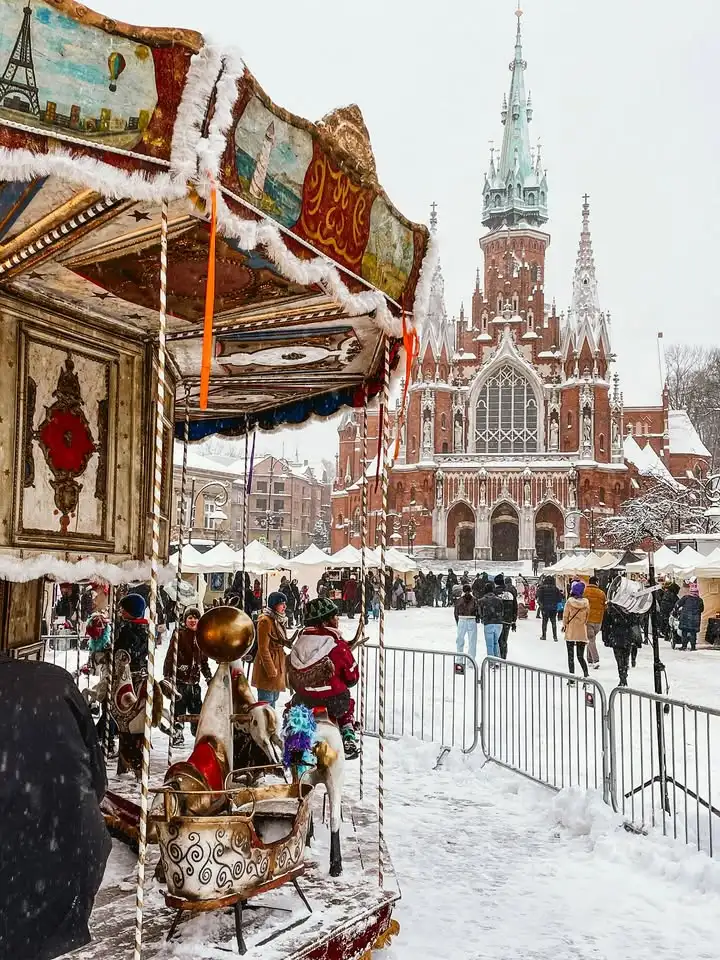
What you must eat: Oscypek—smoked sheep’s cheese from the Tatra Mountains, grilled and served with cranberry jam. It’s the single best thing to eat at the market. Also try grzaniec (Polish mulled wine), kiełbasa (grilled sausage), pierogi, and żurek (sour rye soup).
Best time to go: Weekday mornings for browsing and shopping, then after dark for the lights, the food, and the atmosphere. The square is at its busiest on weekend evenings in mid-December.
📌 Don’t Miss Out
United Kingdom: The Big, Bold Funfair
London’s Winter Wonderland in Hyde Park is not a traditional Christmas market. It’s a funfair, an ice rink, a circus, and a market rolled into one—and it’s enormous. The key to enjoying it is managing expectations and timing.
20. Hyde Park Winter Wonderland
The event runs from mid-November to early January and requires a timed entry ticket (prices vary by demand). Inside, you’ll find German-style market stalls, fairground rides, an ice rink, and more food than you can reasonably eat.
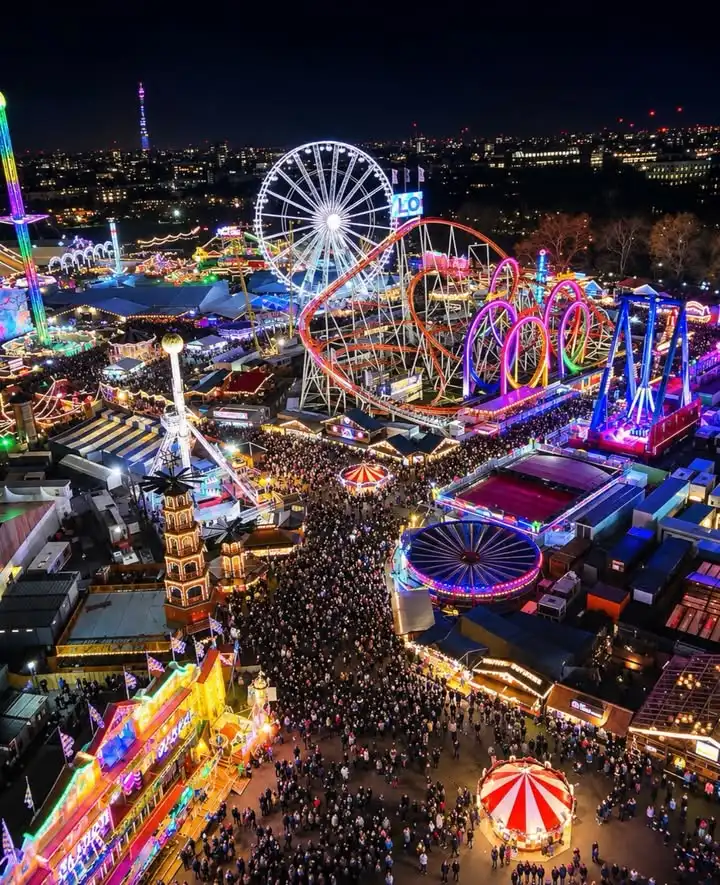
What you must eat: Bratwurst, churros, mulled wine, and hot chocolate. The food is not the reason to come—it’s decent but expensive—so treat it as part of the funfair experience rather than a culinary destination.
Best time to go: Weekday mornings in November or early December are the quietest and cheapest. Avoid weekend evenings and the final weeks before Christmas, when the crowds are intense, and the queues are long.
Our Favorite Hotels in
📌 Central London
A Few Final Truths About Christmas Markets in Europe
The best Christmas markets in Europe are not the ones with the most stalls or the biggest trees. They’re the ones where the setting, the food, and the timing align. A small market in a medieval square, visited on a quiet weekday afternoon with a cup of something hot, will almost always beat a famous market visited on a Saturday night in December.
Go during the day to shop and see the stalls clearly. Come back after dark for the lights and the atmosphere. Eat the local specialty, not the generic sausage. And if a market is too crowded, leave—there’s always another square, another stall, another cup of glühwein waiting somewhere quieter.
That’s the real magic of Christmas markets in Europe: there are enough of them that you never have to settle for the wrong one.