How to Wear Winter Outfit Colors: 7 Bright & Bold Ideas for Cold Days
From vibrant reds to icy blues, these colors make winter outfits pop

- This article contains affiliate links. I may receive a commission if you purchase from them, at no extra cost to you.
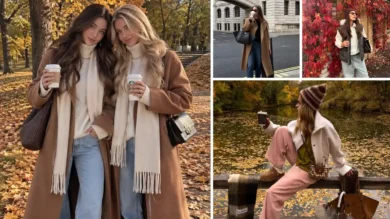
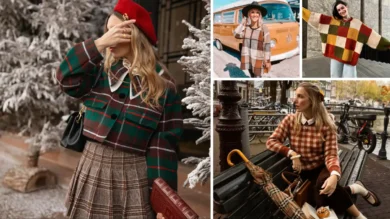
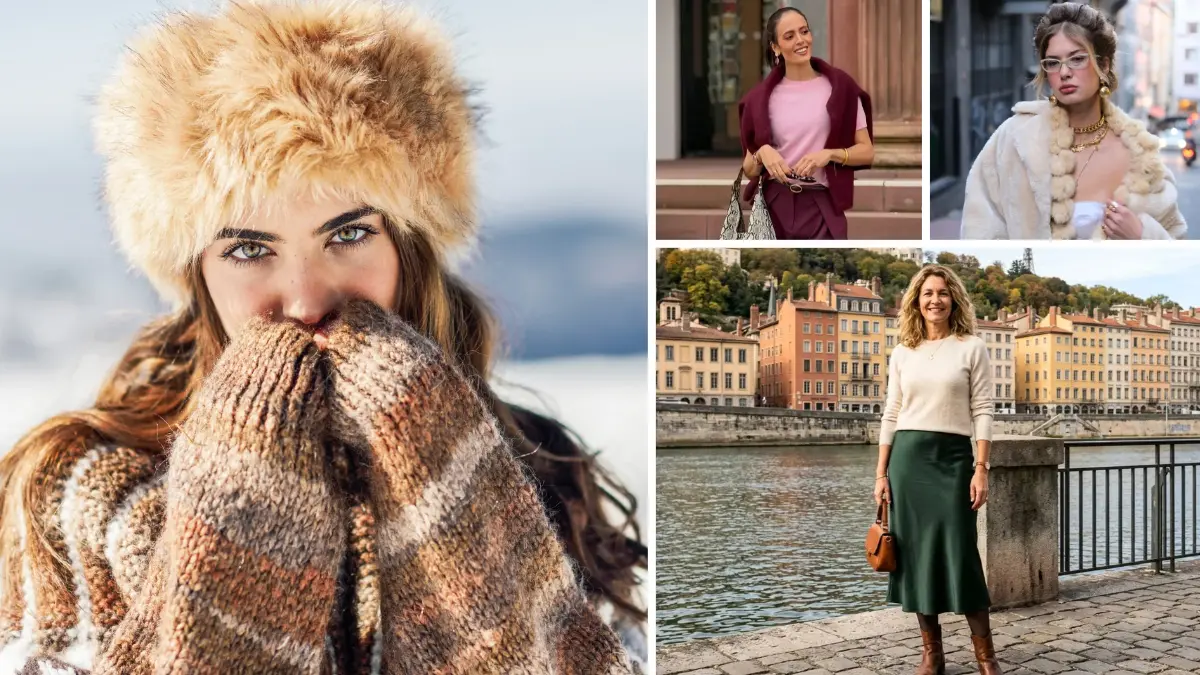
Winter dressing has a default setting: black, grey, beige, repeat. It’s safe, it’s easy, and by February it’s boring. The good news is you don’t need a whole new wardrobe to fix that.
You need two colors per outfit — one that does the heavy lifting and one that lifts it. Get that pairing right and even a simple coat-and-trousers combination looks like you planned it.
Below are seven winter outfit color combinations worth trying, with two ways to wear each one: a polished version for days you need to look put together, and a cozy version for days you don’t.
1. Rose Taupe and Deep Berry
Why it works: These two sit next to each other on the color wheel, so they blend instead of competing.
Rose taupe is a warm, dusty neutral that keeps the outfit soft, while deep berry adds richness and depth without going full red. The result reads expensive — like you own things, not just clothes.
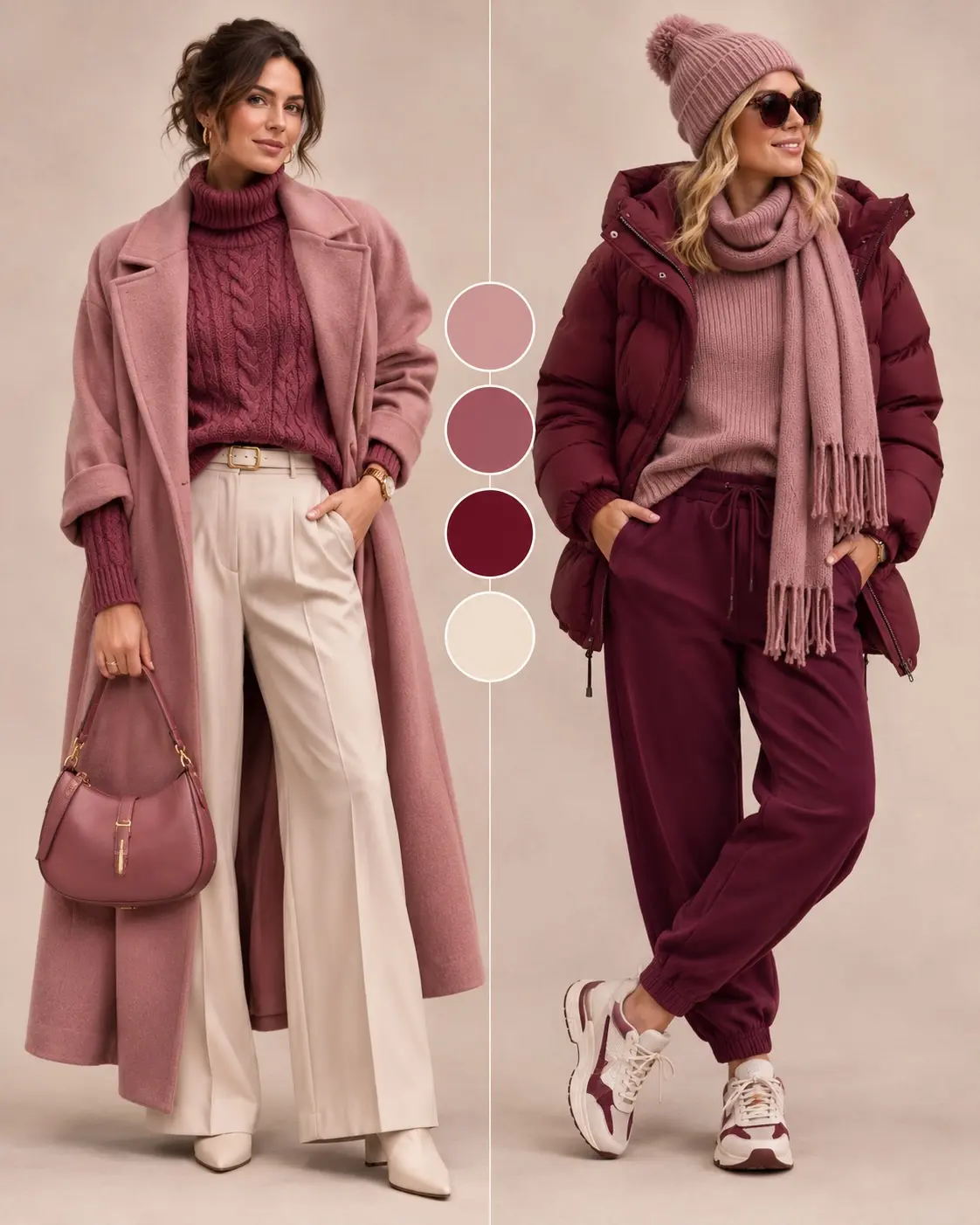
The chic version: A rose taupe wool-blend coat over a cable-knit sweater, wide-leg wool trousers, and pointed-toe boots. Keep everything in the taupe family and let the berry live in one piece — a sweater, a bag, or the boots.
The cozy version: Swap the coat for a puffer and the trousers for soft joggers. A berry knit sweater under a taupe puffer with chunky sneakers is the same palette, just softer.
If you’re starting from scratch, a rose taupe wool coat does most of the work here.
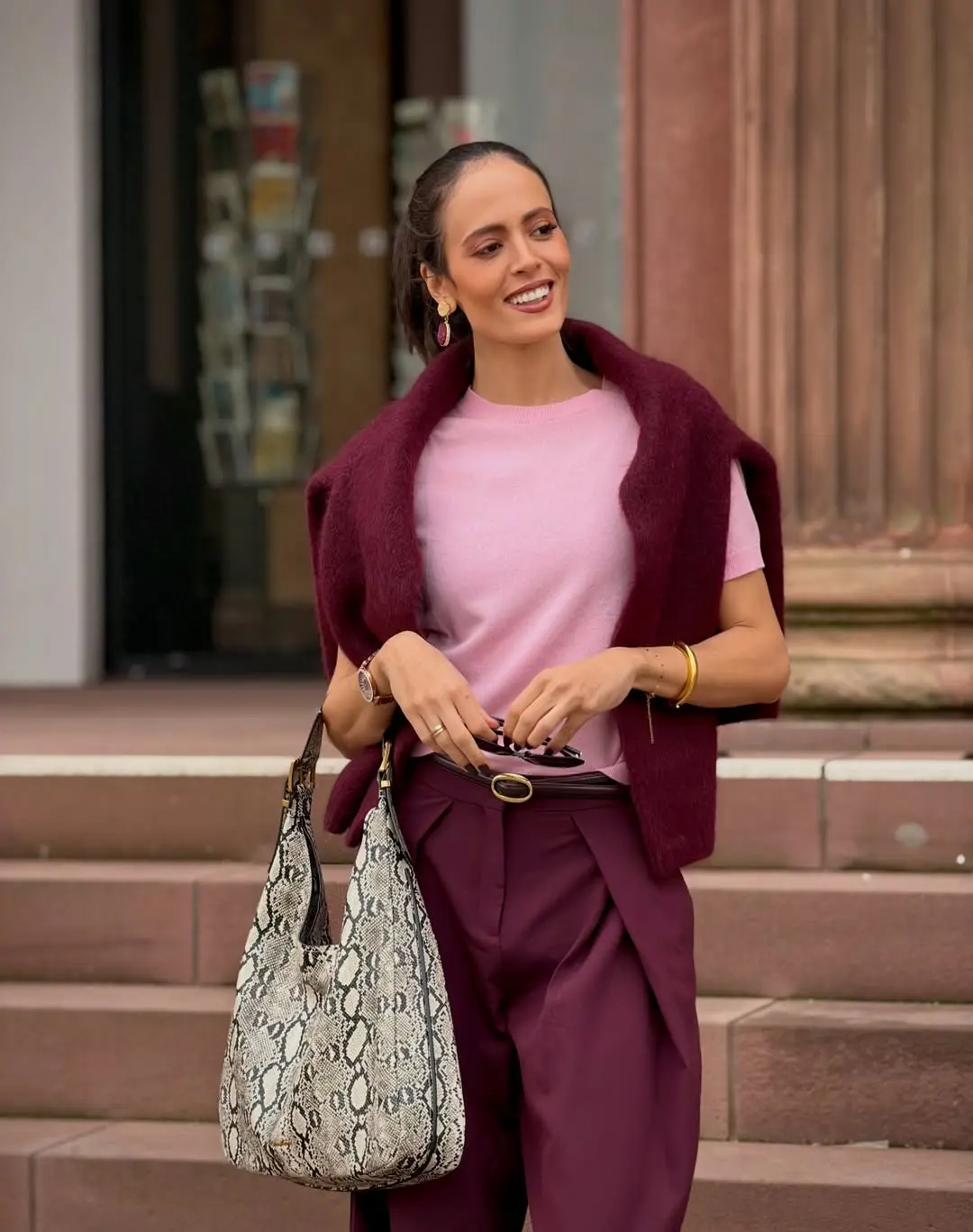
Get the look: Burgundy Sweater | Pink T-Shirt | Burgundy Trousers
2. Charcoal Gray and Soft Yellow
Why it works: This is high contrast done properly. Charcoal is cool and serious, soft yellow is warm and unexpected — and because the yellow is muted rather than neon, it reads sophisticated instead of loud.
It’s also one of the few pairings that genuinely warms up a grey winter wardrobe.
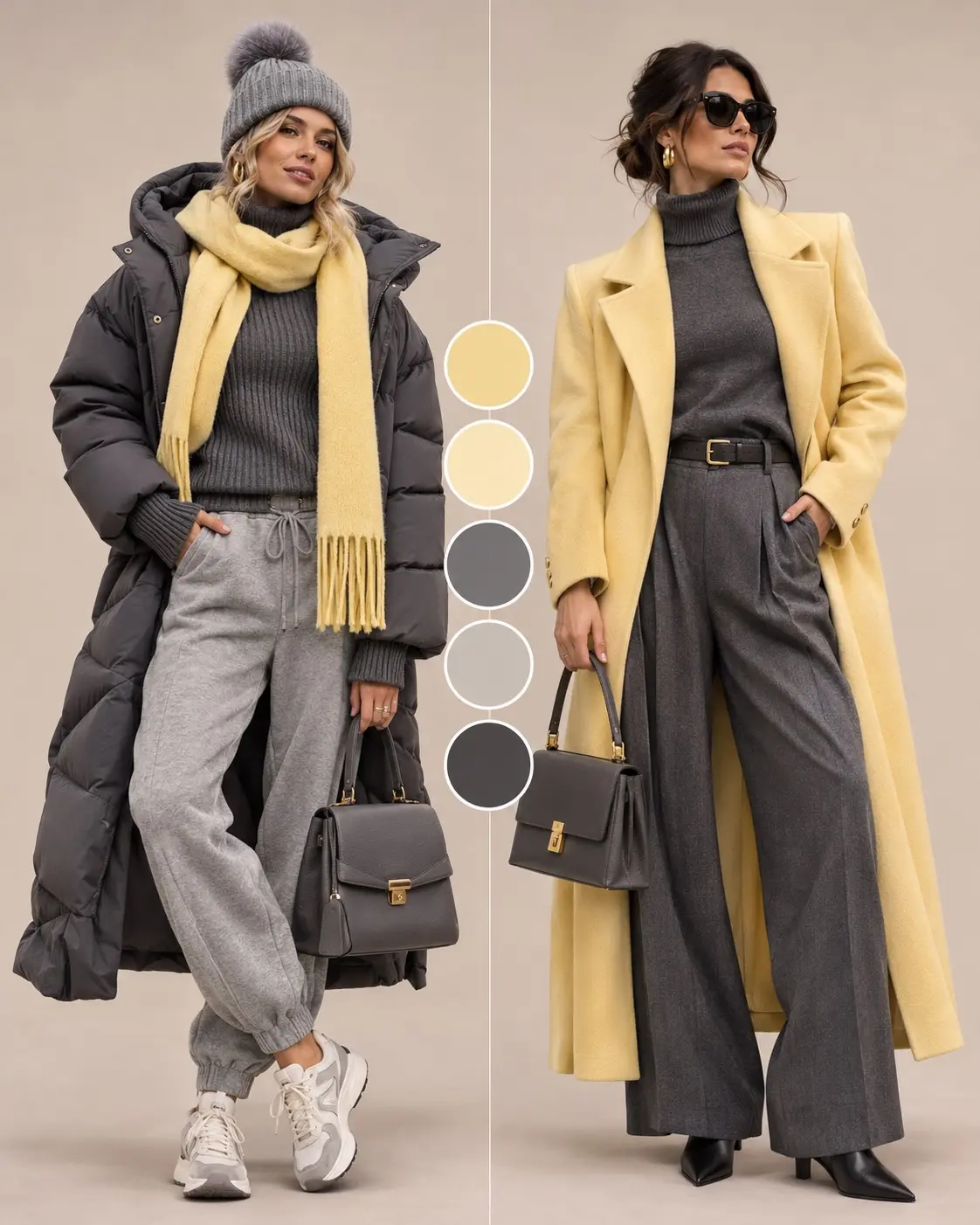
The chic version: A textured wool coat over a tucked-in turtleneck, wide-leg wool-blend trousers, and pointed-toe heels. Let the coat be charcoal and the sweater be the yellow, or flip it for a bolder statement.
The cozy version: A smooth nylon puffer over a ribbed knit sweater and jersey sweatpants, finished with chunky sneakers. Yellow at the neckline, charcoal everywhere else.
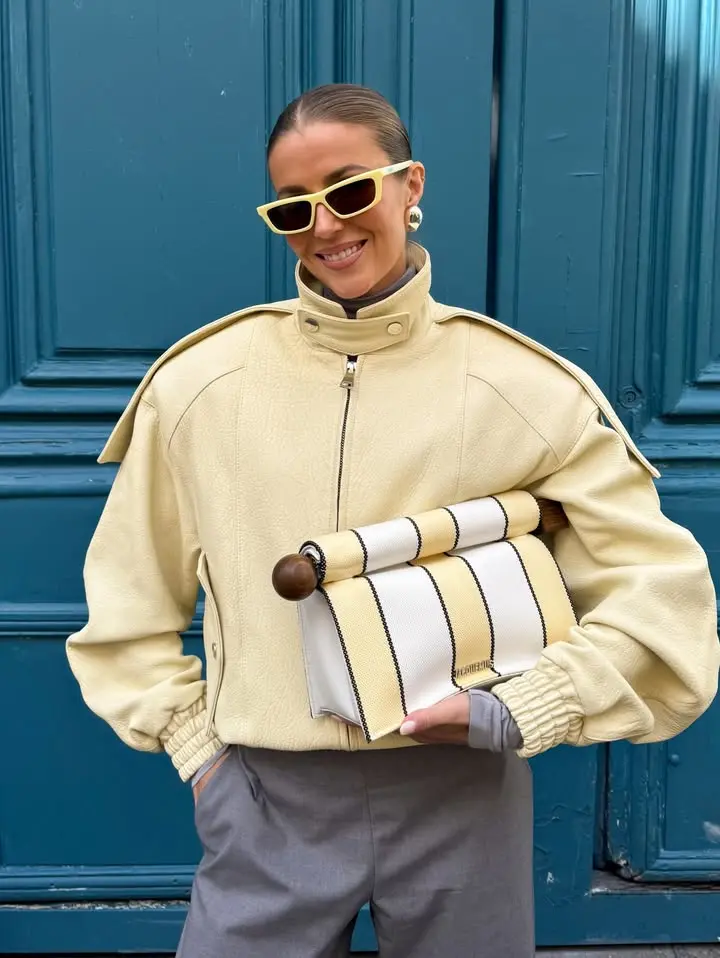
Get the look: Yellow Jacket | Grey Trousers | Yellow Sunglasses
3. Taupe and Mint Green
Why it works: This is a beautiful contrast between a cool pastel and an earthy neutral. The key word here is muted.
The mint green brings a fresh, cool vibe, while the taupe warms it back up and grounds the outfit. Together, they look incredibly sophisticated and calm instead of chaotic.
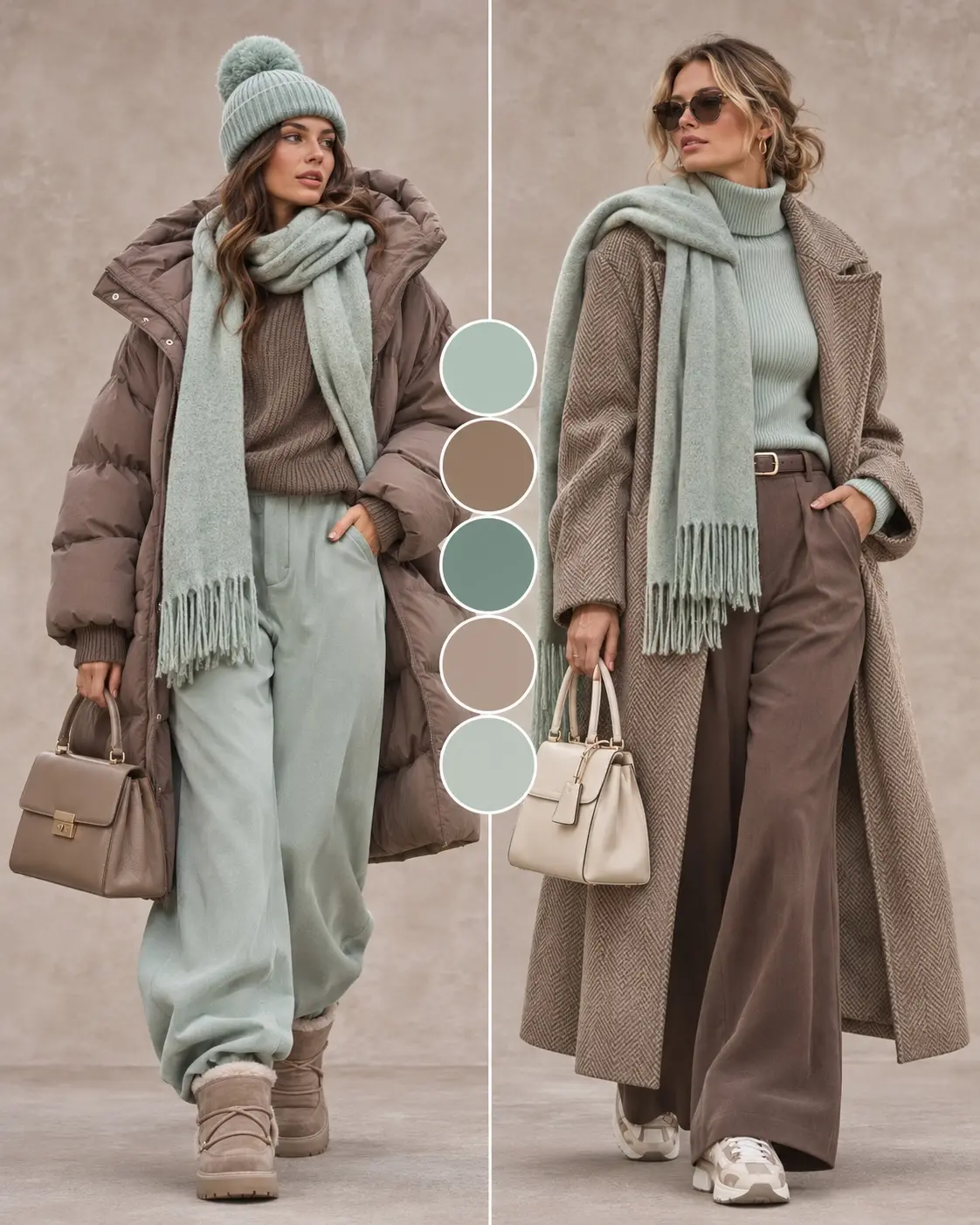
The chic version: A herringbone coat over a ribbed turtleneck, wide-leg trousers in a soft fabric, and chunky leather-and-mesh sneakers. The herringbone texture is what keeps the pastels from feeling flat.
The cozy version: A smooth padded coat over a ribbed knit sweater and flowing trousers, with shearling-lined boots adding a fuzzy, textured finish.
Pairing a pastel with a textured neutral — herringbone, tweed, shearling — is the trick that makes pastel winter outfit colors feel grown-up.
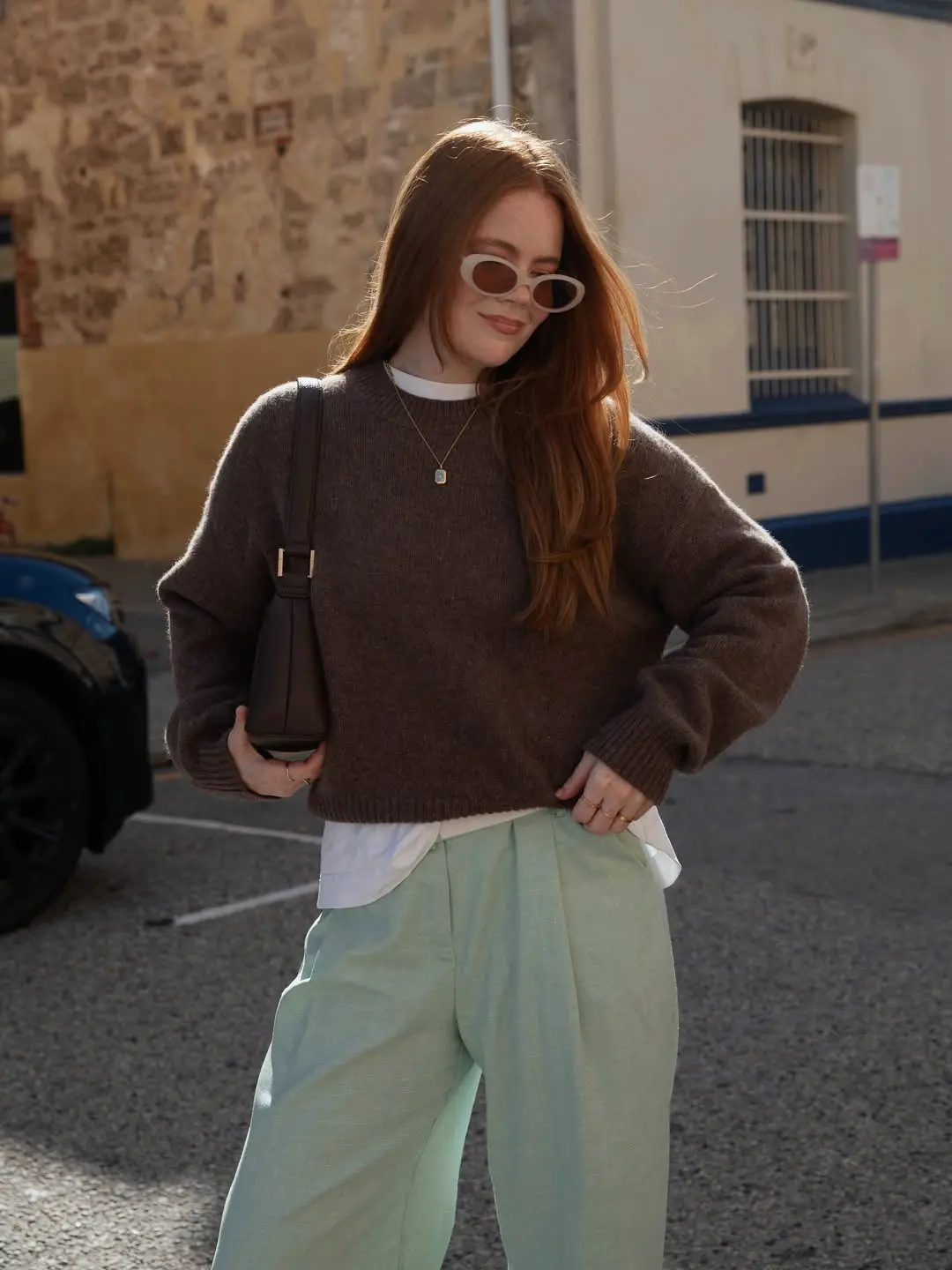
Get the look: Brown Sweater | White Tee | Mint Green Pants
4. Baby Blue and Cream
Why it works: Baby blue can look cold and clinical on its own. Cream fixes that instantly by adding warmth and softness.
Together they’re light, clean, and surprisingly flattering against most skin tones — a nice break from the dark palette everyone else is wearing in January.
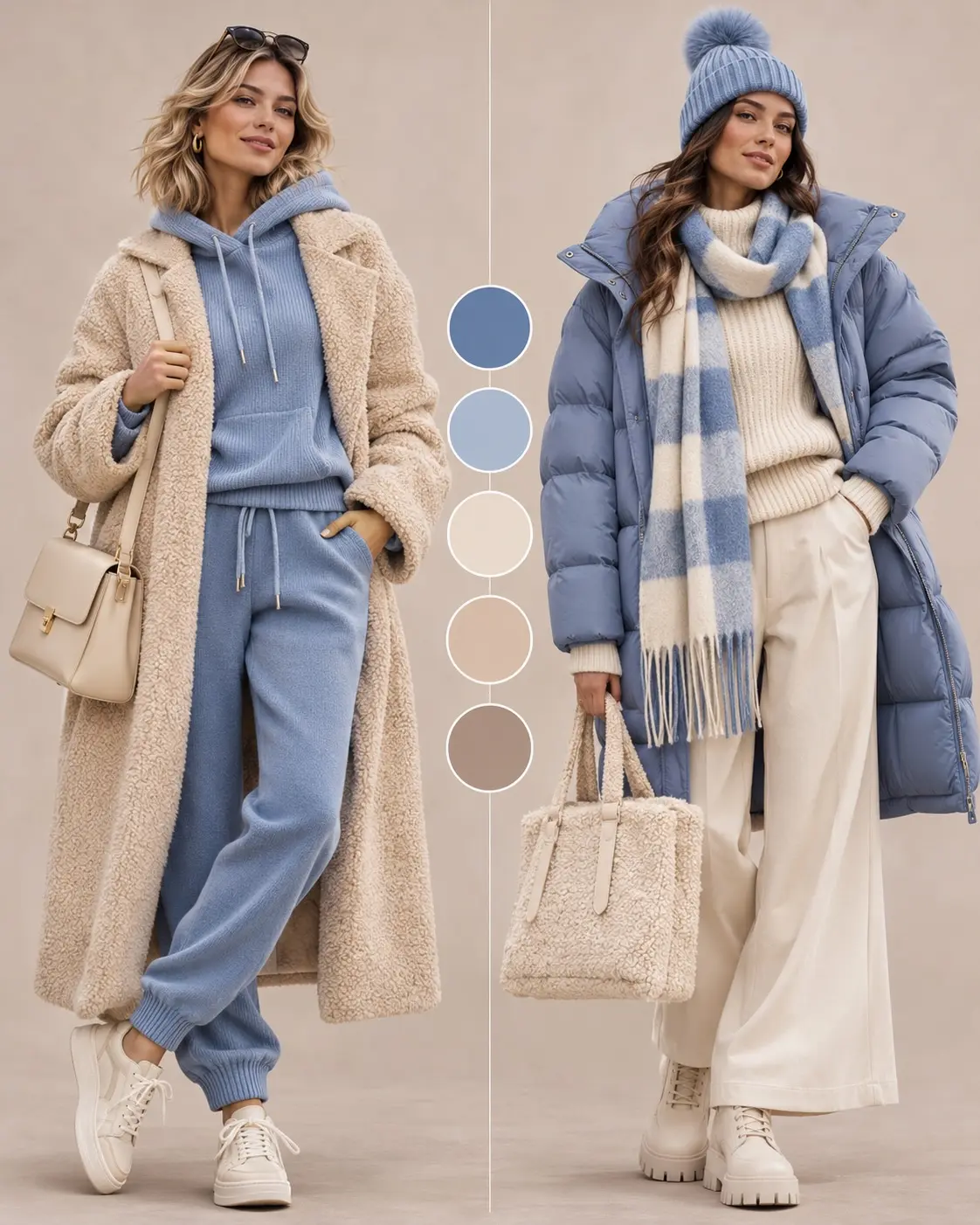
The chic version: A puffer coat over a knit sweater, wide-leg trousers, and combat boots. The combat boots are important — they ground the lightness of the blue and cream so the outfit doesn’t feel precious.
The cozy version: A teddy bear coat over a hoodie and sweatpants with chunky sneakers. All cream on cream with the blue as the outer layer is the coziest version of this palette.
A cream teddy coat is the easiest entry point here.
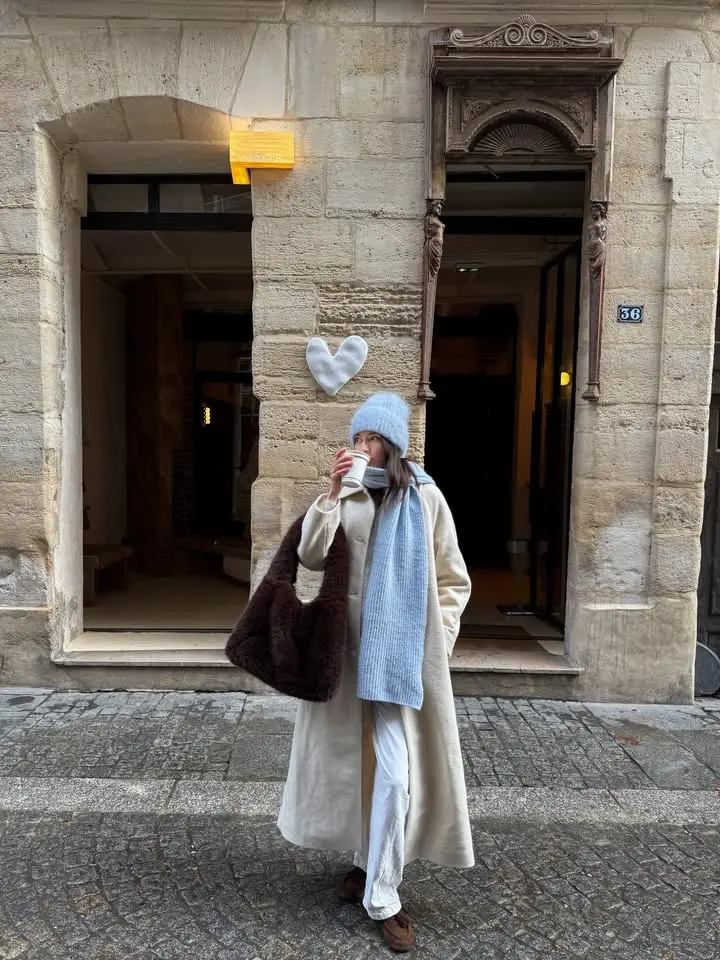
Get the look: Beige Coat | Blue Scarf | Blue Beanie | White Pants
5. Lilac and Heather Grey
Why it works: Lilac is a beautiful color that a lot of people avoid because it can look sweet or juvenile.
Heather grey is the antidote — it’s the most neutral, unbothered color in the wardrobe, and it makes lilac read modern and effortless. Grey does the grounding, lilac does the lifting.
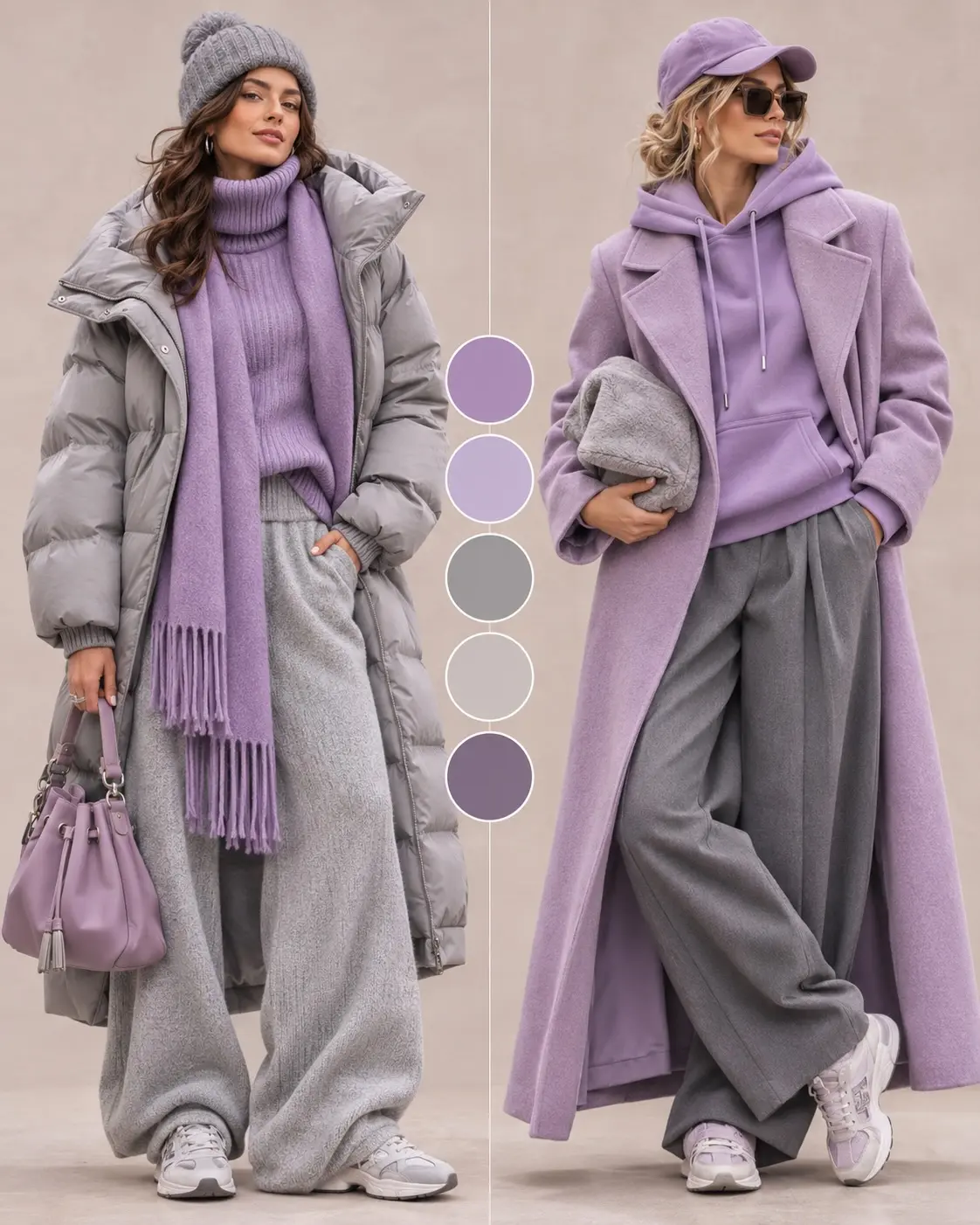
The chic version: A long smooth wool-blend coat over a fleece-feel hoodie, pleated wide-leg trousers, and smooth leather sneakers. Yes, a hoodie — this palette works especially well when the silhouette is relaxed.




The cozy version: A smooth puffer over a ribbed knit turtleneck and textured wide-leg knit pants, finished with chunky-soled sneakers.
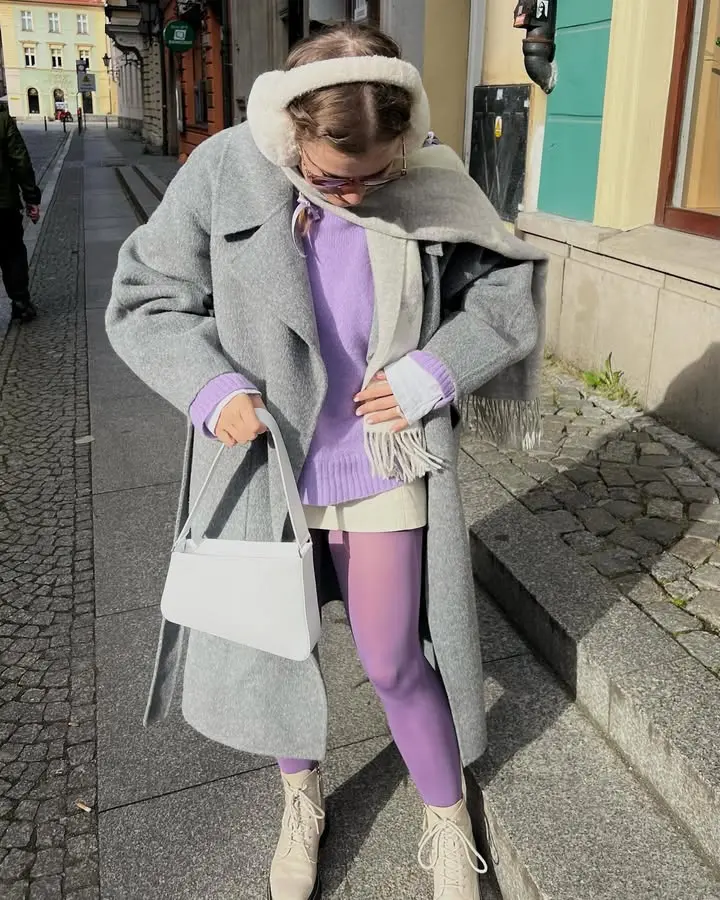
Get the look: Grey Coat | Lilac Sweater | Purple Tights
6. Terracotta and Baby Blue
Why it works: This is a warm-cool pairing, and that tension is exactly why it’s interesting. Terracotta is earthy, grounded, and warm — it’s the color of bricks and clay pots. Baby blue is cool and light.
Put them together, and each one makes the other look more vivid without either getting loud.
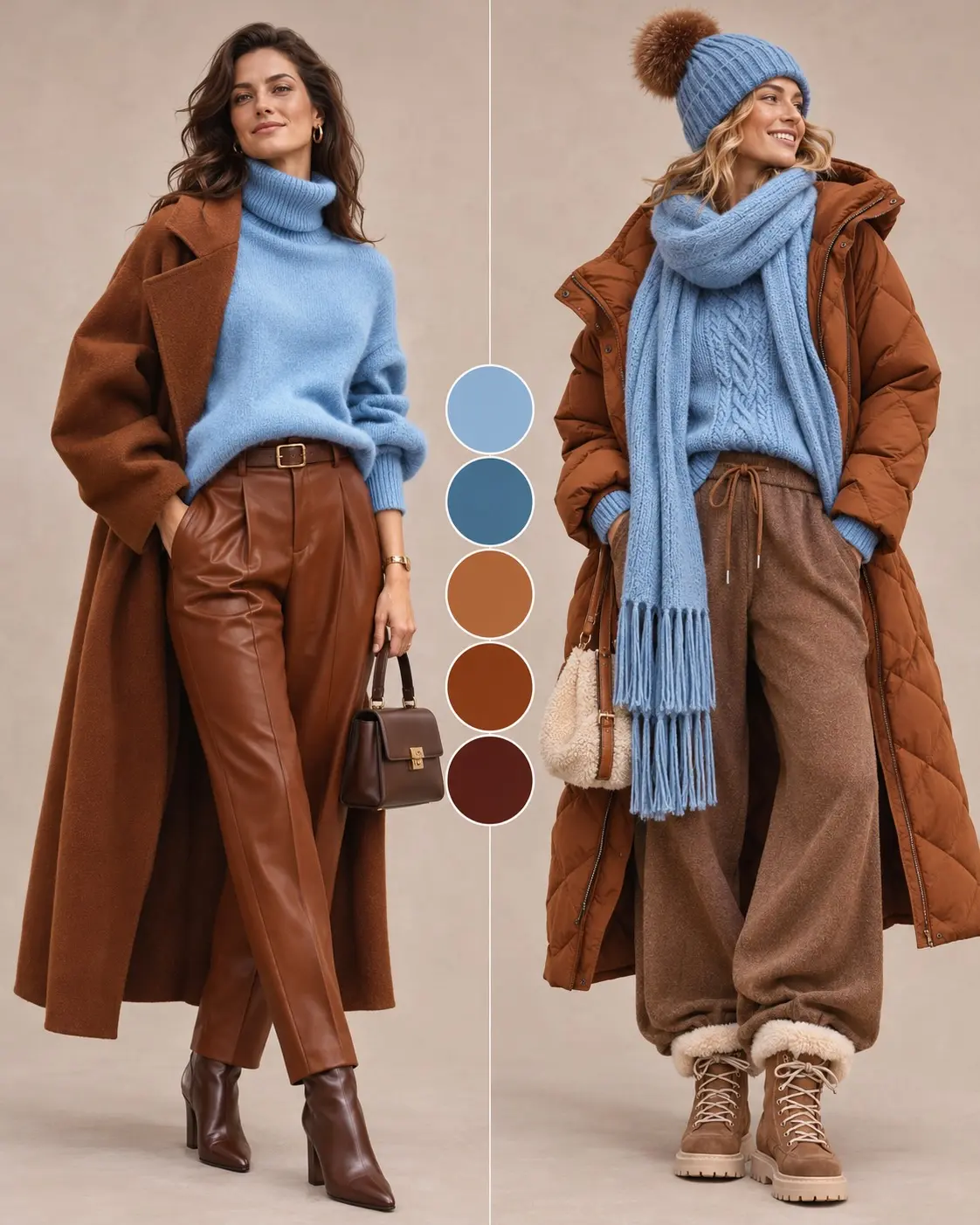
The chic version: A wool coat over a cashmere turtleneck, faux leather trousers, and pointed-toe heeled boots. Terracotta coat, baby blue turtleneck — or the reverse, with the blue on the outside and the terracotta at the neck.
The cozy version: Terracotta knit sweater with pale blue joggers and chunky sneakers. Keep the accessories neutral so the two colors stay the story.
This is the boldest pairing on the list, and it’s also the one that gets the most compliments. Faux leather trousers make the chic version feel modern instead of office-y.
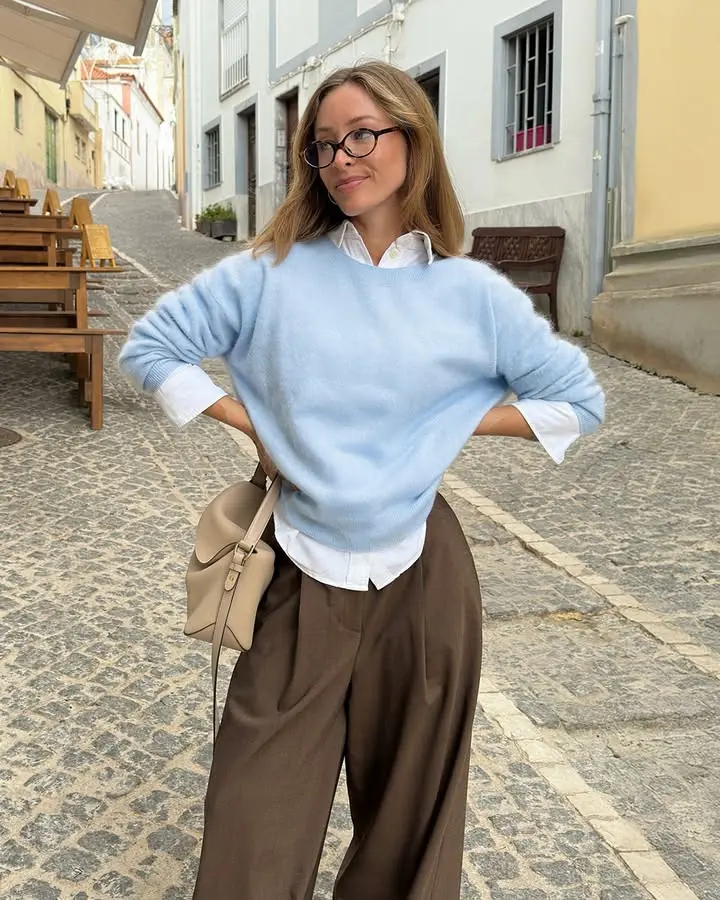
Get the look: Light Blue Sweater | White Button-Down | Brown Trousers
7. Forest Green and Cream
Why it works: Forest green is deep and saturated, which can feel heavy in the middle of winter. Cream lightens it instantly. It’s also a classic pairing — dark green and off-white have been elegant for a hundred years, which is why it never looks trendy or dated.
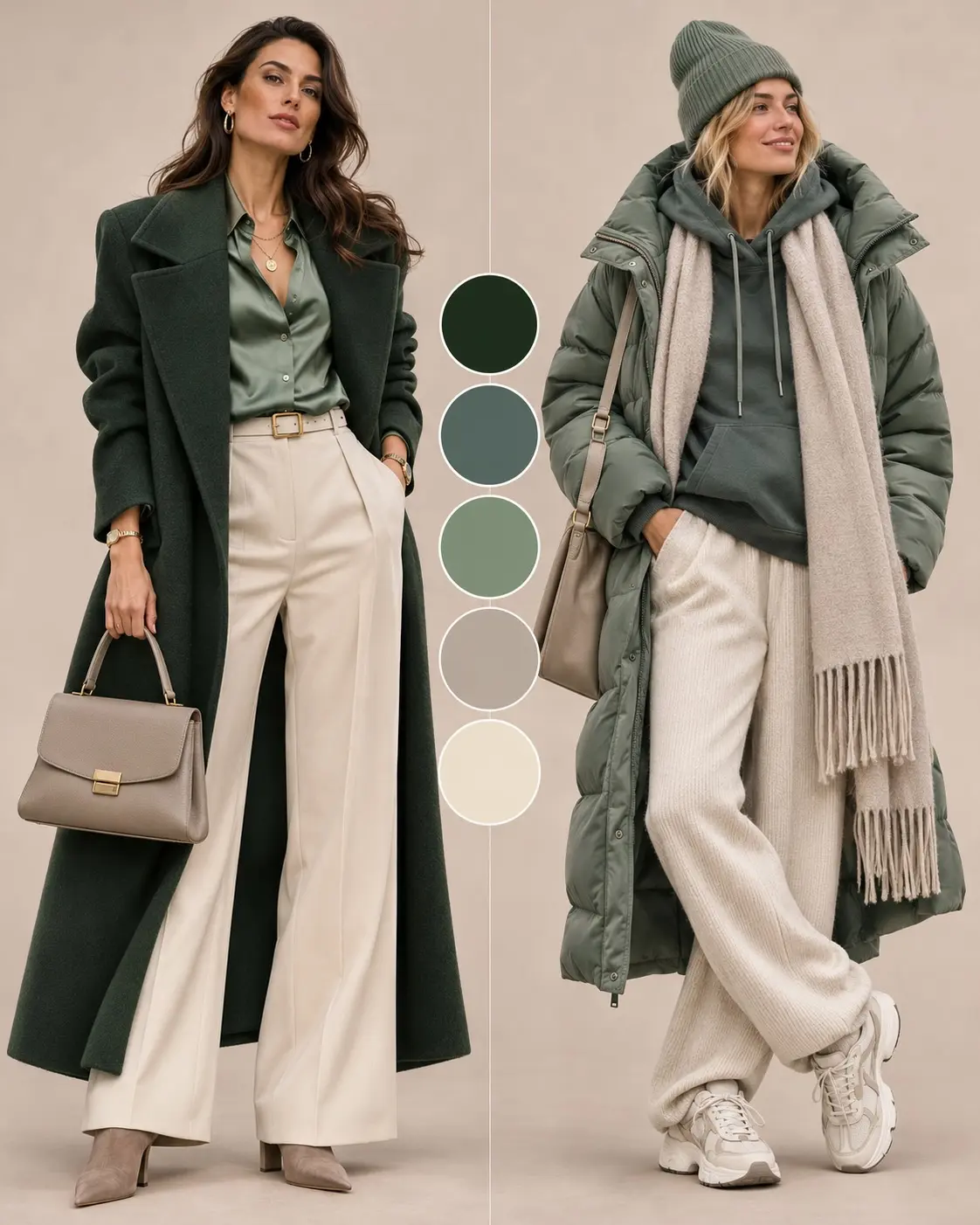
The chic version: A wool-blend coat over a silk blouse, wide-leg trousers, and suede boots. The silk blouse is what elevates it — the texture contrast between wool, silk, and suede does more than any accessory could.
The cozy version: A puffer coat over a hoodie and knit trousers, with sneakers in mesh and leather. Cream hoodie, green coat, neutral shoes.
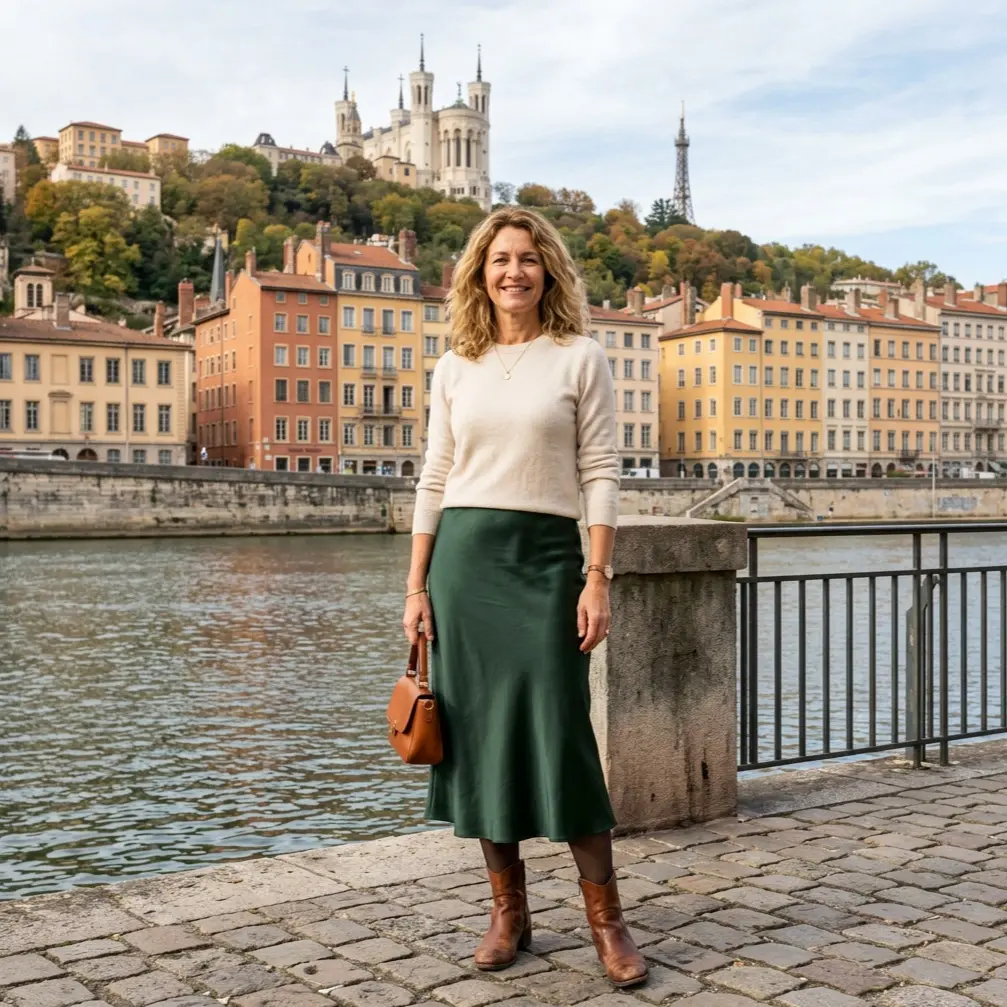
Get the look: Cream Sweater | Green Midi Skirt | Brown Boots
Practical Tips for Wearing Bright Colors in Winter
Before you dive in, a few things that make bold winter colors easier to wear:
- Keep the bright color away from your face if you’re unsure. A coat, trousers, or boots in a statement color is far more forgiving than a sweater right under your chin.
- Anchor brights with a neutral that has texture. Cream, oatmeal, heather grey, taupe. Flat neutrals can make brights look cheap; textured ones make them look expensive.
- Use your accessories to repeat the color. If your coat is berry, carry a berry bag or wear berry gloves. One repeat is enough to make it look deliberate.
- Avoid two brights together unless they’re both muted. Dusty rose and mint work because they’re desaturated. Neon and pastel do not.
- Test the palette in daylight. Winter lighting is grey and unforgiving. Check your outfit near a window before you commit — colors that look fine indoors can clash outdoors.
- Start with a scarf or a beanie. If you want to try a new color without buying a whole piece, a scarf is the cheapest test run, and it sits right where everyone looks.
How to Pick Your Winter Outfit Colors
If you want a rule you can apply without thinking, use this one: one deep color plus one light neutral.
Forest green and cream. Deep berry and rose taupe. Charcoal and soft yellow. Almost every combination above follows that structure, and it’s the reason they all work.
The second thing is texture. Winter is the one season where you can layer wool, cable knit, herringbone, fleece, suede, and leather in the same outfit — so if your winter outfit colors feel flat, the fix is usually texture, not more color.
Start with one pairing from this list. Wear it once. Then try a second. By the time the season’s over, your default won’t be all black anymore.
Which palette are you trying first? Let me know in the comments.