- This article contains affiliate links. I may receive a commission if you purchase from them, at no extra cost to you.
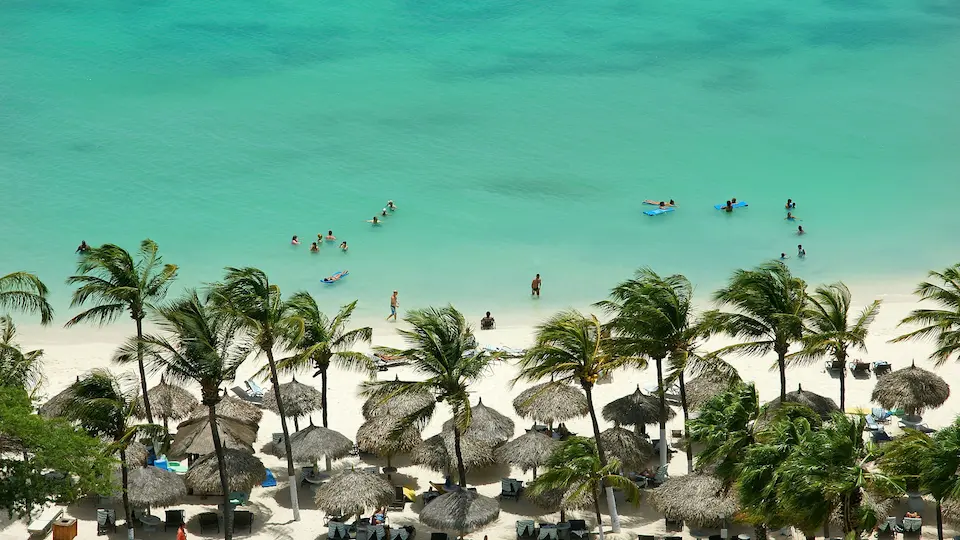
Aruba has a problem most islands would kill for: it’s so easy to love that visitors often never leave their resort. I’ve watched people spend a week on Eagle Beach, hitting the same overpriced restaurants, buying the same generic souvenirs, and leaving convinced they’ve experienced Aruba.
They haven’t. The real Aruba is out there—on the windward coast where waves explode against limestone cliffs, in the hidden coves accessible only by 4×4, at the roadside stands selling pastechi that will ruin you for all other fried dough.
This aruba itinerary is for travelers who want more than a beach chair. It’s the island as locals know it.
Table of contents ⇅
Before Wheels Hit Sand: What Makes Aruba Different
➭ The Wind: Aruba sits outside the hurricane belt—one of its greatest selling points. But that blessing comes with a constant companion: trade winds that blow 15-25 mph year-round. They’re why the divi-divi trees lean permanently southwest.
They’re also why you’ll never feel oppressively hot. Embrace the wind. Let it cool your sunburned shoulders. Just know that your hair will be a disaster and you’ll stop caring by day two.
➭ The Currency: Aruba uses the Aruban Florin (AWG), but the US dollar is accepted everywhere at a fixed rate of 1 USD = 1.75 AWG. Bring dollars. You’ll get change in dollars or florins depending on the establishment. Credit cards work at hotels and restaurants, but cash is king at food trucks and local markets.
➭ Staying Connected: This is where Saily comes in handy. Aruba’s cell service is fine, but roaming fees can sneak up on you. The Saily eSIM app gives you reliable data from the moment you land—no hunting for a Digicel or Setar store, no trying to explain your phone model in a language you don’t speak.

➭ The Language: Papiamento is the local language—a beautiful creole blending Portuguese, Spanish, Dutch, and African influences. You’ll hear “Bon bini” (welcome) and “Danki” (thank you) constantly. Everyone speaks English. Everyone. But learning to say “Bon dia” (good morning) will earn you genuine smiles.
The One Thing You Must Do Before Arriving
Rent a 4×4. Not a sedan. Not a “compact SUV.”
Here’s why: Aruba’s best spots—the Natural Pool, the California Lighthouse dunes, the windward coast—require high clearance and sometimes four-wheel drive. Rental companies will try to sell you a Jeep Wrangler, and for once, the upgrade is actually justified. Book it months ahead. The good 4x4s go fast.
A dry bag for your phone and wallet is essential for beach-hopping. This waterproof pouch lets you take photos without worrying about salt spray.

Day 1: The Windward Coast and Natural Wonder
Morning (8:30 AM): Arikok National Park Before the Heat
Most visitors hit Arikok in the afternoon. Big mistake. By 11 AM, the sun is brutal, and the rocks reflect it like an oven. Go early.
Arikok National Park covers nearly 20% of the island. The entrance fee (about $12) is worth every cent. Your 4×4 will earn its keep here.
First Stop: The Quadirikiri Caves
These aren’t your standard tourist caves. Two chambers connected by natural light shafts that create pools of illumination on the cave floor. Bats hang from the ceiling—they’re harmless, just sleeping. The second chamber opens to the sky through a collapsed roof, and the effect is cathedral-like. Arrive when it opens and you might have it to yourself.
Second Stop: The Natural Pool (Conchi)
This is why you rented the 4×4. The road to the Natural Pool is a test—rocky, rutted, sometimes requiring you to get out and spot for your driver. You’ll pass a sign that says “4×4 Only. No Liability.” They mean it.
The pool itself is a geological freak: a collapsed lava formation that fills with seawater but stays calm while waves crash all around. You climb down a metal ladder, and suddenly you’re floating in cool, clear water surrounded by rock walls, watching waves explode on the rim. It’s Aruba’s most photographed spot for a reason.
The Reality: It can get crowded. If there are already 20 people when you arrive, go to another park spot and return later. The trade winds pick up around 10 AM, which actually makes the pool more dramatic.
Wear water shoes. The rocks are sharp. And bring goggles—the underwater visibility is incredible.
Insider Tip
Lunch (12:30 PM): Local Eats
Skip the park’s snack bar. Instead, head to Zeerovers in Savaneta. It’s a fishing cooperative that turned into a restaurant. You walk up to the counter, point at whatever fish they caught that morning, they fry it, and you eat it at picnic tables over the water. The shrimp is excellent. The fried plantains are essential. The vibe is pure Aruba.
Afternoon (2:00 PM – 5:00 PM): Baby Beach and San Nicolas
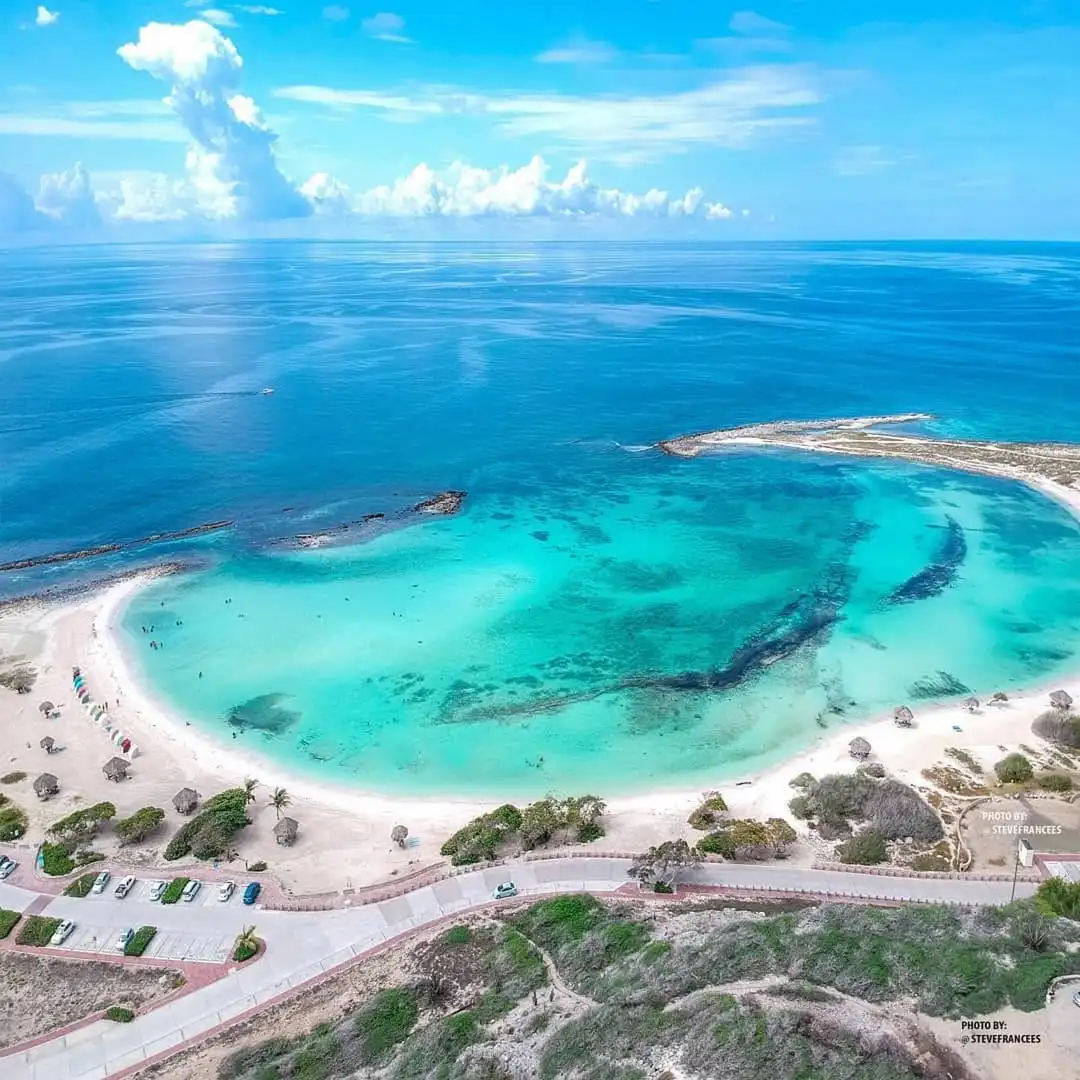
Drive south to Baby Beach. Yes, it’s touristy. Yes, you should still go. The shallow, protected cove is perfect for floating. Bring snorkel gear—the reef near the breakwater has parrotfish, angelfish, and occasional sea turtles.
From Baby Beach, head into San Nicolas, Aruba’s “sunrise city.” This is where the island’s art scene is exploding. The walls are covered in murals by international and local artists. Park and walk. The murals tell stories you won’t find in guidebooks—about Aruba’s history, its people, its struggles.
Evening (6:30 PM): Sunset at Baby Beach
Drive back to Baby Beach for sunset. The western-facing cove catches the light perfectly. Most people watch sunset from the high-rise hotel strip. This is better. Quieter. Realer.
Dinner (8:00 PM):
The Old Cunucu House serves traditional Aruban food in a converted farmhouse. Try the keshi yena—Edam cheese stuffed with spiced chicken, a dish born from Dutch influence and local creativity. It’s heavy, it’s delicious, and you’ll dream about it later.
Day 2: The Northern Coast and Desert Landscape
Morning (9:00 AM): The California Lighthouse and Beyond
Everyone goes to the California Lighthouse. They take the photo. They leave. You’re going to do something different.
From the lighthouse, turn onto the dirt road heading north. You’re now in Aruba’s desert. The landscape is lunar—scrub brush, cacti, and the occasional wild donkey. The road eventually becomes too rough for anything but a 4×4. That’s the point.
Boca Catalina and Arashi Beach:
Before you go off-road, hit these beaches. They’re free, uncrowded before 10 AM, and offer excellent snorkeling. Arashi has a reef just offshore. Boca Catalina is where the locals go.
The Alto Vista Chapel:
A small pink chapel on a hill, built by Spanish missionaries in the 1750s. It’s simple, peaceful, and surrounded by wind-bent divi-divi trees. The Stations of the Cross line the path to the chapel. Even if you’re not religious, the setting is moving.
Lunch (12:30 PM):
Gostoso in Noord. Portuguese-Aruban fusion in a house converted to a restaurant. The owner cooks. The portions are generous. The bacalhau (salt cod) is outstanding. Reservations recommended—it’s tiny.
Afternoon (2:00 PM – 5:00 PM): The Donkey Sanctuary and Bushiribana Ruins
The Donkey Sanctuary is one of those places you stumble into and end up staying for hours. Aruba’s wild donkeys were nearly extinct until a sanctuary opened to rescue and protect them. You can buy carrots at the entrance (a few dollars) and feed them.
The donkeys are gentle, the volunteers are passionate, and the whole experience is unexpectedly moving.
Nearby, the Bushiribana Gold Mill Ruins sit on the coast. In the 19th century, this was a gold smelter. Now it’s a crumbling stone structure that photographers love. Climb carefully. Watch for slippery spots.
Bring the carrots for the donkeys. Also bring water. The sanctuary is dry and dusty.
Insider Tip
Evening (5:30 PM): Local Market
If it’s a Thursday, hit the San Nicolas Market. It’s small, local, and nothing like the tourist markets in Oranjestad. Vendors sell fresh fish, vegetables, and homemade sweets. The energy is neighborhood-block-party.
Dinner (8:00 PM):
Kamini’s Kitchen in San Nicolas. It’s a food truck that became a legend. Trinidadian-Indian-Aruban fusion. The curry goat is life-changing. The roti is perfect. Go hungry. Leave happy.
Day 3: The South Coast and Local Life
Morning (9:00 AM): Mangrove Kayaking
Mangel Halto is a mangrove forest on Aruba’s south coast. Kayak through the channels (rentals available on-site) and you’ll enter a different world—still water, birds overhead, fish darting beneath your kayak. The mangroves are nursery grounds for countless species. The silence, once you’re away from the road, is profound.
Go at high tide. Low tide exposes roots and makes paddling difficult. The rental guys know the tide schedule—ask them.
Insider Tip
Late Morning (11:00 AM): Spanish Lagoon
From Mangel Halto, walk to the Spanish Lagoon viewpoint. This was Aruba’s first European settlement site. The lagoon is calm, the views are wide, and you’ll likely be the only person there.
Lunch (1:00 PM):
Pika’s Corner in Paradera. This is where locals go. It’s in a residential neighborhood, has no website, and serves the best pastachi (stuffed fried dough) on the island. Cheese, beef, chicken—try all three. The owners will ask how you found them. Tell them a friend recommended it. That’s how it works here.
Afternoon (2:30 PM – 5:00 PM): Oranjestad Like a Local
Oranjestad is the capital, and most visitors only see the cruise ship terminal. Walk beyond it.
- Caya G.F. Betico Croes: The main street, with pastel Dutch colonial buildings. Look for the Fort Zoutman Historical Museum—it’s small but tells Aruba’s story better than any guidebook.
- The Local Markets: Skip the cruise port shops. Head to the Wilhelmina Park area on weekends for a local crafts market. Weekdays, wander the streets near the fort for smaller shops where Arubans actually buy things.
- The Art District: Oranjestad has a growing arts scene. Look for galleries on Seroe Patrishi—the neighborhood behind the main street.
Late Afternoon (5:00 PM): One Last Beach
Choose your farewell beach based on what you want:
- Eagle Beach: The classic. White sand, calm water, the famous fofoti trees leaning in the wind. It’s beautiful. It’s also crowded. Go anyway.
- Arashi Beach: Quieter, good snorkeling, fewer people.
- Boca Prins: On the windward coast, dramatic cliffs, not swimmable but spectacular for photos. If you haven’t seen the wild side, end here.
Evening (6:30 PM): Sunset with Locals
Skip the high-rise sunset bars. Go to Flying Fishbone for dinner with your feet in the sand, or just grab a cold Balashi (Aruba’s local beer) from a gas station and sit on any beach facing west. The sunsets here aren’t subtle. They’re the kind of Technicolor explosions that make people believe in something bigger.
Dinner (8:00 PM):
Yemanja in Oranjestad. Wood-fired grill, fresh seafood, excellent cocktails. It’s one of the nicer restaurants on the island, but the atmosphere is relaxed. The grilled octopus is unforgettable. Reserve ahead.
Where to Stay: Skip the High-Rise Zone
The High-Rise District (Palm Beach): This is where most tourists stay. It’s convenient. It’s also a bubble. If you stay here, you’ll need to make a conscious effort to leave it.
Better Options:
- Eagle Beach area: Quieter than Palm Beach, still tourist-friendly, closer to the “real” Aruba.
- Noord: Inland, more local, great for exploring.
- Savaneta: The fishing village. Quiet, authentic, near Zeerovers and some of the best local restaurants. If you want to feel like you live in Aruba, stay here.
- Airbnb in residential neighborhoods: Aruba is safe. Renting a casita in a local neighborhood gives you the best experience.
What to Pack for Aruba
- Reef-Safe Sunscreen: Aruba banned oxybenzone and octinoxate. Standard sunscreen damages coral. Bring mineral-based sunscreen (zinc oxide or titanium dioxide). If you forget, buy it on island—it’s everywhere.
- A Lightweight Long-Sleeve Shirt: For hiking Arikok. The sun is relentless, and sunscreen wears off.
- Water Shoes: Rocky beaches, the Natural Pool, kayak launches—you’ll wear these constantly.
- A Sweatshirt: Evenings are windy. After sunset, a hoodie feels perfect.
- Cash: Small bills. For roadside stands, the donkey sanctuary, and places that don’t take cards.
What NOT to Pack:
- High expectations of solitude. Aruba is popular. Embrace sharing.
- Expensive jewelry. Leave it home. It’s just another thing to worry about.
- A rigid plan. The best Aruba moments are unplanned—the roadside stand you stop at on a whim, the beach you find because you took a wrong turn.
A good cooler bag keeps drinks cold for beach days. This collapsible one packs flat in your suitcase.
The Aruba Tourists Never See
Three days isn’t enough to scratch Aruba’s surface. But it’s enough to get under it.
You’ll leave knowing the difference between Eagle Beach and Arashi. You’ll have a favorite food truck. You’ll have argued about whether Zeerovers’ shrimp or fish is better (the answer is both). You’ll have seen the wild side of the island—the coast where waves explode against rocks, the desert where donkeys wander, the neighborhoods where Arubans live their lives.
This aruba itinerary 3 days isn’t about checking boxes. It’s about finding the Aruba that exists beyond the resorts—the one that keeps people coming back, year after year, for reasons they can never quite explain.