10 Most Dangerous Tribes in the World You Should Never Approach
Isolated territories where even governments warn travelers to stay away

I’ll never forget the chilling moment I first saw the grainy footage of John Allen Chau’s final journey to North Sentinel Island. As a young anthropology student, it was a sobering introduction to the complex ethics surrounding uncontacted peoples. That incident, more than any textbook, taught me that our world still holds communities who want absolutely nothing to do with our modern civilization, and that their isolation is not a challenge to be overcome, but a right to be respected.
Through years of research and conversations with anthropologists and indigenous rights advocates, I’ve come to understand that labeling these groups as the most dangerous tribes is often a misrepresentation. Their “danger” typically arises from a fierce defense of their sovereignty, a legitimate fear of outside diseases to which they have no immunity, or a cultural context we simply don’t understand. This list isn’t a thrill-seeker’s guide; it’s a testament to human diversity and a crucial lesson in boundaries.
It’s essential to clarify that this article is based on historical records, anthropological research, and accounts from organizations like Survival International. I have not, nor should anyone, attempted to personally contact these communities. The following profiles of the most dangerous tribes are presented with the utmost respect for their autonomy and a firm belief that their wishes for isolation must be honored.
Table of contents
1. The Sentinelese: Guardians of North Sentinel Island
Location: North Sentinel Island, Andaman Islands, India
The Sentinelese are arguably the most isolated people on the planet and a definitive example of why some tribes are considered among the most dangerous tribes to approach. They have inhabited their small, forested island in the Bay of Bengal for an estimated 60,000 years, and they consistently and violently reject all contact with the outside world.
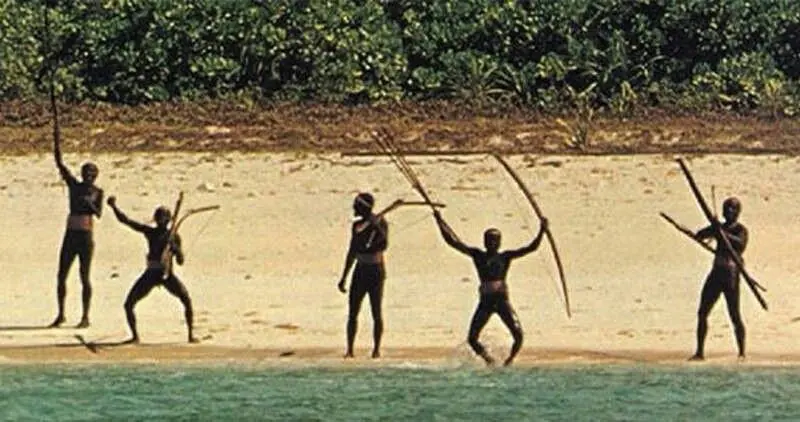
Their reputation is defined by their unwavering defense of their home. They use bows, arrows, and spears to attack anyone who comes too close, from helicopter photographers to lost fishermen. The Indian government, after several failed and tragic contact attempts in the 1980s and 90s, has now established a 3-mile exclusion zone around the island. It is illegal to approach, and the policy is one of “eyes on, hands off,” monitoring from a distance to ensure their safety and sovereignty.
Why they reject contact: Beyond a clear cultural choice, their isolation is a matter of survival. They have no immunity to common diseases like influenza or measles. A simple cold brought by an outsider could wipe out their entire population, as has happened with other Andamanese tribes after contact.
A Defining Incident: The death of American missionary John Allen Chau in 2018 tragically underscores their stance. Chau illegally paid fishermen to take him to the island, and he was killed soon after setting foot on the beach. His death was not a random act of violence; it was a predictable consequence of ignoring decades of clear communication from the Sentinelese that they wish to be left alone.
2. The Mashco-Piro: Nomads of the Peruvian Amazon
Location: Manú National Park and surrounding areas in the Peruvian Amazon
Deep within the world’s most biodiverse rainforest, the Mashco-Piro are a large, nomadic tribe that has actively avoided contact with the outside world. In recent years, however, their appearances at the edges of riverine communities have increased, leading to tense and sometimes violent encounters. They are one of the most prominent amazon tribes known for their defensive aggression.
They are hunter-gatherers, living in extended family groups and moving frequently through their territory. Their increased visibility is not an invitation for contact but is widely believed by anthropologists to be a result of external pressures: illegal logging, drug trafficking, and oil exploration that are encroaching on their lands and disrupting their traditional nomadic routes.
Why caution is paramount: While there have been instances of the Mashco-Piro seeking out certain settled communities, these interactions are incredibly fragile. They have made it clear through their actions that they do not want sustained contact. Approaching them poses a massive risk of disease transmission and can spark conflicts. The Peruvian government has a strict no-contact policy, but enforcing it in the vast, remote jungle is a constant challenge.



A Defining Incident: In 2011, the tribe was filmed on the banks of the Río de las Piedras, yelling at people across the river. This footage provided stunning documentation of their existence but also highlighted their distressed state. In 2015, they were blamed for killing a tribesman from a contacted village who had long shared a complex, sometimes hostile, relationship with them.
3. The Yaifo and Other Eastern Tribes of Papua New Guinea
Location: The remote highlands and eastern reaches of Papua New Guinea
Papua New Guinea is one of the most culturally diverse and topographically challenging countries on Earth, home to dozens of uncontacted tribes. The Yaifo were famously encountered by British explorer Robin Hanbury-Tenison in the 1980s in what was likely one of the first-ever contacts with that specific group. While not all tribes in PNG are hostile, first-contact situations here are universally considered among the most perilous.
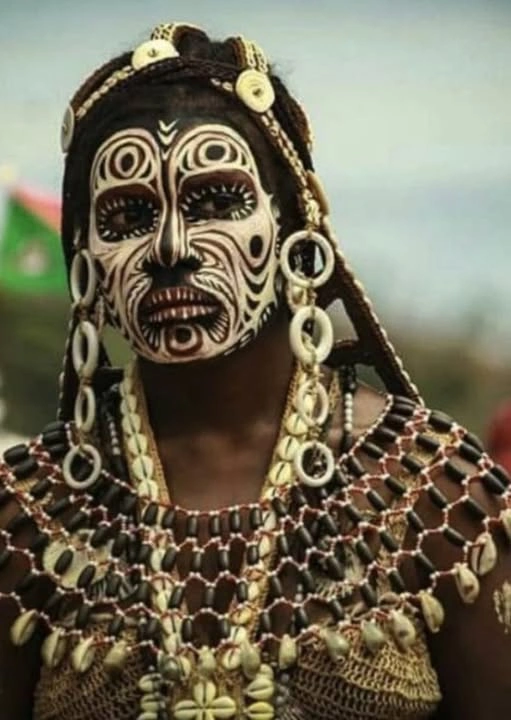
The danger doesn’t necessarily stem from inherent aggression, but from a complete lack of shared language or cultural context. In a society where inter-tribal warfare has been a part of life for millennia, strangers are often assumed to be enemies. Their weapons—bows, arrows, and clubs—are highly effective, and their territorial boundaries are absolute.
The Context of First Contact: Even friendly first contacts are incredibly dangerous. When the outside world first made sustained contact with the famously fierce Dani tribe in the Baliem Valley in 1938, it led to decades of upheaval. Today, while many all tribes in PNG have been contacted, groups in the extremely isolated eastern swamplands and highlands remain shielded from the modern world, and their lands are best observed from the air.
A Defining Anecdote: In 2018, a missionary was reportedly killed by a tribe on the remote Island of New Britain after swimming to shore. While details are scarce, such incidents serve as stark reminders that there are still places where outsiders are not welcome.
4. The Korowai: Treehouse Dwellers of West Papua
Location: The southeastern lowland rainforests of West Papua, Indonesia
The Korowai were largely unknown to the outside world until the 1970s. They are famous for their incredible treehouses, built towering high in the canopy to protect them from floods, insects, and rival clans. While many Korowai clans have since had contact, often through missionary groups, there are almost certainly smaller, more remote family groups that remain uncontacted and deeply suspicious of outsiders.
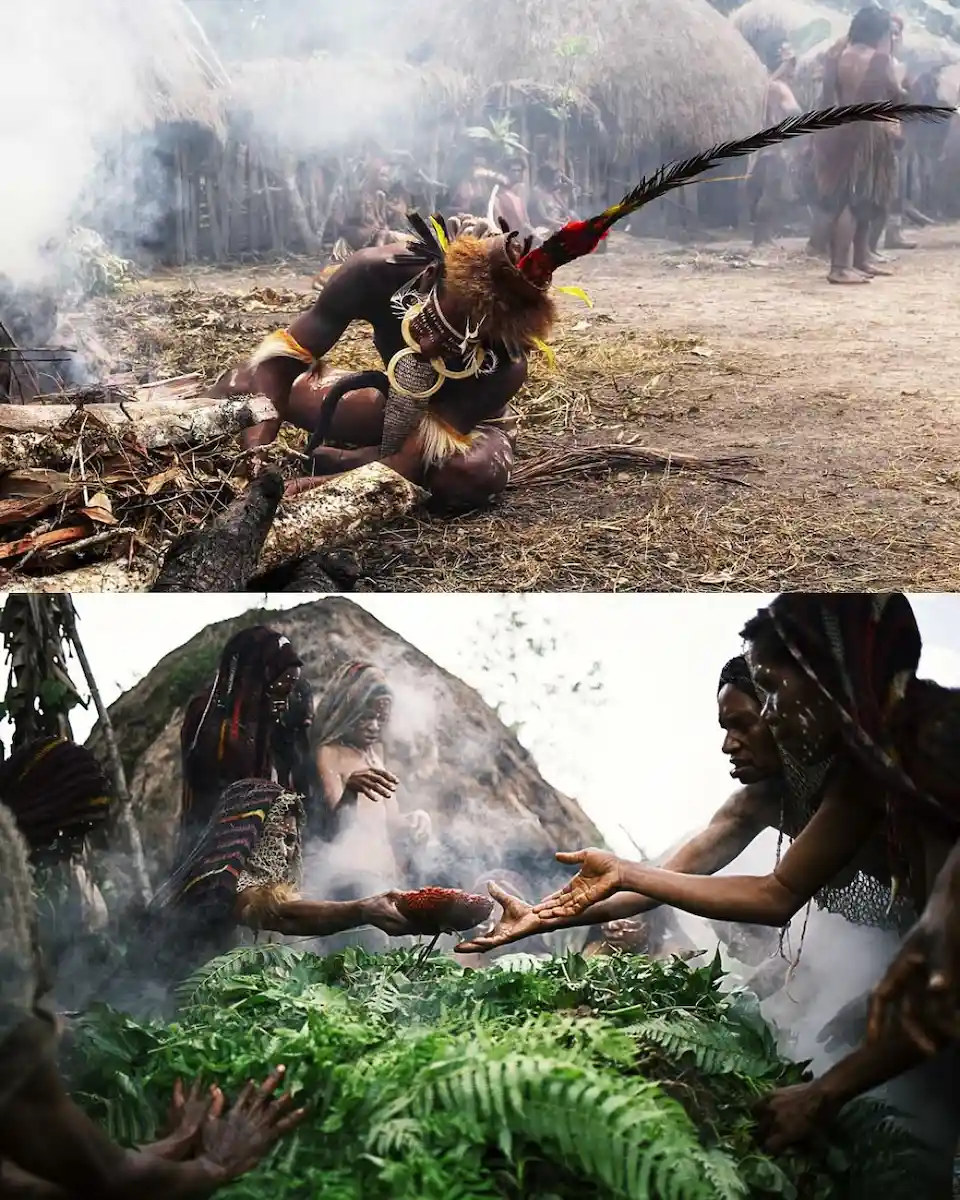
Historically, their society was structured around small, familial clans with a history of inter-clan feudalism. A significant aspect of their belief system that contributed to their fearsome reputation was ritual cannibalism, which they reportedly practiced not for sustenance but as a form of justice against individuals they believed were “khakhua,” or demonic witches.
The Reality Today: The “danger” associated with the Korowai is often sensationalized. For the contacted clans, the primary threat now is exploitation. “Tribal tourism” has become a problem, with outsiders paying guides to trek into their lands to gawk at their way of life. This is a modern form of intrusion that disrespects their dignity and health. The uncontacted clans, however, remain a real risk to approach due to their justified fear and defensive capabilities.
A Defining Change: The practice of cannibalism is believed to have ceased among contacted clans decades ago, as missionary influence grew. Their story is a powerful example of how a tribe’s reputation as one of the most dangerous tribes can become frozen in time, even as their reality rapidly evolves due to forced or chosen contact.
5. The Awá: The World’s Most Endangered Tribe
Location: The eastern Amazon rainforest of Brazil
While not inherently violent, the Awá are included on this list because approaching them or their territory is incredibly dangerous—for them. They are rightly known as the world’s most endangered tribe, and their survival depends on the complete protection of their land from all outsiders. Illegal loggers and ranchers who encroach on their territory have faced attacks, and rightly so, as they are fighting for their very existence.
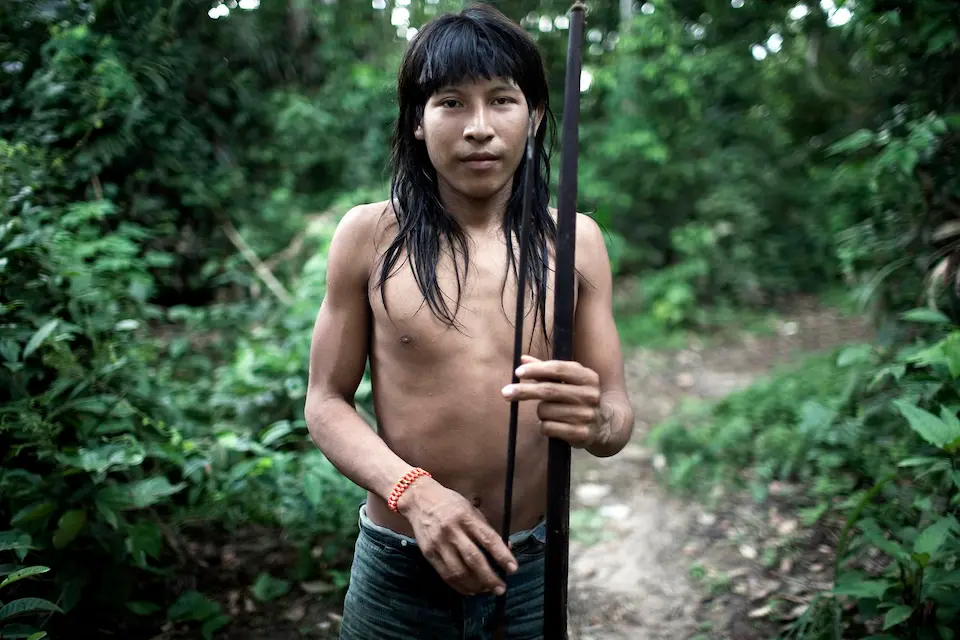
The Awá are a nomadic hunter-gatherer people, with an incredibly intimate relationship with the forest. Some families remain uncontacted, while others live in settled communities established by the Brazilian government’s Indian affairs department, FUNAI. The contacted Awá have been very clear: their uncontacted relatives want to be left alone.
Why they are defended: The true danger comes from the armed loggers who illegally invade their protected land. FUNAI maintains outposts to monitor the territory and keep intruders out, but it’s a constant, violent battle. For any outsider, entering the Awá’s land is not only illegal but also potentially lethal, as the uncontacted families will defend themselves, and the loggers are often well-armed and ruthless.
A Defining Campaign: Survival International led a massive global campaign that resulted in the Brazilian government sending in forces to evict illegal loggers and secure the Awá’s territory in 2014. This ongoing struggle highlights that the danger faced by many isolated tribes isn’t about their aggression, but about the existential threats they face from the outside world.
6. The Yanomami: A Complex Society Under Siege
Location: The border region between Venezuela and Brazil
The Yanomami are one of the largest relatively isolated tribes in South America, with a population of around 35,000. They are not a single, monolithic group but a society of multiple communities with a complex culture. They have been extensively studied, but that history is fraught with ethical controversy, and their lands are now being invaded by a modern scourge: illegal gold miners.
This invasion has created a profoundly dangerous situation for everyone involved. The miners, known as “garimpeiros,” are violent, armed, and are destroying the rainforest, poisoning rivers with mercury, and introducing diseases like malaria. The Yanomami, in defense of their land and families, have fought back, leading to brutal massacres on both sides.
The Context of Violence: It’s crucial to understand that Yanomami society has its own internal dynamics, including ritualized warfare. However, the scale and nature of the violence introduced by the gold miners is catastrophic. To approach a Yanomami village now is to step into a violent conflict zone. The risk of being caught in crossfire or introducing new pathogens is extremely high.
A Defining Tragedy: The Haximu massacre of 1993 saw garimpeiros kill 16 Yanomami, including children and the elderly. This was legally recognized by Brazil as genocide. The cycle of violence continues today, making their territory one of the most perilous in the Amazon for outsiders and natives alike.
7. The Baining and Neighboring Tribes of New Britain
Location: The island of New Britain, Papua New Guinea
Papua New Guinea makes a second appearance on this list for a reason: its isolation and cultural fragmentation create pockets of extreme caution. The Baining people, along with other, lesser-known tribes in the mountainous interior of New Britain, have a history of being deeply reticent of outsiders.
While not all groups are hostile, first contact is always unpredictable. The terrain is punishing, and the cultural divide is immense. Stories from explorers and missionaries—the few who have ventured into these regions—often tell of being watched for days by unseen eyes, of finding warning signs made of leaves and sticks, and of tense, armed standoffs that could turn deadly in an instant.
The Nature of the Danger: The risk here is less about a tribe being universally “dangerous” and more about the unpredictable nature of encountering a people with no shared framework for understanding who you are or why you are there. In a culture where sorcery accusations are common and inter-group violence is part of the historical fabric, a stranger can be seen as a mortal threat.
A Defining Characteristic: The Baining are known for their spectacular “fire dances,” where men dance barefoot on glowing embers. This incredible cultural practice is a testament to their rich spiritual life, a life that is easily disrupted by the sudden, uninvited presence of foreigners.
8. The Uncontacted Tribes of the Vale do Javari
Location: Vale do Javari (Javari Valley), Brazil
The Vale do Javari is one of the world’s last great sanctuaries for uncontacted peoples. It’s a Portugal-sized indigenous territory in the western Amazon, and it is believed to be home to at least 14 uncontacted groups, more than anywhere else on Earth. As a collective, they represent the front line of isolation and are among the most dangerous tribes to approach precisely because we know so little about them.
FUNAI maintains a long-term presence here to protect their territory from poachers, fishermen, loggers, and drug traffickers. The tribes themselves have made their position clear: they shoot arrows at FUNAI’s monitoring team’s boats and buildings as a warning to keep their distance. They have also been known to destroy camps and equipment left by intruders.
A Complex Ecosystem of Isolation: These groups likely have complex relationships with each other—some may be hostile, others may be in hiding. What unites them is a shared desire to remain separate. The danger in approaching them is multifaceted: you risk your own life, you risk sparking a conflict between tribes, and you almost certainly risk introducing pathogens that could accomplish what arrows cannot.
A Defining Policy: The head of the FUNAI post in the Javari Valley, who has dedicated his life to protecting these groups, once stated, “They are not dangerous. They are defending themselves.” This perfectly encapsulates the ethical stance required: the danger is a consequence of intrusion, not inherent malevolence.
9. The Dani and Yali of West Papua’s Highlands
Location: Baliem Valley and surrounding highlands, West Papua, Indonesia
When the Dani were first contacted by the outside world in 1938, they were living in a Stone Age culture, their lives dominated by complex ritual warfare between confederations of villages. While the Indonesian government has since pacified the region, the Dani and their neighbors, the Yali, maintain a fierce cultural pride and a deep-seated suspicion of the Indonesian state, which has occupied their land for decades.
The “danger” here has evolved. It is no longer about ritual warfare (though tensions between villages can still flare). Instead, it stems from the political situation. West Papua is a conflict zone, with a long-standing independence movement and a heavy, often brutal, Indonesian military presence. An outsider wandering into the highlands can easily be mistaken for a spy, a missionary, or a miner, any of which could lead to a dangerous confrontation.
The Modern Context: The Yali, known as the “lords of the earth,” live in even more remote areas than the Dani and were known for their fierceness as warriors. Today, the greatest risk in approaching remote Yali or Dani villages is getting caught in the geopolitical struggle between Papuan separatists and the Indonesian military, a conflict that is largely hidden from the world.
A Defining Image: The Dani were historically known for the practice of finger amputation as a sign of grief for lost relatives. While this practice is now rare, it speaks to the profound cultural differences that still exist and the potential for misunderstanding and conflict when outsiders intrude without invitation.
10. The Hadza: Not Dangerous, But a Critical Case Study
Location: The shores of Lake Eyasi, Tanzania
I am including the Hadza not because they are dangerous—they are famously welcoming and have lived in harmony with researchers and respectful tourists for decades—but because their situation provides a critical contrast. They are one of the last true hunter-gatherer societies on Earth, and their way of life is under threat from exactly the kinds of pressures that create the most dangerous tribes elsewhere: loss of land and resources.
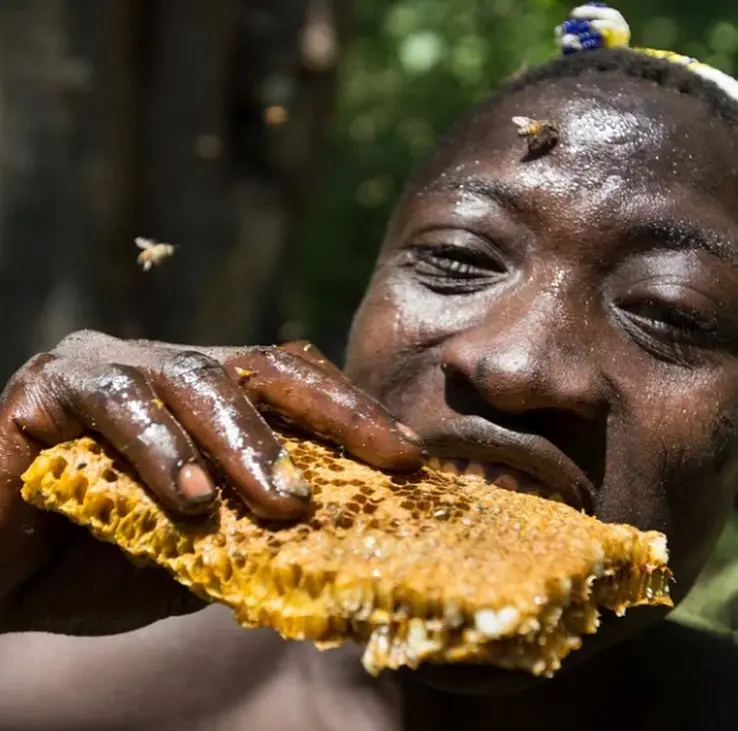
The Hadza have no history of warfare, no fortified villages, and no interest in accumulating wealth. They are a powerful reminder that isolation and defensive violence are not intrinsic to “tribal” life. They are specific responses to specific threats.
The Real Danger: The danger facing the Hadza is the loss of their hunting grounds to agriculture, pastoralists, and safari tourism. If they are pushed to the brink, if their land is taken and their survival is threatened, any group of people can become defensive. The Hadza stand as a testament to what can be lost when we fail to respect the sovereignty and land rights of indigenous peoples. They show us that the “danger” we associate with isolated tribes is often a last resort for survival.
A Defining Lesson: Living with the Hadza for a short time was a transformative experience that solidified my understanding that our framing of these communities is often wrong. The question should never be “Which are the most dangerous tribes?” but rather “How can we ensure the survival and autonomy of the world’s last independent peoples?”
Frequently Asked Questions
Q: Why are these tribes so dangerous?
A: This is the most important misconception to address. These tribes are not inherently violent or “savage.” Their defensive behavior is almost always a response to outside threats, which include disease, land invasion, and violent encounters throughout their history. They are protecting their families, their land, and their way of life from perceived existential threats.
Q: Has anyone ever made peaceful contact with these groups?
A: Yes, but these events are incredibly rare, highly staged by experts, and still extremely dangerous. The Brazilian government’s FUNAI agency has a specialized team for such situations, which they only attempt when a tribe’s survival is imminently threatened and contact is deemed the lesser of two evils. For most of these groups, the policy is now to protect their land so that contact is unnecessary.
Q: Is it illegal to approach these tribes?
A: In most cases, yes. India has a strict exclusion zone around North Sentinel Island. Brazil has laws protecting indigenous territories, and entering the lands of uncontacted tribes is a crime. Peru has similar protections, though enforcement in the vast Amazon is difficult. Approaching these tribes is not only dangerous but also a violation of national and international law.
Q: What diseases are they vulnerable to?
A: Common illnesses that are minor to us can be devastating to them because they have no acquired immunity. These include influenza, measles, chickenpox, and even the common cold. It’s estimated that in the first years after contact, up to 50-90% of a tribe’s population can die from introduced diseases.
Q: Why don’t we just leave them alone?
A: This is the prevailing ethical stance among anthropologists and indigenous rights organizations today. The goal is no longer to make contact and “integrate” them, but to secure their land rights and protect their territories from loggers, miners, settlers, and missionaries, allowing them to determine their own future.
Q: Are there uncontacted tribes in Africa?
A: While Africa is home to incredible cultural diversity and many tribes who live traditionally, like those living near natural wonders in africa, there are very few, if any, truly uncontacted tribes in the same sense as in the Amazon or PNG. Most have had some level of contact with the outside world, though many remain isolated and highly vulnerable.
Q: How do they survive without modern technology?
A: They are masters of their environment. Their knowledge of local plants, animals, and ecosystems is profound and has been passed down through millennia. What we see as a “lack” of technology is, in fact, a highly specialized and sophisticated technology perfectly adapted to their world.
My journey from that wide-eyed student watching footage of North Sentinel Island to someone who has spent years studying these communities has been a lesson in humility. The phrase most dangerous tribes is a loaded one, often conjuring images of primitive violence. The reality is far more nuanced. These communities represent the breathtaking diversity of human experience and the fierce, universal will to protect one’s home and family.
The greatest danger we face is not from them, but from our own arrogance—the belief that our way of life is superior and that their isolation is a problem to be solved. The true challenge for our global society is not to make contact, but to exercise restraint; to be the generation that finally learned to let them be.
Their continued existence is a testament to resilience and a precious part of our shared human heritage. The best way we can honor that is by ensuring their forests and islands remain protected, so that they may continue to live as they choose, on their own terms, for generations to come.