10 Things South Korea Travel Guides Don’t Tell You
Things that surprise almost every first-time visitor
- This article contains affiliate links. I may receive a commission if you purchase from them, at no extra cost to you.
The first time I landed in Seoul, I thought I was prepared. I’d read the blogs, watched the YouTube videos, memorized the subway map. I was wrong. South Korea operates on layers that reveal themselves slowly—through missed cues, accidental discoveries, and the kindness of strangers who finally take pity on your confusion.
After multiple trips and enough mistakes to fill a book, I’ve compiled the things no guidebook mentions. The stuff you actually need to know. These aren’t the romantic destinations in asia highlights you’ve already seen. They’re the real Korea—the one you’ll only find by accident.
Table of contents ⇅
1. The Subway System Has a Secret (And It’s Genius)
Every guide tells you Seoul’s subway is world-class. None explain why it’s actually better than Tokyo or New York. The secret is in the numbers.
What They Don’t Tell You:
Each station entrance is numbered. When you arrange to meet friends, you don’t say “meet at Hongik University Station.” You say “meet at Hongik University Station, Exit 3.” Everyone knows exactly where to go. The exits are lettered too (English and Korean), and the signage is so consistent you can navigate without speaking a word of Korean.
The Real Magic:
Free Wi-Fi everywhere—on trains, in stations, even in tunnels between stops. It’s faster than most hotel connections. Download nothing; just connect when you descend.
The Emergency Card:
If you lose your T-money card (the reloadable transit card), you’re out the balance. But if you register it at a convenience store when you buy it, you can transfer the balance to a new card. Most tourists don’t know this. Do it.
The subway runs until midnight, then stops until about 5:30 AM. Night buses exist but are confusing. If you’re out late, budget for a taxi.
Insider Tip
A T-money card is essential. Buy one at any convenience store for about 4,000 won (US$3). This holder keeps it accessible.
2. KakaoTalk Isn’t Optional. It’s Oxygen.



Every guide mentions KakaoTalk is Korea’s main messaging app. None explain that without it, you’ll be functionally locked out of modern Korean life.
Why You Need It:
- Restaurants with waitlists use KakaoTalk to notify you when your table’s ready
- Museums and attractions send digital tickets through KakaoTalk
- New friends will ask for your KakaoTalk ID within 5 minutes of meeting you
- Many businesses communicate exclusively through KakaoTalk channels
Download Before You Go:
Set it up at home. Verify your phone number. Add a profile photo (even a basic one—blank profiles seem suspicious). Learn to use the QR code scanner function—it’s used everywhere post-pandemic.
KakaoTalk also has a built-in translator for chats. It’s not perfect, but it’s good enough for basic communication.
Insider Tip
The Payment Feature:
KakaoPay works in countless places. Link a card if you’re comfortable. Otherwise, just use it for communication.
3. The Cafés Are Actually a Different Universe
Korea has more cafés per capita than any country I’ve visited. Starbucks is everywhere, but the real action is in the themed and specialty cafés.
What They Don’t Tell You:
A café in Korea isn’t just for coffee. It’s a third space—not home, not work—where people spend hours studying, dating, or just existing alone in public. You’re expected to order one drink and stay as long as you want. Nobody rushes you.
The Themed Cafés:
- Cat cafés: Obviously. But also dog cafés, sheep cafés (yes, in Hongdae), raccoon cafés, and even a “poop café” in Insadong where everything is poop-themed. It’s weird and wonderful.
- Photo cafés: Places with backdrops and lighting where you pay to take professional-quality selfies.
- Board game cafés: Hundreds of games, hourly rates, popular with groups.
Look for cafés on upper floors. Ground floor spaces are expensive; the best, most authentic places are up two or three flights of stairs. The view is usually better too.
Insider Tip
The Real Reason:
Many young Koreans live with parents until marriage or in tiny studio apartments. Cafés are where they entertain friends, go on dates, or just escape. You’re not just getting coffee; you’re participating in a social infrastructure.
4. The Banchan Refill Isn’t Polite—It’s Expected
Korean meals come with banchan—small side dishes that arrive before the main course. Kimchi, pickled radish, bean sprouts, fish cakes, and a dozen other possibilities.
What They Don’t Tell You:
The banchan are unlimited. When you finish a dish, you can ask for more. The server won’t be annoyed; they’ll be confused if you don’t. It’s not a test of politeness; it’s just how the meal works.
The Protocol:
- Start eating banchan while waiting for mains (it’s fine)
- Use separate spoons for serving yourself (communal dishes have serving utensils)
- Don’t mix banchan into your rice until you’re ready to eat it
- If you love a particular banchan, ask for more by pointing and saying “han beon doo” (one more time)
The best banchan is often the simplest—fresh kimchi made that day, crisp bean sprouts with sesame oil, perfectly seasoned spinach. Don’t fill up on them before the main course, but don’t skip them either.
insider Tip
The Exception:
Some upscale restaurants charge for extra banchan. Usually not, but watch what locals do. If they’re paying, you pay.
5. The DMZ Tour Isn’t What You Think
Every guide recommends a DMZ tour. None explain what it actually feels like—the tension, the surreal normalcy, the propaganda.

The Reality:
You’ll visit:
- Imjingak Park: Souvenir shops, a defunct train station, and a strange carnival atmosphere
- The 3rd Infiltration Tunnel: A tunnel dug by North Korea, discovered in 1978. You’ll walk down in a hard hat, bent over, feeling the cool air from the North
- Dora Observatory: Look across the DMZ into North Korea through binoculars. You might see the “Propaganda Village” (actually a facade with no residents) and Kaesong industrial complex
- Dorasan Station: A train station with signs to Pyongyang and Paris, but no trains run north
The Feeling:
It’s touristy but not trivial. The soldiers are real. The tension is real. The North Korean guides you’ll encounter at the JSA (if you do that tour) are actual North Korean defectors. You’ll leave with a knot in your stomach.
The Rules:
- Dress conservatively (no ripped jeans, no military-style clothing)
- Passport required
- No pointing or gesturing toward the North
- Follow instructions immediately
6. The Korean Bathhouse Experience (Jjimjilbang)
Jjimjilbang are public bathhouses with hot tubs, saunas, and communal sleeping areas. Every guide mentions them. None prepare you for the cultural immersion.
What Actually Happens:
- You’ll strip naked in the gender-segregated bathing area (same gender only, obviously)
- You’ll shower thoroughly before entering any pools
- You’ll soak in baths of varying temperatures, from ice cold to scalding
- You’ll sweat in saunas made of clay, salt, or jade
- You’ll scrub your skin raw with a rough cloth (or pay an ajumma to do it for you—an experience)
- You’ll put on provided shorts and t-shirt and join the mixed-gender common areas
- You’ll eat a meal, nap on heated floors, watch TV, and possibly never leave
Your skin will feel like new. Your muscles will relax completely. You’ll understand why Koreans do this weekly.
The Etiquette:
- Tattoos are sometimes restricted (cover them if possible)
- No photos in bathing areas (obviously)
- Quiet voices in common areas
- Fold your towels neatly when done
Dragon Hill Spa in Seoul is tourist-friendly with English signage. The really local places won’t have English, but you’ll figure it out—Koreans are helpful.
Insider Tip
Bring your own toiletries if you’re particular. This travel kit has everything you need.
7. The Age Question Isn’t Rude—It’s Required
In Korea, when you meet someone new, they’ll likely ask your age within the first few minutes. Westerners often find this intrusive. It’s not.
Why They Ask:
Korean language has different speech levels depending on relative age and status. Knowing your age tells them whether to use formal or informal speech. It’s not curiosity about your personal life; it’s navigating social grammar.
How to Answer:
Just tell them your birth year. If you’re close in age, you might become “friends” (same-age relationships have their own dynamics). If you’re older, they’ll show respect. If you’re younger, you’ll show them respect.
The Exception:
If you’re obviously much older, they’ll use formal speech immediately. If you’re close in age, expect the question within minutes.
8. Convenience Stores Are Restaurants (and More)
Korea’s convenience stores (CU, GS25, 7-Eleven, Emart24) are not like the ones at home. They’re a lifeline.
What They Offer:
- Hot food: Ramen you can cook at in-store machines, rice balls, triangle kimbap, hot dogs, tteokbokki (spicy rice cakes)
- Seating areas: Many have tables and chairs where people eat meals
- Delivery service: Order from the store and have it delivered
- Bill payment: Pay utility bills, top up T-money cards, buy concert tickets
- Alcohol: Beer, soju, makgeolli available 24/7
- Cosmetics: Travel-sized skincare, sheet masks
- Umbrellas: When it rains, every store has cheap umbrellas by the door
The Best Finds:
- Banana flavored milk: The iconic Korean drink. Try it.
- Triangle kimbap: Rice and filling wrapped in seaweed. Perfect snack.
- Peach-flavored soju: Dangerous because it tastes like juice and isn’t.
- Ice cream bars: Endless varieties, all cheap.
Look for the “1+1” or “2+1” deals—buy one get one free, buy two get one free. It’s how Koreans stock up.
Insider Tip
A reusable bag is essential for convenience store runs. This foldable tote fits anywhere.
9. The Reservation Culture Is Intense
In Korea, if something is popular, you need a reservation. Not just restaurants—everything.
What Requires Reservations:
- Popular restaurants: Especially those featured on TV or social media
- Noraebang (karaoke rooms): Weekend evenings book up
- PC bangs (internet cafes): For tournaments or peak times
- Cafés with limited seating: The themed ones especially
- Hair salons: Walk-ins are rare for good stylists
- Spa appointments: The good scrubbers book up
The App You Need:
CatchTable is the main reservation app for restaurants. It’s in Korean but has English options. Naver is the search engine that shows real-time wait times and reservation availability.
What to Do:
If you see a line outside a restaurant, it’s probably good. But also probably has a waitlist system you don’t understand. Ask the host—they’ll usually help.
10. The Trains Are Fast, But the Buses Go Everywhere
KTX trains connect major cities quickly—Seoul to Busan in 2.5 hours. But the express bus system is Korea’s real transportation secret.
Why Buses Are Better for Some Routes:
- More destinations: Trains only serve major stations. Buses go to every medium-sized town.
- More frequent: Often depart every 15-30 minutes.
- Cheaper: Usually 30-40% less than KTX.
- Comfortable: Reclining seats, footrests, often better than economy class on planes.
The Bus Classes:
- Economy: Fine for short trips
- Premium: Wider seats, more legroom, sometimes only 3 seats per row
- Luxury: Individual seats, personal screens, snacks included
How to Book:
Use the Kobus app (English available) or buy at the terminal. Terminals are usually near subway stations. You can also use Tmoney cards on some intercity buses.
The Experience:
Korean bus drivers are professional. They drive smoothly, stop at designated rest areas, and arrive on time. You’ll see countryside you’d miss on the train.
For Busan, the KTX is worth it. For smaller cities like Gyeongju, Jeonju, or Sokcho, the bus is often more convenient and drops you closer to the center.
Insider Tip
Bonus: The Etiquette They Don’t Mention
Shoes Off: Indoors, always. Homes, many guesthouses, some restaurants with floor seating. Check for shoe racks by the entrance.
Two Hands Rule: When giving or receiving something (money, drinks, business cards), use both hands or support your right wrist with your left hand. It shows respect.
Pouring Drinks: When drinking with others, pour for each other, not yourself. If someone pours for you, hold your glass with both hands. When pouring for an older person, use both hands.
Tipping: Don’t. It’s not expected and can be confusing. Service is included.
Saying Thank You: Gamsahamnida (formal) or Kamsahamnida (slightly less formal). You’ll hear it constantly. Use it.
Learning basic Korean phrases is appreciated. This phrasebook fits in a pocket.
Where to Stay: Neighborhood Guide
Hongdae: Young, energetic, nightlife, shopping, street performances. Best for first-timers under 35.
Myeongdong: Tourist central, shopping, street food, close to major sights. Convenient but chaotic.
Insadong: Traditional vibe, tea houses, art galleries, craft shops. Quieter, more cultural.
Gangnam: Upscale, modern, business district, K-pop star sightings possible. Expensive but polished.
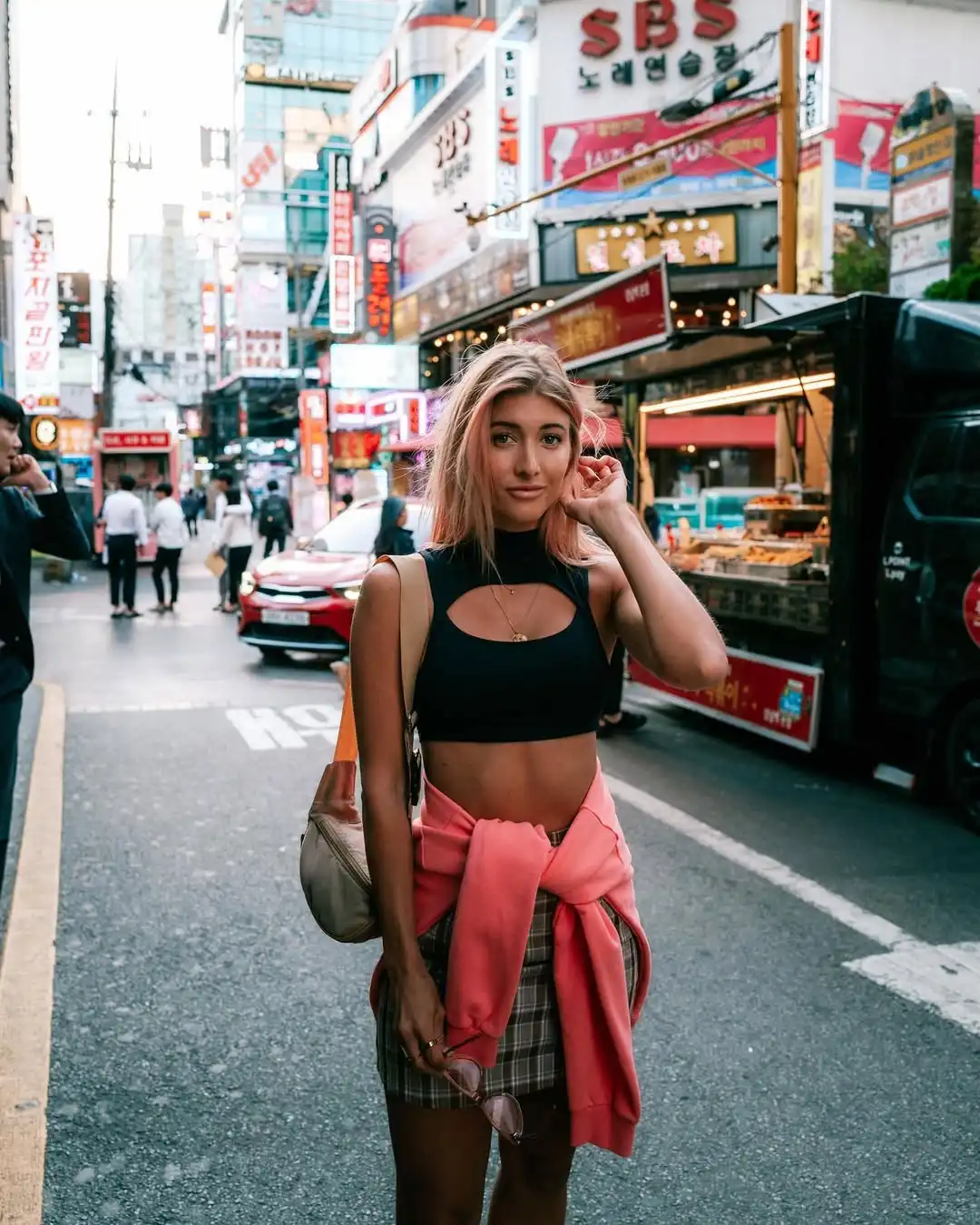
Itaewon: International, diverse, foreigner-friendly, great restaurants, nightlife. Good for English speakers.
Where to Stay:
- Luxury: Signiel Seoul (Gangnam, 81st floor, absurd views)
- Mid-range: Lotte Hotel (Myeongdong, classic, central)
- Budget: Zzzip Guesthouse (Hongdae, social, clean)
- Unique: Bnonly Hotel (design-focused, multiple locations)
What to Pack for Korea
The Essentials:
- Comfortable walking shoes. Seoul is huge. You’ll walk.
- Power adapter. Korea uses Type C and F (same as Europe).
- Portable Wi-Fi or SIM card. Korea has the world’s fastest internet. Use it.
- Reusable shopping bag. Plastic bags cost extra and are discouraged.
- Handkerchief or small towel. Many public restrooms lack paper towels.
The Nice-to-Haves:
- T-money card. Buy on arrival, use everywhere.
- Face masks. Still common in crowded places and during flu season.
- Translation app. Papago works better than Google Translate for Korean.
- Portable charger. You’ll use your phone constantly.
What NOT to Pack:
- Revealing clothes for temple visits. You’ll be given cover-ups if needed, but better to bring your own.
- Heavy winter gear in summer. Korea’s seasons are extreme. Check forecasts.
- Expectations of Western service standards. Korea does things its own way. Embrace it.
The Korea You’ll Actually Find
The Korea in travel guides is accurate but incomplete. It’s the palaces and the K-pop, the Bibimbap and the Bulgogi. The Korea you’ll actually find includes the 3 AM convenience store ramen, the ahjumma who grabs your arm and guides you to the right bus, the new friend who adds you on KakaoTalk and invites you to dinner next time you’re in town.
It’s a country that reveals itself slowly, through layers of etiquette and technology and food and friendship. Go expecting the version you’ve seen online. Stay for the version you couldn’t have imagined.
Save this guide. Book the flight. Korea is waiting.