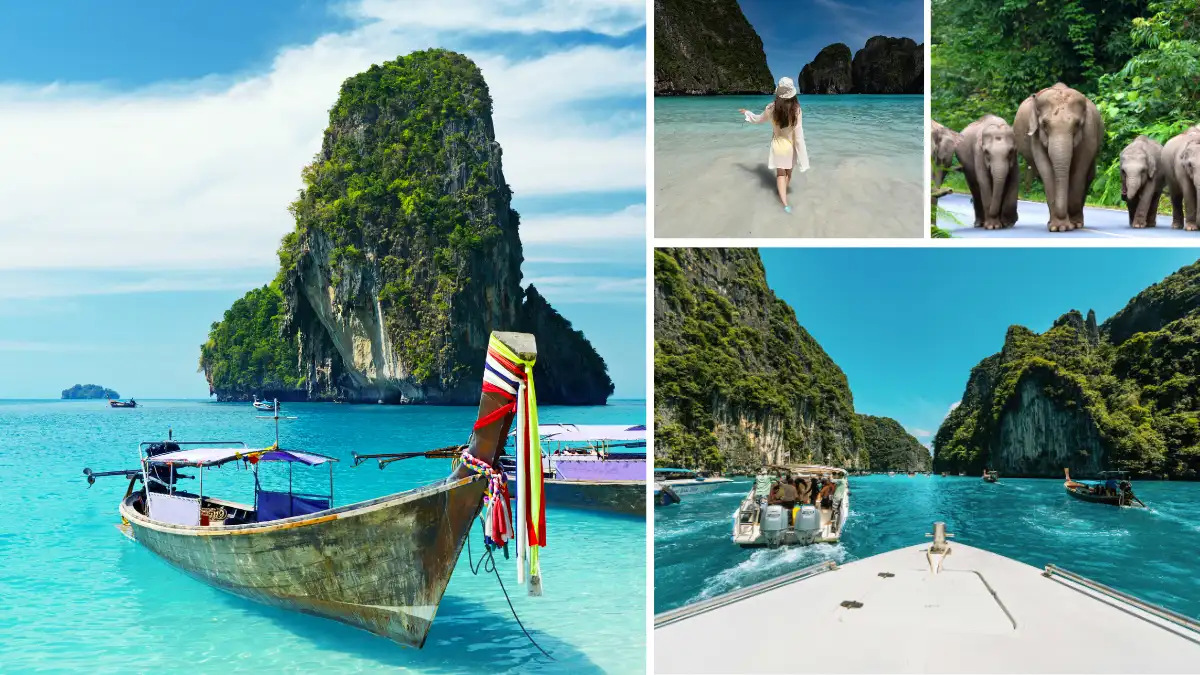
11 Insane Things to Do in Thailand You’ve Never Heard Of
These wild experiences go far beyond Bangkok and the usual island tours
- This article contains affiliate links. I may receive a commission if you purchase from them, at no extra cost to you.
Imagine this: every guidebook, every influencer, every “Ultimate Thailand Bucket List” you’ve ever scrolled through is showing you the same fifteen places. Same temples. Same islands. Same elephant selfies. It’s like they all copied homework from the same Thai tourism brochure printed in 1998.
Here’s what they’re not telling you: the real Thailand operates on a different layer entirely. It’s not hidden behind secret doors or accessible only by secret handshake. It’s just three turns off the main road, one extra hour of effort, or the willingness to say “yes” when the guide offers something not listed on the itinerary.
These eleven experiences don’t appear in the “Thailand Tourist Places” roundups. You won’t find most of them on TripAdvisor’s top 100. They’re the best things to do in thailand for travelers who understand that the country’s greatest currency isn’t baht—it’s curiosity.
Consider this your unofficial, unsanctioned, absolutely essential field manual.
Table of contents ⇅
1. The Train Market That Shouldn’t Exist (Maeklong Railway Market)
Here’s the setup: hundreds of vendors spread tarps directly on active railway tracks. Trains barrel through eight times a day at 30 km/h. The vendors retract their awnings with millimeter precision, the train passes, and within seconds they’ve reset and resumed selling tilapia like nothing happened.
Why it’s insane:
Because it’s not a performance. These people are just selling fish and shallots. The train is just commuting. The absurdity is completely normalized.
The Damnoen Saduak + Maeklong Double Punch:
Most tours bundle this with Damnoen Saduak Floating Market, and here’s the truth about that: Damnoen Saduak is a tourist zoo. Overpriced paddle boats, aggressive vendors, and trinkets you’ll throw away . But you should still go. Why? Because riding a human-paddled wooden boat through canals choked with vendors is ridiculous and fun once. Just don’t buy anything.
The Scam You Will Encounter:
Your taxi driver will insist on taking you to “his” boat pier. This will cost you ฿2000+. Refuse. Demand drop-off at the actual market entrance. Hire a paddle boat inside for ฿200.
Insanity Level: 7/10. It’s touristy, but watching a train thread a needle through umbrellas never gets old.
2. Muay Thai at Rajadamnern Stadium (But Not on a Monday)
You know Muay Thai exists. You don’t know Rajadamnern.
Opened in 1945, this is the oldest Muay Thai stadium on earth. It predates the invention of the ballpoint pen. Walking through its corridors feels like stepping into a sepia photograph. The ring canvas is worn. The air smells like liniment and old sweat.
The Insider Move:
Avoid Monday through Thursday. These are “development” nights featuring teenagers building records. It’s still real Muay Thai, but the energy is different. Friday through Sunday deliver elite stadium champions, the kind of fights where the wai kru (ritual dance) alone gives you chills.
The Immersive Show:
At 20:15, they project a 360-degree history of Muay Thai onto the dome. It’s unexpectedly moving. You’ll watch it and immediately want to elbow something.
Where to Sit:
Ringside is intimate but exposes you to potential sweat. Club Class offers the best sightlines. Second Class is fine but you’ll watch the screens more than the ring.
Insanity Level: 6/10. It’s a tourist attraction now, but the history is real and the fighters are legitimate.
3. The Overnight Elephant Experience (Not the Day Trip)
Here’s the problem with 99% of elephant “sanctuaries”: you feed them, you bathe them, you leave. It’s a photoshoot with a side of conservation theater.
The Ethical Elephant Sanctuary near Chiang Mai offers something different: the overnight stay.
You don’t just visit. You arrive, you help prepare food, you walk with the elephants into the forest as they forage. At sunset, the day-trippers leave. You stay. You sleep in a basic hut on a mountain overlooking a valley, the only sounds being jungle and the occasional low rumble of elephants settling for the night. The Mahout brings you beer from the village. You build a fire. You talk until the moon clears the ridge.
The Reality Check:
One reviewer in January 2024 reported seeing a mahout strike an elephant. The sanctuary claimed it was a “naughty elephant” defense . I’m including this because you deserve the truth: no elephant interaction is 100% ethical. These are captive animals. Do your homework. Ask hard questions. If you see something, say something.
That said:
Dozens of reviews describe elephants roaming freely, no hooks, genuine affection between mahouts and animals . The overnight option removes the conveyor-belt tourism element. You’re not a customer; you’re a guest.
The Waterfall Bonus:
Overnight guests are often taken to a secret waterfall the day-trippers miss. It’s a 40-minute hike through primary forest. You’ll have it entirely to yourselves.
Insanity Level: 9/10. Sleeping above a valley where elephants roam below is genuinely magical.
4. The Floating Bungalow at Khao Sok (500 Rai)
Khao Sok National Park appears in every guidebook. Staying on Cheow Larn Lake inside the park does not.
500 Rai Floating Resort isn’t a hotel; it’s a collection of rustic bungalows on pontoons, accessible only by longtail boat. There are no roads. No 7-Elevens. No Wi-Fi that works. You wake to mist rising off teal water, limestone karsts piercing the clouds like dragon teeth.
What You Actually Do:
Kayak at dawn when the lake is glass. Take a longtail deeper into the flooded forest, where your guide points out hornbills, gibbons, and the telltale snapped branches of elephants on the shore. Trek to a cave hidden inside a karst, wading through cool water while stalactites drip above you.
The Honest Truth:
The floating bungalows are not luxury. They’re comfortable, but you’re on a lake in a national park. Expect basic amenities and incredible views.
Book the two-night minimum. One night feels rushed. Two nights allow a full day of trekking and kayaking without watching the clock.
Pro Strategy
Insanity Level: 8/10. Sleeping on water inside one of Thailand’s oldest jungles is a flex.
5. Maya Bay Without the Crowds (The Speedboat Gambit)
You’ve seen the photos. You know it closed for restoration. You know it reopened with strict visitor limits.
What nobody tells you: the tours still go. And they’re still crowded.

The Insane Move:
Book the first departure of the morning. The earliest speedboats hit Maya Bay around 08:00, before the fleets arrive. You’ll have 45 minutes of relative quiet. You can walk the curve of sand, feel the famous bay without being sandwiched between selfie sticks.
The Extra Mile:
Skip the included snorkel stop at the main reef—it’s dead from decades of sunscreen and fins. Instead, pay the ฿400 national park fee and take the longtail into Pileh Lagoon. The water is emerald, the cliffs rise sheer on all sides, and the longtail driver will let you jump from the boat into water so buoyant you can barely sink .
Phi Phi Reality: Yes, it’s touristy. Yes, you should still go. Just do it smarter.
Insanity Level: 5/10. You’re still on a tourist boat, but you’re optimizing.
6. The White Temple, Blue Temple, Black House Trifecta
Chiang Rai’s Wat Rong Khun (White Temple) is famous. You’ve seen the gleaming white facade dripping with skulls and pop culture references. It’s the work of national artist Chalermchai Kositpipat, and it’s genuinely stunning.
The Insane Part:
Most tours take you there, feed you lunch, and leave. They skip the context.
The Full Trifecta:
- White Temple: Buddhist heaven rendered in mirrored glass and white plaster. The bridge represents crossing over desire.
- Blue Temple (Wat Rong Suea Ten): 15 minutes away. Deep blue interior with a massive white Buddha surrounded by ethereal murals. Less crowded, equally beautiful .
- Black House (Baan Dam): Not a temple. The home and museum of Thawan Duchanee, another national artist. Dark wooden structures filled with animal bones, crocodile skins, and unsettling erotic art. It’s the yang to the White Temple’s yin.
The Karen Village Question:
Most tours include a Long Neck Karen village. This is ethically complicated. The women wear brass coils for tourism, not tradition. Some visitors find it educational; others find it exploitative. Go, don’t go—decide for yourself. But know what you’re walking into.
Insanity Level: 7/10. Three artists, three visions, one very long day.
7. Pig Island (Koh Samui) and the Honest Review
Here’s what you’ve heard: an island inhabited by swimming pigs. Crystal water. Instagram paradise.
Here’s the unvarnished truth from recent travelers: it’s dirty. It smells. The pigs bite.
Koh Tan and Koh Madsum (marketed as “Pig Island“) receive thousands of visitors weekly. The pigs are fed constantly. They’re not starving; they’re overwhelmed. The island lacks adequate waste management for this volume. Multiple 2025 reviews describe “litter everywhere” and an “unpleasant odor”.
Should you skip it? Not necessarily. The pigs are genuinely cute. Watching them swim to meet arriving boats is surreal. But go in with open eyes.
The Better Move:
Combine Pig Island with Koh Tan snorkeling. Koh Tan has decent reef and far fewer people. The speedboat tours typically include lunch, snorkeling gear, and 1-2 hours on Pig Island—enough time for photos, not enough to be overwhelmed by the smell.
Bring hand sanitizer. You’ll touch pigs. You’ll want to clean your hands before eating.
Pro Tip
Insanity Level: 4/10. More “quirky” than “insane,” but worth it for the story.
8. Grandma’s Cooking School (The Farm-to-Table Truth)
Chiang Mai has 8,000 cooking classes. Most are conducted in sterile kitchens with pre-chopped ingredients. You stir, you eat, you leave.
Grandma’s Home Cooking School operates differently.
The Insane Detail:
You don’t just cook. You visit a local market first, learning to choose galangal that isn’t woody, kaffir lime leaves still dewy, shrimp paste that doesn’t smell ammoniated. Then you travel to an organic farm outside the city. You feed the chickens. You collect eggs. You pick vegetables based on what’s actually ripe, not what’s on the menu.
The Menu Problem:
Most classes give everyone the same dishes. Grandma’s lets each student build their own menu. You want Khao Soi? You get Khao Soi. Your friend wants Pad Thai? Different station, different ingredients. The instructors adjust for dietary restrictions in real time.
Don’t Miss Out
The Khao Soi Revelation:
Northern Thai curry noodles are notoriously difficult. Grandma’s instructors have taught this thousands of times. They know exactly where beginners fail. You will not fail.
Insanity Level: 6/10. It’s cooking class. But it’s cooking class done right.
9. Hong Islands 360° Viewpoint (The Stairmaster to Heaven)
Krabi’s Hong Islands are on every itinerary. The 360° viewpoint is not.
You’ll see the sign: “Viewpoint 500 meters.” What the sign doesn’t convey is that those 500 meters are nearly vertical, up a jagged limestone karst with uneven steps and sheer drop-offs. It’s not technical climbing; it’s just relentlessly, absurdly steep.

Why It’s Worth It:
At the top, you understand why the archipelago is called Hong—Thai for “room.” The islands enclose a lagoon like walls around a chamber. Emerald water, limestone sentinels, longtails tracing white lines across the surface. You’re 150 meters above it all, and you earned every meter.
The Strategy:
Go early. The viewpoint gets congested, and the path is narrow. First speedboat of the day means you might have the top to yourself.
What to Bring:
Water shoes. The path can be slippery. Proper footwear makes the difference between exhilaration and misery.
Insanity Level: 8/10. It’s a legitimate hike in tropical heat. Your calves will remind you of this for days.
10. Ang Thong Marine Park by Kayak (Not Just by Boat)
Mu Ko Ang Thong National Park is a 42-island archipelago so pristine it inspired The Beach. Most visitors see it from a cruise boat: they motor in, snorkel, eat lunch, motor out.
The Insane Move: Book the kayak option.
You’ll still take the big boat to the park. But instead of joining the herd on the main beach, you’ll launch a kayak into the emerald water. Paddle into the hidden lagoons the tour boats can’t access. Glide through sea arches while macaques watch from overhanging branches.
The Talay Nok Hike:
Most kayak tours include a stop at Koh Mae Ko for the hike to Talay Nok—the “inner sea.” It’s a saltwater lake hidden inside the island, accessible only by climbing 500 meters of stairs and fixed ropes. The water is eerily still, impossibly blue, completely enclosed by karst walls.
The Honest Truth:
It’s crowded. Multiple boats converge on the same islands. But the kayakers disperse faster. You’ll find pockets of silence the cruise passengers never experience.
Insanity Level: 7/10. Kayaking + hiking + rope climbing = actual adventure.
11. The Mae Hong Son Loop (But Backwards)
The Mae Hong Son Loop is famous: 600 kilometers of mountain switchbacks connecting Chiang Mai to Pai to Mae Hong Son and back. Bikers worship it. Travel blogs romanticize it.

The Insane Move:
Run it backwards. Start with a private driver-guide, not a scooter. Head straight to Mae Hong Son first, then work your way up to Pai.
Why:
Everyone does Chiang Mai → Pai → Mae Hong Son. They hit Pai on day two, exhausted from the road, and spend three days in the backpacker bubble. By running reverse, you reach Mae Hong Son fresh. You book a homestay with a Black Lahu hill tribe family. You trek into the forest while they cook lunch over bamboo fire. You learn about weaving and animist traditions that predate Buddhism in this region.
Pai becomes your decompression, not your destination. After days of genuine cultural exchange, Pai’s waterfalls and vegan burritos feel like a reward rather than a disappointment.
The Honest Truth:
You need a guide and driver. This isn’t DIY territory unless you speak Thai. It’s more expensive. It’s absolutely worth it.
Insanity Level: 10/10. This is the Thailand tourists don’t know exists.
The Thai Tourism Survival Kit
Visa: 30 days visa exemption for most nationalities. Don’t overstay; fines are severe and jail is possible.
Health: Tap water is not potable. Street food is generally safe if it’s cooked fresh and busy. Bring Imodium. You’ll probably need it.
Don’t Miss Out
Scams to Kill Immediately:
- “The Grand Palace is closed for a Buddhist holiday.” (It’s not. They’re taking you to a gem store.)
- “This boat pier is the official one.” (It’s not. Insist on the public pier.)
- “Rent a scooter without an international license.” (You will be stopped by police. The fine is ฿1000. Budget for it or don’t ride.)
What to Pack That Isn’t Obvious:
- Water shoes. Reefs, beaches, national parks—you’ll wear these constantly. These ones drain quickly and protect from sharp coral.
- A headlamp. Power outages happen. So do pre-dawn temple visits.
- Reef-safe sunscreen. Standard sunscreen kills coral. Thailand’s reefs are dying. Don’t contribute.
Frequently Asked Questions
Is this really “insane” or are you just being dramatic?
Some are genuinely insane (sleeping on a floating bungalow in a national park). Others are just smarter ways to do famous things (early Maya Bay). All are experiences most tourists miss entirely.
How many days do I need for this?
These 11 activities span the entire country. Minimum 14 days to do them justice. 21 days is better. Thailand rewards slowness.
Is the Mae Hong Son Loop dangerous on a scooter?
Yes. Hundreds of turns, unpredictable weather, and Thai driving standards. Experienced riders manage fine. Beginners crash. Hire a private driver instead.
What’s the single best time for this itinerary?
November to February. Cooler temperatures, clear skies, minimal rain. Book everything far in advance.
Here’s what separates this guide from every other “Things to Do in Thailand” list: I’m not trying to convince you that Thailand is undiscovered.
It’s discovered. The floating markets are crowded. The viewpoints have queues. The elephants are captive.
But underneath the tourism infrastructure, the real Thailand persists. It’s in the 80-year-old fight stadium where champions are still made. It’s in the mountain homestay where a Lahu grandmother teaches you to weave bamboo. It’s in the pre-dawn kayak across a glass-still lagoon, the only sounds being paddle stroke and hornbill call.
You just have to turn left when everyone else turns right.
Save this guide. Book that flight. And when you’re standing on the Hong Islands viewpoint, legs burning, looking down at water that doesn’t look real, you’ll understand why the extra effort was the entire point.
Your Thailand is out there. Go find it.